
ALEX REVIEWS MUSIC (ARM): TAKING BACK SUNDAY – YOU CAN’T LOOK BACK (MUSIC VIDEO) | 2016-08-28

Watch the video first:

So last Tuesday my favourite band of all time Taking Back Sunday released a new single off their upcoming seventh studio album Tidal Wave (out on 16th September on Hopeless Records) titled “You Can’t Look Back”, which obviously got me overwhelmingly excited and all. Then, a couple of days and hundreds of plays later, I stumbled across a very funny and interesting article reminiscing about early Noughties punk-rock/emo nostalgia in which the author scrutinises frame-by-frame and with extreme meticulosity the band’s cult music video for fan-favourite track “You’re So Last Summer” released in late 2003. I immediately really liked the idea – less so the form and method used though – and hence thought to myself that, considering that thus far within my critically-acclaimed music review feature Alex Reviews Music I’ve only considered full records and or live shows, I might as well have a try myself at considering a music video as fundamental unit of my analysis. So here I am taking a closer look at the New York emo veterans’ latest single disguised as official music video (do they even still exist?!) directed by Anthem Films‘ DJay Brawner, also responsible for the band’s videos for Happiness Is‘s singles “Flicker, Fade” and “Better Homes and Gardens“. Yet, before I’d dug into any kind of reasoning or reflection and therefore somehow influence someone’s understanding of the track, I’d like you, my reader, to immerse yourself independently into the video hence why I copied it at the top of this page. Please do have a look at it before continuing reading if you’re interested in what I’m writing about.

The video starts off with a young man in a bright jeans jacket picking up a girl from what one understands might be her job place then driving off across desolated desert streets with a middle-range pick up truck. The couple then appears to be riding through unpaved roads before joining other friends at an outdoor party surrounding an impromptu fireplace on an empty clearing, all in an extremely joyous and intimate way. Nothing too spectacular so far. But more importantly, nothing that could somehow be misinterpreted or that is left hanging searching for meaning. This is when Taking Back Sunday themselves come into the game, as we find  – in order of appearance – lead guitarist John Nolan, drummer Mark O’Connell, singer Adam Lazzara, bassist Shaun Cooper and rhythm guitarist Eddie Reyes all already gathered around the festive rendezvous.

It is exactly from this point in time onwards that finding a common and indisputable meaning to the developments in the video, especially when paired with the enigmatic lyrics, becomes truly hard. That is, for example, as soon as the couple of leading actors joins the rest of the group I start noticing dark expressions and moderate discomfort on frontman Adam Lazzara’s face, who in the end is the one not only writing but also singing the lyrics in question. This impression doesn’t fade with time as Adam incidentally remains the only one not pouring with joy and light heartedness even when the lead actors mix themselves up with the rest of their friends and everyone else seems to be having a good time. In fact, this theory appears to be confirmed from minute 2:47 onwards, as an unexpected dramatic twist hits the so far linear and harmonic plot of the video, when Adam suddenly starts throwing up tons of blood from the depth of his stomach and searches his way through the crowd surrounding the fire, seemingly unaware of the whole thing.

Adam then starts to touch, approach and cover up other people with the dark blood coming out of his throat while every single one of them doesn’t bat an eye and keeps going on with what they’re doing. At one point, he then reaches for the lady who got picked up by the main character at the beginning of the video by touching her shoulder but even herself, albeit with a small and quick sign of awareness, ignores him altogether and keeps flirting with her alleged fiancée. Adam then collapses on the floor suffering in pain and rolls on his sides while at the same time covering himself up with sand and everything else that’s on the ground, before walking away from the feast and the group of people on a small path, not without falling back down the hill and adding to the existing damage even more. The video ends with Adam reaching the young couple’s truck parked not far from the party starting its engine seemingly ready to leave.

I guess my overall interpretation of the music video depends greatly from a few lines of the song’s lyrics that to me seem to ornament and complement the actual development in the visual story line. These verses are “I’m not the same man / not since you came in”, “Still feel the same way / Still don’t know where I’m going”, “I’m going to get you if it takes me all night long” as well as “Don’t know how you did it other than you did / I was there beside myself in my own skin”. My takeaway from them is that the young lady who joined the party with her man at the beginning of the video is the one Adam is (metaphorically) referring to in the song and obviously played an important part in his life, most likely sentimentally. Then, as soon as she joins the game he starts losing control of himself and so begins his physical downfall until he needs to leave the gathering altogether (“I’m not the same man / not since you came in”). Since he doesn’t seem able to explain such kind of reaction (“Don’t know how you did it other than you did”) he thus seeks time for himself and acquires ownership of one of the only things that could take him back to her later on, her fiancée’s car (“I’m going to get you if it takes me all night long”).

At heart, the track sounds to be about not being able of letting go of the past but at the same time convincing yourself that looking at the rearview mirror is only making things worse. As with all best songs, there’s much juxtaposition to be found and while for a great part it is a song about emotional weakness – not least when considered alongside its music video – after having listened to it one can’t help but feeling motivated to overcome said challenge and convincing themselves that moving forward in order to stop suffering about the past is not only an option but also the right one.

All in all, the beauty of art pieces is precisely that everyone is allowed the privilege of drawing different meanings and interpretations from them, sometimes very far off from what the creator first might have wanted to transmit, and this latest music video by Taking Back Sunday is probably no exception. I’ll leave you below with the complete lyrics for the song, perhaps they might help shed some clarity on its original meaning for the band and Adam most of all, looking back at how it all ties together with sounds and images. Or did we not just learn that we can’t look back?

[Verse 1]
I was living day to day
As the meetings they would suggest
Sitting pretty having one foot out that door
I didn’t know how to act
Started running and I didn’t look back
Still feel the same way
Still don’t know where I’m going
Oh, then you let me in
I don’t know how you did it other than you did

[Pre-Chorus]
You cut your wrist and said ‘come get you some’
It only works if you don’t look down
Bought the ticket, now you’re on the track
You can keep it but you can’t look back

[Chorus]
I didn’t know what I was looking for
And come to think I wasn’t looking at all
I’m not the same man, not since you came in
I’m going to get you if it takes me all night long
I’m not the same man, not since you came in
I’m going to get you if it take me all night
I’m going to get you if it takes me all night long

[Verse 2]
I was nearly four states away
Mamma calling from the other end
Something about someday a woman’s gonna need you most the time
I didn’t know how to act
I started running and I didn’t look back
Still feel the same way
Still don’t know where I’m going
But now I’m in it until the bitter end
So if you’re gonna do me then you do me like that

[Pre-Chorus]

[Chorus]

[Bridge]

[Outro]
Don’t know how you did it other than you did
I was there beside myself in my own skin
Unfamiliar, I tried it on and liked the fit
I don’t know how you did it other than you did
I’m going to get you if it takes me all night long
I don’t know how you did it other than you did
I was there beside myself in my own skin
Unfamiliar, I tried it on and liked the fit
I don’t know how you did it other than you did
Don’t know how you did it other than you did
I was there beside myself in my own skin
Unfamiliar, I tried it on and liked the fit
I don’t know how you did it other than you did
Don’t know how you did it other than you did

I’d like to thank you sincerely for taking the time to read this and I hope to feel your interest again next time.

AV

TBS_CantLookBack

ALEX REVIEWS MUSIC (ARM): BLINK-182 – CALIFORNIA | 2016-07-31

It’s another time of great artistic inspiration the one that led to me to the present new ARM instalment that scrutinises Californian pop-punk legends blink-182’s latest full length effort. That is, a renewed wave of exciting and refreshing TV shows has been fast approaching delivering, among others, Mr Robot‘s second season as well as Netflix original new cult series Stranger Things, which I’m sure will keep me busy for a good while during my holidays (yours sincerely writing this on the second day of well-deserved Summer vacation, indeed). Moreover, more time resources have been found lately being devoted to catching up with readings that had unfortunately been forced to be put aside for too long, such as Hermann Hesse, Dennis Lehane as well as good ol’ Chuck Palahniuk. Lastly, and possibly most closely related to the output of this blogpost, a number of new musical discoveries has permeated my non-work-related time over the past month, with the likes of Temple of the Dog – incidentally having just announced their first tour ever, though as of now only confined to the USA – Butch Walker and Phosphorescent adding up significantly to my personal list of new obsessions.

Back to the main purpose of this writing. Blink-182’s seventh studio LP California, recorded during the first months of 2016 and produced by notorious hitmaker John Feldmann (Panic! at the Disco, The Used, 5 Seconds of Summer), had been long on my radar of most highly anticipated releases of the year and couldn’t therefore get away from my fiercely ferocious and deeply feared sonic analysis. In fact, there are a ton of good and legit reasons to be objectively excited about the record, not least it being the first one after founding member Tom DeLonge’s departure – replaced by on guitar and vocal duties by Alkaline Trio’s Matt Skiba – and pretty much coming together not long after blink-182 being an inch away from splitting up and never playing together ever again. The album, previewed by catchy and explosive lead single “Bored to Death” and whose original artwork was created by UK street artist D*Face (cf. image below), did however get released on 1st July and has therefore been marinating in my mind for almost a month, which I believe is a fairly adjusted amount of time for a properly comprehensive tell all about it.

California cuts at just about 43 minutes of length with a total of sixteen (!) tracks, which I guess places itself well along a punk-rock pantheon made of collections of numerous, speedy and immediate songs. To be fair, two of these songs (“Built This Pool” and “Brohemian Rhapsody”) can’t really count as such being more of old-blink skits/jokey songs about male and female nudity with some shredding and drums fills spread across a handful of seconds running time each. The remaining fourteen songs don’t exaggerate in length either, with basically all of them ending at about the 3-minute mark exception made for opening track “Cynical” and live-favourite “The Only Thing That Matters”, both not even reaching two minutes and actually representing some of the best moments on this record, with some honest in-ya-face fast punk rock drive married with extremely catchy vocal melodies. Said formula unfortunately doesn’t seem to succeed in many other tracks of the album, with rather miserable attempts undertaken on “The Rock Show”-rip off “She’s Out of Her Mind”, “Kings of the Weekend” and “Teenage Satellites”, by far the most unnecessary, repetitive and overstayed songs on California.

Instead, it’s when blink-182 change the formula that things start to work out much better. One way of crystallising this is going back to thinner, basic songwriting towards a place that couldn’t be further apart from the punk rock edge that defines a big chunk of this album. Songs like “Home Is Such a Lonely Place”, which could have easily been developed in the same writing session as of fan-favourite “I Miss You”, and their homeland tribute “San Diego”, represent both pleasant acoustic surprises that, sonically and considering the overall tonal mood of the record, help mellow things out at number eight and thirteen on the tracklist. Another pattern that could roughly be spotted across the sixteen songs it’s the involvement of electronic sound touches that lie somewhere between +44 (bassist Mark Hoppus and drummer Travis Barker’s short-lasting side project borne out of blink-182’s first hiatus crisis in 2005) and the latter ambient incarnations of the band manifested in 2011’s Neighborhoods and the poorly-received EP Dogs Eating Dogs released in 2012. This pattern is found at best in tracks such as the anthemic and paramount “Los Angeles” as well as the album’s title track, possibly my favourite song off the LP. Less successfully, and somehow in disagreement with the band members themselves, such intersection between raw punk rock roots, big stadium sound and electronic finishings doesn’t really seem to take off in “Left Alone”, which was apparently long in the shortlist for the first lead single off the record.

Speaking of singles, besides the aforementioned “Bored to Death” the So-Cal punk rockers opted for the fast-paced and quite dark “Rabbit Hole” as a follow up shortly before “No Future“, where one can’t miss to find a wealth of similarities with classic blink “Adam’s Song”, found the light of the day as third preview of California. The picking choice of the three singles isn’t surely one that will go undiscussed and holds significant room for alternative suggestions, yet, at least from a commercial perspective, the final selection seems to have been a reasonable one given that the album debuted straight at number one in both USA and UK. It is however through a catchy, up-beat and generally great song like “Sober”, co-written with Fall Out Boy’s Patrick Stump, that one finds grand pleasure in welcoming blink-182 back to the scene, in many ways it seemed like the mainstream punk rock world had been missing them for too long.

blink-182 is currently on a headlining tour supporting their latest release, accompanied by an impressive list of supporting acts including A Day to Remember, All Time Low and The All-American Rejects. It looks however as if the California tour is only touching US ground so far, hence my suggestion would be (Pokémon) go catch the punk veterans live if you’re lucky enough to be based in America, though let me make damn sure that this very last sentence entailing said judgement of quality can only be used in conjunction to the above topic and bears no further reference to present tumultuous political times. Unless prank song “Built This Pool” turns into a new version involving the construction of something else, obviously.

I’d like to thank you sincerely for taking the time to read this and I hope to feel your interest again next time.

AV

BLINK-182

“CALIFORNIA”

2016, Viking Wizard Eyes LLC

http://blink182.com

Blink182_California


THAT TIME I RESEARCHED THAT THING U2 DID WITH APPLE | 2016-03-26

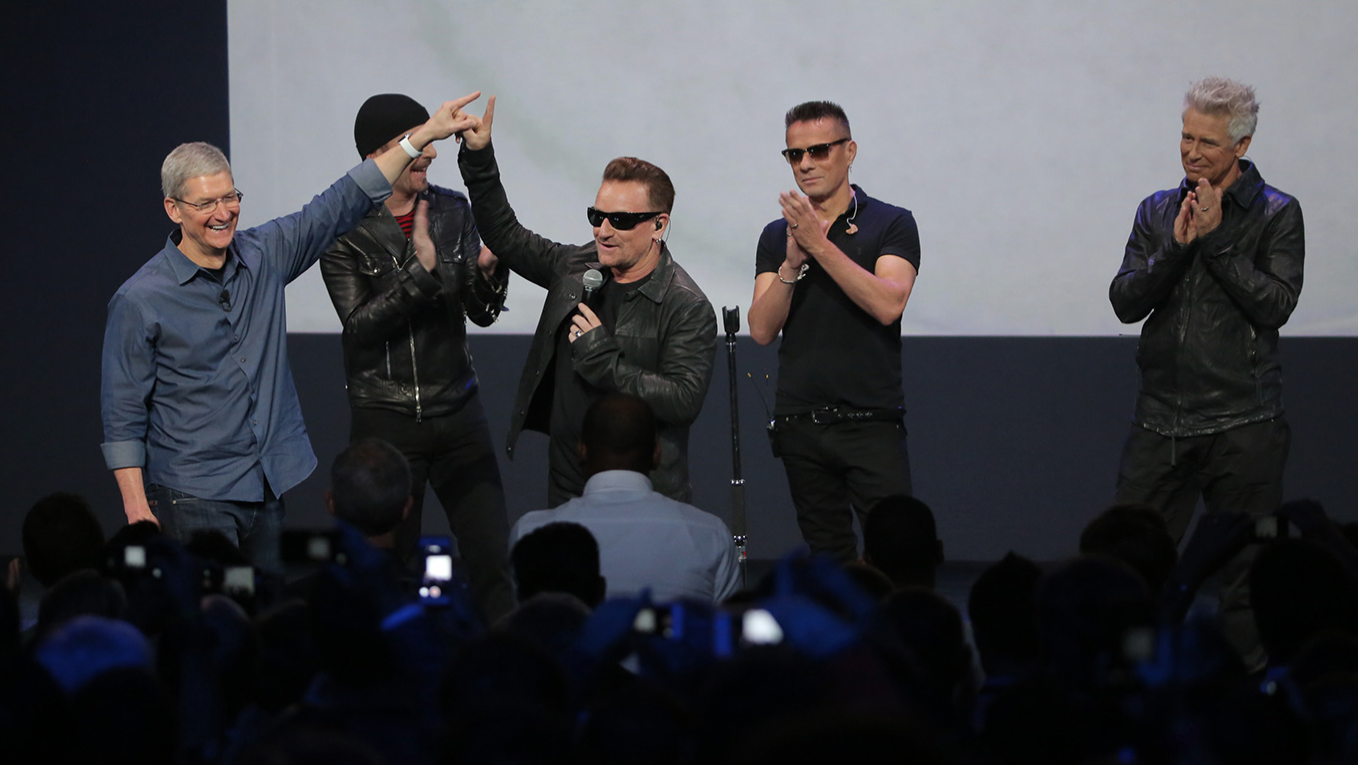
One of the useful things that I did in the past few years was completing a Master’s programme at the London School of Economics and Political Science (LSE). In order for me to obtain the degree certificate and therefore complete the curriculum I had to undertake an extensive and comprehensive research project that would broadly fall within the field I studied, what others, especially in the UK, usually call a dissertation. I decided to explore the public and media cataclysm that exploded after legendary Irish rock group U2 and the biggest brand in the world Apple decided to partner on an exclusive promotional deal for the band’s latest album “Songs of Innocence” in September 2014, realising it for free for over half a billion iTunes customers. I did this not because it was – and unfortunately in many ways still is – highly fashionable to criticise and be against U2, but rather for the exact opposite reason: I was excited about the distribution strategy and couldn’t really understand all the rage and resistance that was being put forward by not only the public but also by social and mainstream media outlets themselves.

I thus found myself analysing a whole lot of content and material deriving from traditional media outlets (newspapers) and social media (tweets) trying to make some sense of both the mainstream narrative as well as the opinions deriving from bottom-up reactions of social media users around the globe, all from a predominantly journalistic perspective. Well, long story short, after having handed in my dissertation last August 2015 – entitled “Songs of Guilt”: When Generosity is to Blame – A Content Analysis of the Press and Social Media Reactions to U2’s “Songs of Innocence” Giveaway on iTunes – I was lucky enough to be considered for external publishing and included within a working paper series called Media@LSE MSc Dissertation Series hosted by LSE’s Department of Media & Communications. I wouldn’t onboard on such a shameless act of self-promotion other than for the fact that the research project is now publicly available and downloadable here and maybe of interest of you, esteemed reader. As one does with pretty much anything new that’s being presented and/or launched nowadays (especially cultural and artistic artefacts), I’m attaching the dissertation’s abstract here below as a preview/snippet/trailer/extract in case you’d still wondering whether this whole explorative journey could be something of your interest (though come on, you could still download the freaking file and just skip to the 2-page results section, isn’t this what we all do anyway? Also, some of the figures are cool.):

“The present research project aimed at delivering an update on networked journalism practices within hybrid media systems’ theorisations. It approached such a theoretical framework, completed by the notions of framing and (inter-media) agenda setting, through the consideration of the case study of tech giant Apple and Irish rock group U2’s promotional deal directed at the giveaway of the band’s latest album “Songs of Innocence” on iTunes, which was notably accompanied by widespread disapproval and a questioning of its means. The study set out to appraise and analyse the reactions of the mainstream and social media to the promotional stunt as hybridised phenomena. A quantitative content analysis of 145 English-speaking press articles (further subdivided into general-interest and specialised music press clusters), as well as of over 1200 tweets, published during the course of the operation, allowed the researcher to assess the narratives of the two dimensions in relation to their interactive development.

The research concluded that the mainstream and social media shared various patterns of content development, such as the predominance of negative tone over positive tone and the reliance on framings relating to both the top-down imposition of “Songs of Innocence” and issues of privacy. The study also found that the two media dimensions employed significant cross-referencing, with social media relying relatively more on the mainstream than vice versa. However, key events in light of the overall public discourse concerning the operation were found originating on social media first and being later taken up by the mainstream. Thus, in general the research could further contribute to the conceptual acceptance of a fluid hybrid media system in which traditional and online media ought not be seen so much as replacing each other, but rather as complementing themselves in a fast-paced supportive symbiosis.”

I obviously had to reformat the whole document in order to comply to the series’ standards and I guess that made for a very long article in its final version, but I’d say that in general it’s pretty enjoyable and worth a read if you’re even remotely into music. It was definitely an interesting experience for me as I got to gain really surprising and fascinating insights into people’s perception of privacy and intimacy in the modern social media age as well as key thinkings surrounding the music industry after its digital disruption that happened over fifteen years ago. If any of these buzz words sound remotely exciting for you, I’d say you wouldn’t waste your time reading the research. If not, no problem, there are a lot of exciting TV series out there to spend your time with. If you’re currently searching for inspiration, give Daredevil, Better Call Saul, Mr Robot or House of Cards a try. All highly addictive. Otherwise, simply stop by Kanye West‘s Twitter timeline and that should keep you busy for a good while too. Either way, I guarantee for quality to be found.

I’d like to thank you sincerely for taking the time to read this and I hope to feel your interest again next time.

AV
Apple&U2_SOI

ALEX REVIEWS MUSIC (ARM): ANDERSON .PAAK – MALIBU | 2016-03-05

I’ve been heavily into hip hop lately, blasting almost literally no other type of music into my ears for over a good couple of months. This is certainly partly due to recent explosive releases, such as Kanye West’s The Life of Pablo or Kendrick Lamar’s untitled unmastered., which surprisingly dropped overnight just 48 hours ago. Though I would say that a greater element justifying my latest musical inclination would definitely be the genre’s ability to get under the listener’s skin while at the same time activating juxtapositional feelings like probably no other genre can do. Certain rap songs simply beautifully succeed in sparking emotions of anger, excitement, sadness, angst, and freedom all within a single fully amalgamated track, which to me is an incredible sensation. While this phenomenon might be partly explained by the actual observable mixture and contamination of different genres found in the musical creations of, for instance, Kanye West, Oddisee, Kendrick Lamar, Rozz Dyliams or even Chance the Rapper, I genuinely feel that there’s something really specific to the genre itself that opens the door for multi-layered, holistic conceptions of sonic outputs originating the close-up series of feelings outlined above. The latest exponent of the like wonderfully succeeding in developing said process to me is Anderson .Paak, 30-year old Los Angeles-brewed rapper who’s just ended up becoming the new Dr. Dre’s protégé after releasing his second major release Malibu early this year. Let me tell you a little more about his recent album. (Interesting fact: the full-stop “.” preceding his last name is totally on purpose, reminding people of the importance of details in arts. I already like him)

Being praised – or rather grilled by too many, I should say… – as the new Kendrick Lamar for his poetic-narrative ability as well as the fruitful combination of soul, R&B and possibly jazzy elements all into one is probably not one of the lightest pressures to cope with, especially in this moment in time after the Compton MC literally took over the world and still has all eyes on him. Add to this the fact that after Dre’s endorsement the hype surrounding him is risking an unprecedented blow up and you’ll immediately get a big fat mountain to climb in the first place. Yet, his hypnotising latest 16-track release Malibu – excerpt: another reason why I love hip hop is heavily extensive tracklists –  thankfully speaks for itself and leaves all cheap talks and gangsta gossip aside.

As already hinted at, Anderson .Paak’s effort nods at a variety of musical influences, ranging from sexy soul atmospheres to edgy unspoken tributes to Motown, all mixed up in modern fresh production and an undisputed talent for hip hop storytelling (dawg’s got some flow there…). Though one should not be deceived by the initial trio of songs “The Bird”, “Heart Don’t Stand a Chance”, and “The Waters”, as albeit totally pleasant and low-profile, one of the LP’s best cuts already sits at number four. “The Season/Carry Me” is a rare beauty encapsulated into a little more than five minutes that perfectly showcases Anderson .Paak’s musical flexibility and lyrical refinement. And its live performance is possibly even more flawless, amplified by Anderson’s past as a drummer and expressive emotionality. Skipping the rather dull “Put Me Thru”, the best cohesive 5-piece segment of the album follow. Lead single “Am I Wrong”, featuring Lamar’s buddy ScHoolboy Q, is to me exactly what modern hip hop should be with great exposure to newer electro/ambient elements, while the edgy and raw “Without You” is for the redeemed angry ones, plus Rapsody’s guest appearance on there is incredibly intense and rad. The album takes a well deserved leaning-back break during “Parking Lot”, in which listeners can get smoothly transported by the sound while imagining of wandering though some sunny corner of L.A. The hypnotic and daring “Lite Weight” might definitely not please everyone, though over time it turns out to be one of my personal favourites, not least thanks to its whirly beat and vocal huge-quiet performance accompanied by Anderson’s smokey voice. The central and arguably best part of the LP comes to a close with latest single “Room in Here” at number ten, a witty and at times sensual track where a catchy piano riff and a master-verse by guest The Game dominate the scene.

After said fortunate and brilliant section the album unfortunately loses itself a little in a bit of self-indulgence and tracklist-filling numbers, where above all interlude “Water Fall” and “Come Down” could have easily stayed off the LP’s final incarnation without doing any harm whatsoever (on the contrary…). However, even with the risk of sounding repetitive, Anderson .Paak unveils his real magic on album’s curtains call “The Dreamer”, in my opinion one of those striking and anthemic songs that only get release once every couple of years. One can’t help but picture themselves on the beachy coast along Santa Monica – or in this very case I should say Malibu – escaping from every day carnal sins embracing the sonic journey that this gem is offering. The straight outta 70s chorusy guitar melody entangled with a contextual feeling of liberating chants and a reverberating choir make up for a song to be remembered for long. It’s somewhat at the same time a sound familiar to warm souls and a sonic architecture that has not been around for a long time, unlike anything else that’s come out in decades. Safe to say in this case that Anderson kept his best as last.

All in all, an L.A. born and bred album that definitely follows major recent hip hop patterns while – and I stress this as very important – simultaneously offering its own original angle shutting down all detractors accusing Anderson of stealing someone else’s authenticity. Moreover, the icing on the delicious cake in this case is the artist’s live ability (I haven’t seen him live yet but his YouTube clips are there to prove this), something that in this day and age of relentless touring and albums’ cross-monetisation through live shows should definitely not be taken for granted and could be the key element in the surviving-of-the-fittest race that’s the music industry. In this sense, Kendrick Lamar is the one to copy.

I’d like to thank you sincerely for taking the time to read this and I hope to feel your interest again next time.

AV

ANDERSON .PAAK

“MALIBU”

2016, Steel Wool/OBE/Art Club

http://www.andersonpaak.com

anderson-paak-malibu-album-cover

ALEX REVIEWS MUSIC (ARM): BLOC PARTY – HYMNS | 2016-02-04

I was actually going to publish a very different blogpost before I suddenly got enlightened by a powerful inspiration to draft down yet another ARM critical appraisal. Nonetheless, the other initial topic I had (and still have) in mind might find its way to the light too, sooner or later, don’t worry too much about that. Also, to be fair, Bloc Party is kind of a big deal. First and foremost for me individually as music fan, but also I’d say for the alternative music scene of the last two decades, really. Therefore, ladies and gentlemen, here I am delivering to the Interweb my personal take on the British indie outfit’s latest release HYMNS, dropped to the globe a bunch of days ago on 29th January 2016.

HYMNS follows quite a turbulent recent past for Bloc Party, who after the not so critically and fanbase acclaimed electro-garage-psychedelic Four in 2012 as well as an almost indefinite hiatus saw two of their four legacy members, bassist Gordon Moakes and drum beast Matt Tong, leave the band after what most people wouldn’t necessarily describe as an amicable departure. This presumably meaning that the contextual environment within which HYMNS was conceived and developed must have by all means been one of the harshest and volatile the band has ever been through. That is, no one is really ready to deny the fact that the Londoner band took a very clear descending path after 2008’s Intimacy, clearly positioning itself along a newly found sonic spectrum that visceral lovers of the first two full length LPs A Weekend in the City and especially indie space game-changing Silent Alarm found slightly difficult to bear to say the least. To be honest, I quite liked Four (softy ballad “Real Talk”, The Police-ian “Day Four” and spiritual “The Healing” are true gems, hands down), while on Intimacy and all other episodic and sporadic releases (see “One More Chance”, “The Nextwave Sessions” among others) I tend to agree with a vast majority of the public opinion I’ve come across over the years in finding them just too far away from where they truly shine.

With that being said, HYMNS finds the English indie masters taking yet another path across their musical and compositional journey. Gordon and Matt have in the meantime been replaced by almost-famous but pretty unknown Justin Harris (bass and keys) and Louise Bartle (drums), which is no little internal earthquake to begin with. On top of that, founding members Kele Okereke (lead singer and rhythm guitars) and Russell Lissack (guitars) kept themselves quite busy in between releasing and producing music on multiple fronts. This possibly all made for a very different set-up and mood approaching writing for the latest LP, and in many ways there indeed are different vibes and feels coming out of HYMNS. Overall, the album slows down quite drastically Bloc Party’s fast and sped up paces which were to be found, with different intensities and pronunciations, on all other punkier albums. This might partly have to do with Matt Tong’s departure and consequent substitution by Louise behind behind the drum set, something that lies along the lines of having to replace one of modern time’s most gifted and talented alternative-rock drummers, definitely not the easiest task ever. Such particular featuring, defining the 11-track LP in almost all its entirety, is however best observable – or in this case I’d rather say listenable – on songs like “Fortress”, “Exes” and curtain call “Living Lux”, which in fact get quite close to representing the worst the album has to offer. At the other end of this particular rhythm spectrum lie lead single and album opener “The Love Within” as well as “My True Name”, the latter being a song to me falls among the top three best tunes off the record, incidentally showing how the four-piece outfit still feels very much at ease when the BPMs tend to be rather high.

Furthermore, aside from the rather anonymous “So Real” (though that little edgy guitar lick is pretty rad and so catchy…) and “Into the Earth” – it must’ve been a B-side from one of their previous efforts, right? – the absolute and clear standouts off HYMNS are the magnetic and skin-wrapping “Different Drugs”, a true masterpiece, as well as third single and radio-friendly “Virtue“, reflecting a healthy and organic mixture of all those elements that made Bloc Party conquer the alternative scene in the last 15 years. And that’s more or less about it. I explicitly forgot to mention second on tracklist “Only He Can Heal Me” and second (no pun intended) single “The Good News”, simply because the still leave me quite indifferent to their effects even after repetitive listens, although the former one seems to possess a weird and perverse catchiness that might grown on me with time, to which though I’m not able to express anything more at the moment anyway.

Remember, I said it at the beginning, Bloc Party are a super big thing for me and one of my favourite bands ever. I really want to like this album, I truly do. In general, I believe I’m on the right path to getting there, as the initial impact has been good though possibly not quite Silent Alarm good. And while I tend to say this for very very few bands, Bloc Party’s case is definitely one of those where the pureness and genius of the debut effort have never been replicated after. I’d really like to go back to that kind of band, for once. Maybe, considering the rocky and fairly dark past the band has had, HYMNS was a necessary album to recalibrate themselves and reinvent a new beginning. Let’s give them this (one more) chance. Considering the above, if that’s the deal they’re making us, I’m buying it this time. I’m in. I have to.

I’d like to thank you sincerely for taking the time to read this and I hope to feel your interest again next time.

AV

BLOC PARTY

“HYMNS”

2016, BMG RIGHTS

http://blocparty.com

Bloc Party_Hymns

ALEX REVIEWS MUSIC (ARM): TAPE – BODIES | 2015-12-23

Every Time I Die (ETID) and The Damned Things‘ frontman Keith Buckley seems to have been pretty busy lately in terms of artistic outputs. After last year’s From Parts Unknown successful and critically-acclaimed release with ETID and a relentless run of worldwide tour dates in support of it, earlier on this year the Buffalo NY-native also announced his literary debut with semi-autobiographical novel “Scale” and recently dropped a rather surprising synth-wave influenced 5-track EP under the alias TAPE. While some well-deserved time and words will probably be spent in the future on this website with regard to “Scale” – which, for instance, is in the process of being read by yours sincerely and very recently saw the addition of a limited edition audiobook on vinyl read by Keith himself and scored by Fall Out Boy’s Joe Trohman and Josh Newton of Shiner and The Damned Things – it’s TAPE’s “Bodies” EP that represents the one and only focus of this new ARM blogpost, back after a long-awaited inspirational break.

“Bodies” is essentially the result of Keith teaming up with friend-producer Joshua Hurley while exploring foreign electronic territories and musical landscapes substantially cast away from his usual comfort zone, which places itself within a hardcore-punk-metal spectrum, broadly speaking. The EP, as hinted before composed of 5 tracks that taken together nearly reach 20 minutes of length, was produced by longtime acquaintance and Glassjaw frontman Daryl Palumbo as well as TJ Penzone (ex-Men, Women & Children). “Bodies” was released digitally on 6th November and as far as I’m aware is retrievable pretty much everywhere among the usual suspect music stores and services, though an entangling mystery surrounds TAPE’s desert SoundCloud profile. In fact, the synth-driven side project doesn’t necessarily seem to be willing to disclose much about themselves and its background, as information on the Interweb really runs low on that frequencies…

Anyways, enough for the introduction, the editorial shift now spins towards the musical output as such, which to me could be summarised with a bucketful of adjectives sounding roughly among the lines of mesmerising, pounding, fleeting and gelatinous. I’ll try to elaborate a little these judgements, though given the fact that I don’t really consider myself someone worth spreading elegant commentary on electronic music in general I urge you to not take these words literally and especially to let them attract meaning from alternative standpoints. Alternative used here in the sense of not being generated from within the context, lexicon and specific terminology of such music genre. Yet what I can surely say instead is that I often find myself relating to Keith’s music and lyrics so intensely and in so many different ways that I’d definitely rate myself eligible to express some thoughts about this very release, too. So there you go.

The EP kicks off with what might also be one of the highlights of the release, the wavy and cyclic “Synthetic” (the clue is in the name, I guess…). The track features vocal samples from Keith (and someone else?) that looking back and after repetitive listens begin to take shape as integral part of the song’s structure and almost even end up being catchy (Anything for you and Shine a light / In your eyes above all). The opening tune is followed by “Entry Request / Exit Strategy”, which despite its cool title fails to truly emerge and take a life on its own sticking too much to gloomy and darky undertones driven by hammering kicks. Next on the tracklist is “Nein” (German for “no”), easily the most melodic and lyrics-heavy track of all. However, its static dynamic and the fact of having the vocals too much in the background tend to soften up something that could’ve probably been leveraged a little more. “Nein” also introduces the listener to the latter half of the 5-track EP, probably the better one exposing “Monitor” and its unexpected melodic twists accompanied by Oriental (?) influences as the best tune of the release, despite being the shortest of all. The collection of songs is then wrapped up by the grand finale of “Guest Appearance”, without doubt the synth-heaviest and most layered as well as elaborated effort off the EP. Particularly convincing are the the e-drums beat as well as, once again, the layering vocals that in this case, as opposed to “Nein”, really seem to make sense leaving more room and prominency to the driving instrumental wall of sound.

When Keith announced this side-project and the release of “Bodies” it all truly came as a surprise to me, quickly followed by feelings of confusion and suspicion. Yet, after having given this EP a chance and actually even liking it pretty much, I gotta say it would’ve been a shame had it not been released. The overall judgement is thus primarily a positive one and it also seems to resonate elsewhere. Again, this is not the music I normally listen to and I really don’t feel comfortable describing its components and technical features while at the same time pretending to be taken as an expert (actually, I never do, but in this case less than ever before). Nonetheless, I must say I felt the need to let out some thoughts surrounding this release, possibly considering this some kind of experiment for me, departing from the usual rock and roll conceptional contexts I normally feel more comfortable in. Exactly the same thing Keith Buckley did with “Bodies”, really.

I’d like to thank you sincerely for taking the time to read this and I hope to feel your interest again next time. And happy holidays this time around.

AV

TAPE

“BODIES”

2015, ELECTRIC DENIM

https://www.facebook.com/TapeAudio1

Tape_Bodies

WHERE THE EAGLES FLY | 2015-11-28

On Friday 13th November 2015 at around 1pm UK time I was about to board on a transatlantic flight from London’s Heathrow airport with destination San Francisco. I was going to embark on a week-long programme of trainings and formative sessions at my video technology company’s HQs in Silicon Valley’s Santa Clara, spending the preceding weekend in San Fran in a fully touristic modus with a bunch of other colleagues. Little I knew about what kind of news were expecting us that same day when landing and turning our devices on again at about 3pm West coast local time in California. The rest is an unfortunate, horrendous and senseless history.

This is without a doubt the earliest I would’ve been able to take some time and formulate some solid and connected thoughts about what happened across Paris that night. I’m saying this not only because of the overwhelming intensity of the brutality that manifested itself against humanity that evening, but also considering a very personal legacy to that city – not mentioning the many acquaintances I have who (still safely) reside there – and the fact that I was just there only three weeks ago. Precisely around the affected areas.

The only thing I feel I’m able and allowed to express in regard to this are some words about Eagles of Death Metal (EODM)’s involvement in what was the most intense and ruthless of all the attacks that night. Unfortunately, everyone must be sadly familiar with them at this point in time, as they were playing on stage at the Bataclan when gunmen entered the venue and opened fire on the crowd, leaving at least 90 dead. This past week the US rock band spoke publicly for the first time ever after the horrific event in a heart-wrecking interview with VICE.

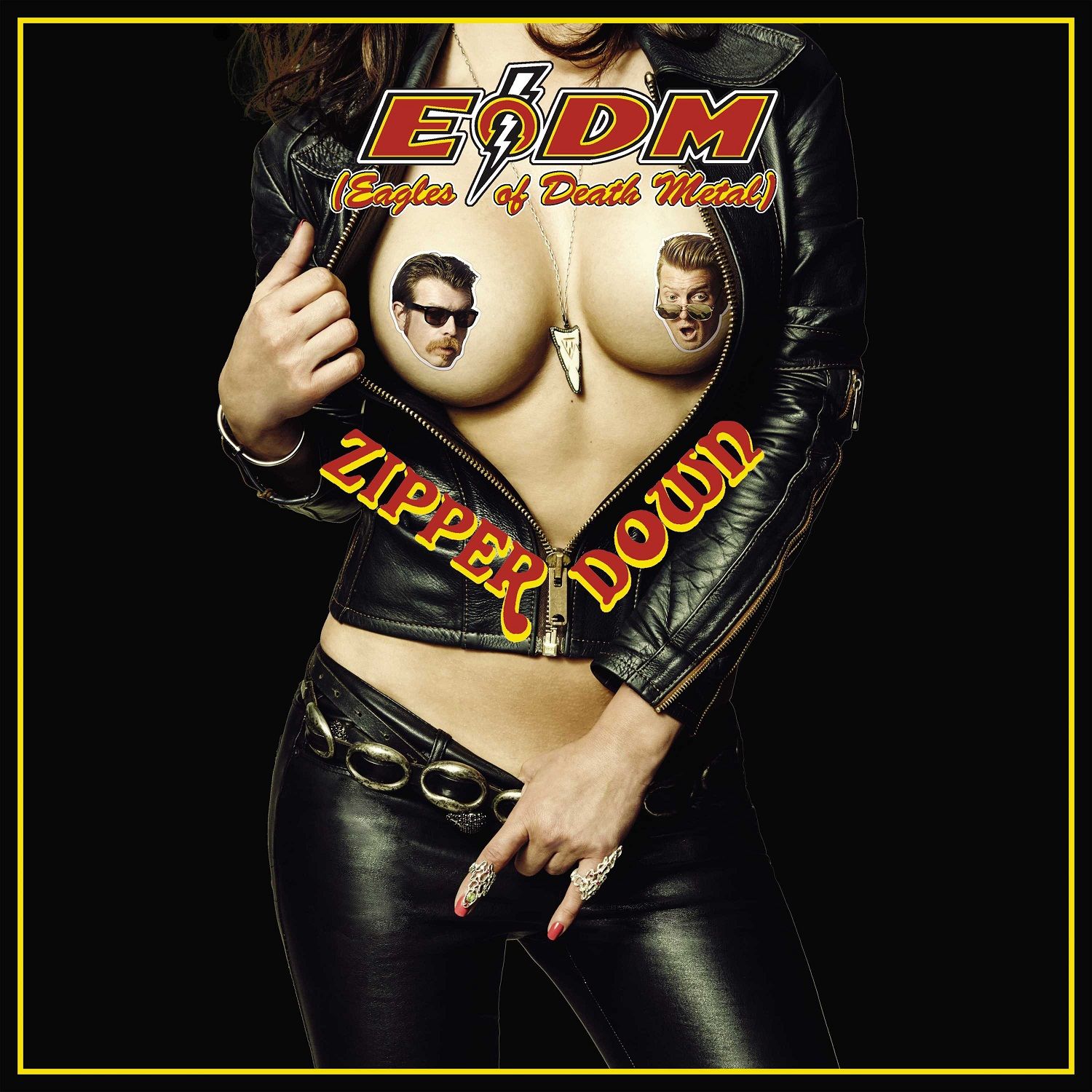
I firmly believe that there is literally nothing to add to such an emotional, deep and almost unreal account of a life-changing evening. Yet, I feel that there’s an implicit angle to this whole constellation that it’s worth elaborating a little more. By this I mean the almost surreal, paradoxical combination of elements that, for that specific evening, foresaw that one of the most fun, humorous and freaky bands out there would be involved in such a tangible and dark tragedy. Yes, because ever since their beginning, Queens of The Stone Age’s Josh Homme’s side project founded in 1998 with frontman Jesse Hughes has always been leveraging hilarious music videos with cameos by among others Jack Black and Dave Grohl, releasing over-the-top album artworks (cf. below) and proactively joking about everything that takes itself too seriously in the rock and roll space, not least considering their band name. That is, because EODM, contrary to what 99% of scatterbrained and partly unprofessional mass media outlets still like to report, are by no means a metal band, let alone a death metal one. And never was. Wikipedia simply defines them as a rock band (dear journos around the globe: a quick double-check on damn Wikipedia would’ve been enough…). I would define them as a solid, catchy and straightforward rock and roll outfit, nothing more sophisticated than that. Now, bearing this sort of background and associations in mind, the bittersweet juxtaposition of watching Jesse and Josh, as well as the other members of the band, speak movingly with a broken voice about what they experienced that night just leaves me speechless. It’s like the quintessential representation of the absurdity and nonsense of what happened.

There’s one last thing that came out of the interview that EODM did with VICE which I’d like to mention and in some way endorse (they start mentioning this at 21:10 min into the video). As a wonderful action of solidarity and unity, Jesse and Josh pledged artists and musicians around the world to cover and record their song “I Love You All the Time” off their latest album “Zipper Down“. All publishing and royalties earnings from all those covers will then be fully donated by EODM (and hopefully also all major music distributors such as Apple, Amazon, Spotify, Tidal…) to everyone directly affected by the attacks on 13th November. Thus, I humbly pledge artists around the world to take part in this and spread the word as much as possible contributing to the reconstruction of a shared feeling of love and connection once more driven by that supernatural force that is music.

I’d like to thank you sincerely for taking the time to read this and I hope to feel your interest again next time.

AV

P.s.: Click here for more information on how to help the French Red Cross and the Sweet Stuff Foundation do the best they can following the attacks.

—- IMPORTANT UPDATE

EODM and the Sweet Stuff Foundation have set up an official website for their “Play it Forward” Campaign. The website enables musicians to upload their own cover of “I Love You All the Time”, hosts all covers recorder by other artists, and displays a heartfelt letter by the EODM members regarding the initiative and the reasons behind it. Visit the website here: http://playitforwardeodm.com

EODM_Zipper Down

ALEX REVIEWS MUSIC (ARM): JOHN NOLAN – SAD, STRANGE, BEAUTIFUL DREAM | 2015-07-25

A bunch of months ago I wrote a little something about Taking Back Sunday lead guitarist John Nolan‘s new solo album project in collaboration with PledgeMusic and about how the whole thing really got me excited and all. Well, as you all know time goes by really fast and we’ve eventually come to the point when John officially released his second full-length album entitled Sad, Strange, Beautiful Dream through a jointed partnership between the aforementioned crowdsourcing music platform and Collective Confusion Records, who’s primarily taking care of the physical copies of the release. Besides the amount of cool stuff worth a mention related to the chosen promotional strategy, such as the variety of pre-ordering packages or the fact that 10% of all the money collected through the album’s sale will be donated to a pediatric facility in Memphis, TN (St. Jude Children’s Research Hospital), I’ve now taken some time to give the full record, released digitally yesterday 24th July, a proper listen and I feel like I’ve got something to say about it. Also, it kinda makes sense to follow up on the matter on a more technical-musical note, doesn’t it?

John already unveiled a number of tracks over the course of the pre-release period, such as album opener and teenage era-teller “American Nightclub 1999”, the brilliantly titled – but possibly less convincing arrangement – “Drinking Your Way to Confidence” as well as existential-ballad “How Much”, although this latter one went through a substantive sound-polishing if compared to the early released version and arguably became the absolute best track on the record, mixing terrific melodic songwriting with a perfectly raw-edgy instrumentation delivering an immersive sappy feeling (How much can we control? / I don’t know / As much as we can). A little less than a month ago John then released the mastered version of the sparkling and lyrically-terrifying “Street Robbery Blues”, undoubtedly the most energetic and fast tune on the whole album entailing a very interesting uplifting-dark juxtaposition between the lyrics and the music itself. Yet, with the exception made of “How Much”, the best material on the album was not revealed until its full release.

“War is Peace” leads the list of never-heard-before songs on the album and immediately feels like it could have been born out of a raw idea for a Taking Back Sunday song, presenting a properly distorted rock band-modus instrumental base alongside a galloping tempo. The track is followed by the folky-acoustic “Next to You (In New Orleans)”, which probably depicts the lowest point of the record as it results incapable of really taking off in its own terms. The provisional down-status is suddenly mightily overcome with a consecutive couple of triumphant songs that really stand out on the whole. “I’ll Be Home Soon” is a piano-led ballad that truly gets under the listener’s skin and also delivers a quite catchy chorus, something that’s absolutely not to be taken for granted when it comes to slowed down ballads: well done John. It follows the album’s title track, which in some ways does sound a little out of context with its abundance of synth-fillings and indie-pop dyeing but which, after a few listens, already begins to make sense again, not least because it does really encompass traces of sadness, strangeness and beauty in a dreamy atmosphere. After a re-interpretation of 2012 track “C’est Le Fin Du Monde”, originally released on a split 7″ with indie rock band Mansions and the sonic perfection of the previously mentioned “How Much”, John Nolan’s second solo album comes to a close with the brilliant “I Will Be Released”, a sing-along choir anthem curiously and romantically written with his wife Camille.

In a way it’s truly funny and misleading to read on his artist’s description on PledgeMusic that he’s being labelled as folk-acoustic musician, because Sad, Strange, Beautiful Dream seems to confirm he’s actually not, and even at the times when he probably is, the record feels the most vulnerable (cf. “Next to You”). Given the quality of this last effort, he should feel no shame at all to confidently present himself as a modern alternative-rock act, not least given the mighty studio collaborations he took advantage of during the recording process. Yet, tags and label don’t really matter at all as soon as one realises where musical quality lies and that it shouldn’t be constrained by arbitrary boundaries at all. This is precisely what John Nolan has apparently come to realise with this record: with precious songwriting, instrumental rawness, lyrical honesty, and a little experimentation he’s delivered his best musical outcome to date.

I’d like to thank you sincerely for taking the time to read this and I hope to feel your interest again next time.

AV
JOHN NOLAN

“SAD, STRANGE, BEAUTIFUL DREAM”

2015, COLLECTIVE CONFUSION RECORDS

www.pledgemusic.com/projects/johnnolan

JOHN-NOLAN

(MY NEED FOR) TAKING BACK FRIDAY & SUNDAY | 2015-05-27

Don’t fear another straight and plain ARM blogpost. I think I’ve done enough of them in the past months. I mean, just look at the last blogposts (although I can’t guarantee I’ll be able to tackle my temptations to just do another one considering the vast amount of cool releases happening in this pre-summerish period). This one certainly still deals with the magic of music, the mother of all arts, yet in a slightly unconventional and unlabelled form. Essentially, it tries to narrate and report what it felt like to watch my all time favorite rock and roll outfit, named Taking Back Sunday, two times in less than three days over the past weekend. Yes, that is all true, and kind of a great big deal for me, to be honest. Friday 22nd May I got to see them at tiny and intimate Rhythm Factory around Whitechapel, London, while the following Sunday I caught them from front row at alternative-rock/punk Slam Dunk Festival South in Hatfield, about half an hour train ride from central London. Two very different yet somehow connected and complementing experiences, which reminded me once again why this is the band I couldn’t really live without.

Having had seen them three times before this shocking one-two combo in three days, I guess I was at least a little bit pre-warned of what it would feel like having them standing a few metres away from me playing those very tunes that mean so freaking much to myself. Still, every single time their show somehow takes a new form and it transforms itself in a sort of unprecedented experience, at least as far as I’m concerned. Their gig at the Rhythm Factory, supported by new UK emo sensation Moose Blood, was literally surreal, not only because of the venue’s 200–300 people capacity (which of course automatically turns the show’s tangibility of an usual arena-band into something unlike all others), but also because of the true collegial atmosphere and the feelings of complicity that one could breathe by just standing somewhere in front of the narrow-mini stage. Also, the temperature was almost (literally and figuratively) too hot to be true, even before Taking Back Sunday would take the stage everyone was already soaked, so imagine the intensity as soon as they kicked off with latest album Happiness Is’s opener “Flicker, Fade”. Litres, litres, and litres of sweat alongside soaring singing and screaming were released into the air that night, guaranteed. Come on, just take a quick look at the picture below I took on-the-go in between two songs (it was probably before a mighty rendition of “A Decade Under the Influence” and right after majestically wrapping up old timer “Timberwolves at New Jersey”), it’s as if it’s sweating itself, isn’t it? You can almost see drops of rock and roll sweat trickling out of the frame. I assume this explanation excuses me for the poor graphical quality.

I reported Taking Back Sunday’s setlist of their Friday show at Rhythm Factory further below, adding up tunes to a little more than an hour of spectacular entertainment. Personal highlights were with no doubt never-heard-live-before “How I Met Your Mother”, Happiness Is’s b-side and one of their hardest but still somehow most melodic songs, “Better Homes and Gardens”, an intense moment for everyone attending and arguably among the standout tracks off of their latest effort, alongside a live-welcome back of “Spin”, at least with regard to UK soil according to frontman Adam Lazzara. The setlist was more or less replicated at their Sunday show at Slam Dunk South, with the only exception of the omission of the latter mentioned song, probably for time reasons. The context and scenarios were quite different on that occasion, and despite the fact I was able to get up basically until the first row, the whole thing looked indeed much more like a bigger occasion, not least because they were playing the main stage at an outdoor festival. Taking Back Sunday got the set slot between Don Broco, who played just before them, and main headliners You Me At Six, and therefore, quite understandably, the crowd wasn’t there just for the NY emo veterans, as it was the case for me, for instance. Thus, I felt a little more isolated among teens waiting in the vicinity of the front row for You Me At Six for the whole day, yet that didn’t stop me from losing my mind once again. Bearing in mind the sound distortion one gets when at the first row at a big open air festival, the band sounded and looked amazing. Particular mention should be made, in this case, for dance number “Stood a Chance”, personal favorite “Error: Operator” and, obviously, closing gems “Cute Without the ‘E’ (Cut from the Team)” and “MakeDamnSure”, which got the major portion of the crowd go crazy, myself included.

All in all, this past one was certainly one of the most intense weekends I’ve ever had. I’m so glad I was able to make the most out of Taking Back Sunday’s most recent visit to the country I’m currently staying in. I’d do this again a million times, and probably will again in the future, would the possibility arise. These experiences enrich me enormously. And deliver me something priceless, which it’s not so much the fact that I got a guitar pick from Eddie Reyes or that I had close encounters with singer Adam Lazzara including a half-singing into his mic, but rather the confirmation that the connection and emotional intensity that this band is capable of catalysing in me is unlike anything else. I guess I can’t do nothing but thank them for what they do.

Taking Back Sunday’s setlist at Rhythm Factory, London (22.05.2015):

  1. Flicker, Fade
  2. What’s It Feel Like to Be a Ghost?
  3. Number Five with a Bullet
  4. How I Met Your Mother
  5. Liar (It Takes One to Know One)
  6. Stood a Chance
  7. Timberwolves at New Jersey
  8. A Decade Under the Influence
  9. Faith (When I Let You Down)
  10. You’re So Last Summer
  11. Better Homes and Gardens
  12. Error: Operator
  13. You Know How I Do
  14. Spin
  15. Cute Without the ‘E’ (Cut from the Team)
  16. MakeDamnSure

I’d like to thank you sincerely for taking the time to read this and I hope to feel your interest again next time.

AV

TBS_Rhythm Factory

ALEX REVIEWS MUSIC (ARM): ALABAMA SHAKES – SOUND & COLOR | 2015-05-08

Alright, alright. I know. I should be rattling on about what was long praised to be the most uncertain UK general election in a century to date. In fact, it’s been a quite controversial last night here in Britain. According to mass logic, at this point I should be writing up the always dangerous morning-after reflections on what, personally, has been an extreme and quite dramatic electoral delusion. Instead, against all odds, I’m opting for yet another feature piece for the critically acclaimed music review section ARM. Like it or not, I don’t really think this whole thing is meant to be hosting political reflections. At least not yet. Also, not only have I ruled out a socio-political essay on the current status quo, but I’m sure my musical choice will certainly leave some folks disappointed, bearing in mind the present release-intense period (with new music being revealed by Blur, Mumford & Sons, Brandon Flowers, among others)…

This time I’ve taken under close scrutiny newest Alabama Shakes‘ “Sound & Color”, released shortly ago on 21st April via Merge Records. It’s the US rock band’s second studio effort, following highly praised groundbreaking first LP “Boys & Girls” in 2012, which literally transformed the Alabama-native quintet into global mainstream talkabouts. That is to say, expectations were quite high for this second one, not least because of the considerable amount of time taken to work on it, considering present-day digital music industry rhythms and fast-food releases. Despite these external pressures, Alabama Shakes didn’t fail to meet such expectations.

The album as a whole is positively and overwhelmingly dominated by frontwoman, lead vocalist and rhythm guitarist Brittany Howard’s vocal performances, who’s able to fully exploit her unlimited talent to deliver chills on fine tracks such as lead-single “Don’t Wanna Fight” and heartbreaking “Gimme All Your Love”. The 12-track LP immediately establishes itself smoothly with title-track opener, that leads the listener along a rising climax that gets abruptly stopped by the emergence of catchy “Don’t Wanna Fight” as second in song listing. After a softened laying back offered by “Dunes”, the album achieves poppy and most-likely radio-friendly “Future People” as fourth one on the list, before showing some of its artistic best with aforementioned “Gimme All Your Love”. After the first very intense 20 minutes, “Sound & Color” loses itself slightly in its central portion with some melodic and harmonical repetition in following songs “This Feeling” and “Guess Who”, before unveiling some real excitement and fun again with speedy track number 8 “The Greatest”.

The LP, which to me really sounds like a natural and unforced continuation of debut “Boys & Girls”, quiets down a bit for its final segment, where mellow and sappy “Miss You”, alongside mighty instrumental “Gemini”, see Howard at her vocal top once again. Captivating and gospel-reminiscent “Over My Head” brings the album to its conclusion leaving a deep feeling of satisfaction to the listener. Alabama Shakes seems to have not lost their success formula with the passing of time (and, some would say, with the danger of notoriety), delivering a solid, mature, and evolved second effort building upon their fabulous debut. Before finishing up, I’d like to make a special last mention of the sober album’s artwork (see attached below), which not only appears to follow a late trend of essentialism and minimalism within music industry’s visual dimension, but that also truly suggests that the best is to be found in the songs. Nothing has ever been more true, in this occasion.

I’d like to thank you sincerely for taking the time to read this and I hope to feel your interest again next time.

AV

ALABAMA SHAKES

“SOUND & COLOR”

2015, ROUGH TRADE

www.alabamashakes.com

alabama-shakes-sound-and-color