We have no business debuting yet another topical category eleven years into EMS’s existence—especially considering how little TDL we’ve been giving our good ‘ole ARM series as of late—but we might be onto something here. Reality and Dreams (R&D in short) is a pilot content initiative we’re dishing out today to highlight EMS projects of all sorts stemming from the world of research and academia. We swear the astronomy plug via To the Stars* from a few weeks back wasn’t planned with this in mind. Prisoners of the moment?
We recently had the chance to partake in Bradley University‘s inaugural Steiner Sports Communication Research Conference. The good people over there, captained by one Tony Adams, threw together a one-day online student-focused academic gathering dedicated to traditional and creative scholarship in sports communication. We had the chance to present an early-stage project on how rules and bureaucracy are actually a good thing (!), and how the sports domain might be our last-ditched effort to restore democracy and civic participation. Check out the pre-recorded presentation below:
Meanwhile, this coming weekend (November 13-15, 2026) the excellent Hip-Hop Studies department at Howard University’s College of Arts and Sciences is hosting the 4th Annual Hip Hop Studies Conference on their home turf. Billed Respect the Technique: Last Night a DJ Saved my Life, the Washington, D.C. event centers disc-jockeying as a foundational force in Hip Hop culture, highlighting the artistry, innovation, and cultural impact of DJs and producers across generations and global contexts. From the art form’s origins to the digital age, DJs and producers have shaped sound, community, and cultural movements in profound ways—this conference brings together three days of panels, interactive workshops, performances, film screenings, and networking all around that. Take a gander at the full impressive program here.
We’re on Sunday, November 15 at 10:30am (session poster below), blabbering about “The Birth of a Word Jockey? A Critical Appraisal of Lupe Fiasco’s TextFX AI-Tool Experiment”. In other words, discussing a so-called walkthrough method of the Chicago MC‘s TextFX project in partnership with Google. Pull up if you can!
Before we peace out, be sure to peep this recent journal article we published in the mighty International Journal of Sport Communication—dabbling in similar topics as the video presentation above. Hit us up at everythingmustswing@gmail.com if you’re interested in a full copy. End of plugs.
We’d like to thank you sincerely for taking the time to read this and we hope to feel your interest again next time.
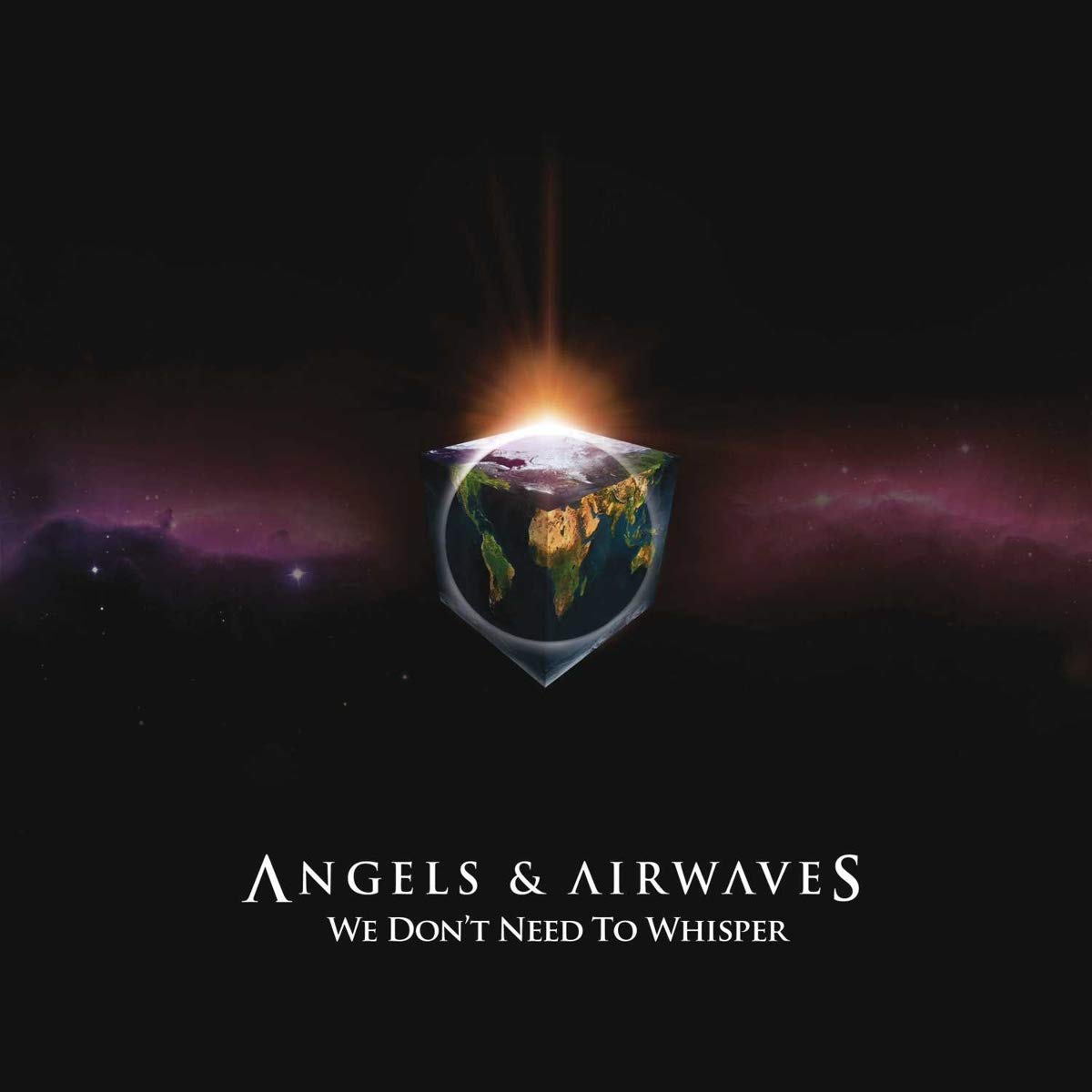
We all owe Tom DeLonge an apology. Don’t look now, but it’s been twenty full years since the 50-year old American musician and songwriter’s emphatic debut with Angels & Airwaves (AVA), We Don’t Need To Whisper. Granted, we’re not quite at the 30-year mark he’d set for himself as part of his efforts to “change the face of rock and roll” through the greatest musical revolution of our generation (nor at the more ambitious 24-year timeline he later upgraded), but two decades after the inaugural album by the self-proclaimed transmedia project about humanity feels like an opportune time for a long overdue midterm review.
Back to the apology though. Remember when Tom started shouting about UFOs during his incredibly successful blink-182 first act era and no one really took him seriously? Recall later, when the U.S. Navy confirmed the mysterious objects appearing in the footage DeLonge‘s tech start up To the Stars*helped get released via the New York Times were, in fact, UFOs? People weren’t exactly having a last laugh then. And yet, the biggest vindication the Poway, CA-native can lay claim on is arguably how much of a sea change moment AVA‘s formation and subsequent career was for, well, pretty much how the whole entire music industry operates nowadays.
Gestated right around the time when blink-182 went on their first hiatus in 2005, most initially assumed that Angels & Airwaves were just another side pet project to blow off steam from the trio’s contentious break up—sitting alongside his 2002 one-album-stint with Box Car Racer (he did after all re-recruit longtime childhood friend David Kennedy from that group to AVA). However, while the latter project had largely dabbled in similar, if rawer, sounds and aesthetics to early 2000s blink-182, AVA were a more flagrant, decisive, and drastic departure from the jump. Right out of the gate, the band’s announcement felt larger-than-life in scope, more serious and mature in lyrical focus, and tapping into a whole entire new side of DeLonge’s musical affinities, including arena rock, post-punk, and new wave.
If people thought DeLonge could come off pompous and irreverent while in blink, they must have flat out not been able to recognize the then-just-turned-thirty gentleman. To say that he oozed braggadocios confidence would be an understatement—far from letting a multimedia concept band quietly announce itself to the world, Tom kept heralding it with the kind of puffy hyperbole that was almost asking for people to take a great deal of pleasure in knocking it down. Incidentally, many wasted little time before doing so once their stellar debut album was released in the year of our Lord 2006. Shame they couldn’t quite understand how big of a watershed moment that represented for (alternative) music writ large.
First, there was the subdued move to independence and DIY. In spite of its huge and expansive sound, We Don’t Need to Whisper was almost entirely written, recorded, and produced at Tom’s makeshift San Diego home studio at the time, with just Atom Willard’s drums getting taped at Foo Fighters’ San Fernando Valley Studio 606 (as the final tracked instrument—another counterintuitive and innovative studio strategy flipping the typical recording assembly chain of starting with percussions). Yes, everyone and their mom self-records and self-produces in their bedroom nowadays, but ditching a glossy label-sponsored studio for a residential dwelling in 2004-2005 felt like a pretty radical move. Especially from a global superstar who had sold millions of records with his previous pop-punk band. Not the kind of equipment and set up downgrade you’d see at the order of the day back then.
As later revealed in the detailed ‘making-of’ chronicles of their debut LP as part of their 2008 documentary film Start the Machine, AVA was also ahead of the curve with respect to cybersecurity. Yup, firewalls, social engineering, ransomware, and all that jazz. As every average Joe is now forced to take an anti-phishing course every six months as part of their company’s security compliance, twenty years ago Tom and the band doubled as an inadvertent canary in the coalmine for online leaking risks and vulnerabilities. As told by their oral histories in the aforementioned documentary, while in the latter stages of completing We Don’t Need to Whisper, a “fan” managed to break into Tom’s email inbox, seeing fit to leak four songs from the project to the internet. Apparently, the first one they “chose” was what ended up being AVA’s lead promotional single, and their biggest tune to date: “The Adventure“. The group had unintentionally crowdsourced their marketing strategy to pirated intelligence.
There’s also the great deal of musical and iconographic influence waged by AVA across the spectrum at the time. Without a billboard splash like that of Tom and co., filled with interstellar imagery and grown up thematic foci, chances are we would have gotten no Black Parade, no Beautiful Lie, no Louder Now. At least not in the immaculate and timeless veneer those projects continue to carry. What’s for sure is that more than half of the so-called third wave emo and alternative rock bands wouldn’t have known where to start in terms of aesthetics and visual inspiration. Did we mention that through his apparel brands Atticus Clothing and Macbeth Footwear Tom also provided the bona fide wardrobe of record to the Scene?
Y’all see the point? There is no Golf Wang and Homer without Tom DeLonge. Tyler and Frank would probably be the first to concede this.
Here’s the kicker though. The largest business impact of Tom DeLonge’s visionary inventiveness might have actually happened behind the scenes—unbeknownst to most regular fans. Well you see, as part of Angels & Airwaves ambitious transmedia corollary—counting north of twenty works of art to date, including feature full length movies, comic books, novels, and a wealth of merchandising—he also built fan club community platform Modlife a few years after the band’s founding. Modlife was a prescient tool that went on to be used by Pearl Jam, Kanye West, Nine Inch Nails, The Offspring, The White Stripes and Taking Back Sunday amongst dozens and dozens of other artists. Not exactly fringe acts in the modern musical zeitgeist.
Sure, we’ll be first to admit that the jury might still be out on whether AVA did end up becoming the kind of “second coming of Jesus Christ” Tom had hailed it to be two decades ago. Much more probable is the attainment of his self-imposed goal of starting a creative revolution with the band. Today, AVA is completed by guitarist David Kennedy, bassist Matt Rubano (of former TBS and many others’ fame) as well as drums prodigy Ilan Rubin, and sits at the heart of a multimedia I-empire, having released six total studio albums—their latest being 2021’s excellent Lifeforms. Check out our full tier list here.
Depending on how exactly one counts, Tom and AVA still have either four or ten years to fully accomplish their revolutionary vision. As of October 2022, he reunited with blink-182 one more time and appears busy having fun on the road with the pop-punk giants, with yet another world tour slated for next year. With AVA on some kind of a break for the foreseeable future, we’d be remiss if we didn’t catch you up on all things science, supernatural, and government intelligence Mr DeLonge has been up to in the last decade. Did we mention he’s been having a bit of an influence lately?
Staying true to his lifelong convictions, since founding the so-called To The Stars Academy of Arts & Science (TTSA) in 2017, Tom has continued to build an unusual-yet-stupendous hybrid of UFO advocacy and transmedia entertainment. Bringing together former government, intelligence, and aerospace personnel with creative talent, the venture’s original mission sought to merge scientific inquiry with storytelling. Its current catalogue operates like a shared intellectual-property universe blending facts with fiction: Sekret Machines spans both realms in the form of lengthy books; Poet Anderson expanded into graphic novels and animation; and joints such as Strange Times, Trinity, and Time Rider keep the blend of paranormal lore, science fiction, and purported real-world mysteries.
As mentioned previously, TTSA also pretty much singlehandedly helped propel unidentified aerial phenomena (UAP) into mainstream news coverage. In December 2017, a TTSA-informed landmark New York Timesinvestigation publicized three U.S. Navy videos alongside revelations about the Pentagon’s Advanced Aerospace Threat Identification Program. Frequently described as classified UFO footage, the videos were subsequently and reluctantly confirmed as genuine Navy recordings. The Department of Defense formally authorized their release in April 2020, however, explicitly stating that the phenomena remained unidentified—not necessarily that they were extraterrestrial in nature. TTSA also secured a 2019 research agreement with the U.S. Army, and further testing under the All-domain Anomaly Resolution Office’s oversight.
Around five years ago, the Academy’s research affectation started to shift identity toward more pronounced entertainment, as the company announced it was scaling back science-and-technology commercialization to prioritize original film and TV content. It legally renamed itself To The Stars Inc. in November 2021 and consolidated its public-facing presence with To The Stars Media in 2022. DeLonge’s cinematic ventures include his solo directorial debut, Monsters of California(2023), the animated series Breaking Bear, released earlier this year, and a developing Sekret MachinesTV-series adaptation. Although the UFO mission persists—how could it not, at this point?—entertainment and cross-platform intellectual property now seem to sit at the center of the business.
All the while Tom carries on cracking dick jokes and self-deprecating humor on the world’s biggest stages with blink-182. One revolution at the time.
We’d like to thank you sincerely for taking the time to read this and we hope to feel your interest again next time.
As it turns out, we couldn’t have imagined we’d be witnessing history as we caught Detroit’s very own Jack White at Gröna Lund in Stockholm, Sweden, earlier this week. Gröna Lund is the Swedish capital’s flagship theme park, and let’s be honest, in all likelihood doubles as the world’s cheapest live marquee concert series. For just over $40, one gets access to dozens and dozens of gigs throughout the summer, set amidst a kaleidoscopic rollercoaster of merry-go-rounds and a total capacity of just over 10,000 people a night. This year includes folks such as Rick Astley, Natalie Imbruglia, Garbage, Brad Paisley, Shaggy, Anthrax, Charlie Puth, and of course, The Cardigans. Pretty sweet deal if you’re from the land of ice and snow (in fairness, a vast majority of the acts are either domestic or Nordics-centric). At any rate, the White Stripes and Third Man Records founder graced the wide-ranging-demographics crowd members this past Tuesday 9th June with a totally fuzzy, messy, and zany near two-hour set that included 22 songs (of which 13 White Stripes and Raconteurs “covers” lol, according to setlist.fm), as well as a bout of cold rain toward the end.
Something else the 50-year old Michiganian did on the same day was announcing a new album without actually… announcing it. Himself, at least. Once again. Aside from quietly squeezing the raucous and testy new lead single “Dollar Bill” at number three on the night’s setlist—unbeknownst to the crowd in attendance—the singer/songwriter-turned-upholsterer did not utter a single word in reference to his new LP, entitled Frozen Charlotte. Sporting the previously released “G.O.D. and the Broken Ribs” b/w “Derecho Demonico” singles to open up the dances, the new thirteen-track project—Jack’s seventh solo outing—sees “Dollar Bill” sequenced halfway through the record at number 7. Naturally, the full length is being marketed and released via his own imprint Third Man Records—slated to drop worldwide on 10th July next month.
Speaking of Third Man Records, given that the boss himself couldn’t be asked to make a mere mention of his new album while literally being on a tour promoting it, the “official” announcement cue had to come by way of the haphazard Detroit-based label’s Third Man Release Lab webinar. A free online series in two parts, the thought leadership series was billed to offer “a behind-the-scenes look at our creative approach to record releases, discussions on the music industry’s evolution, and the strategies we feel still hold up in 2026. Whether you’re an artist, independent label, or simply interested in the mechanics of the music industry, this series offers something for everyone interested in how modern release campaigns take shape”. Well, it was during the second and final installment of the video series—ostensibly an educational deep dive into the label’s marketing strategies, published on the same day as Jack White’s Stockholm gig—that the Easter Egged information about his brand new solo album were disclosed.
For all intents and purposes, the webinar focused on the campaign behind 2024’s terrific No Name, an album that was first ushered into the ether when physical vinyl copies were secretly slipped into customers’ bags at Third Man shops all over the world. Yet at around 24:25 into the video, a dry roundtable of Third Man execs Ben Swank, Ben Blackwell, Morgan Perry, and Jordan Williams gets briefly signal-jacked by a low-fidelity black-and-white footage of a chrome skull-helmeted character in front of a picture framed with the sole word “CONTENT” in it. The mysterious action figure’s nameplate reads “FROZEN CHARLATAN”, as they eventually hold up a sign that says “NEW ALBUM”. A front cover then briefly flashes onscreen before the Release Lab continues without anyone at the roundtable batting an eye.
Truth be told, a similar low-key tease happened during Part One a day prior. As co-founder and Third Man minority owner Blackwell blabbered about releasing the Dead Weather’s “Hang You From The Heavens” 7″ in 2009, the video got warped and interrupted by about thirty seconds of new music, which in twenty-twenty hindsight we now know stems from the aforementioned “Dollar Bill”. That clip was then surreptitiously uploaded to a new standalone YouTube account, @FrozenCharlatan, whose description box currently includes a Linktree to blue and chrome vinyl pre-orders for, you guessed it, Frozen Charlotte. Par for the course, Thee Frozen Charlatan’s YouTube account’s bio simply reads “CONTENT CONTENT CONTENT”, and redirects to a hilariously domain-named site: https://wwwwwwwww.000000000.net.
Intriguingly, this time one should look beyond sonic wavelengths to arrive at source of the total marketing strategy around the LP, as its title appears to stem from White’s recent visual fine art work, as reported on his official IG profile. Incidentally, “Frozen Charlotte” is the name of a series of his sculptures currently on display at Damien Hirst’s Newport Street Gallery in London (as well as being rocked as part of the stage choreography on his current tour, see above), for what is the garage rock pioneer’s first museum exhibition. For those interested, here’s how both the installation and its curious name came about:
An old carnival prize chalkware statue from the 1940’s of a sailor boy falls over in my recording studio and its head breaks off. I grab a nearby blue skull shaker percussion object and glue it in the head’s place. I paint the body white and suddenly an all new character avatar that I called “Frozen Charlotte” came to life.
A “frozen Charlotte” is a penny doll toy from victorian times, they were ceramic but could float or have a dress put over, recalling an old folk song about a girl who froze to death from not dressing properly in the winter. I wanted to make the modern version of chalk ware of the 40’s and 50’s which to me is 3D printed plastic. We took the piece to be scanned and CAD filed in order to make more of her with the help of Daniel Birkhead at @pr3nter_inc and my good man Daniel Mancini facilitating. Then sanding, priming, spraying back at my own shop to create numerous avatars of her including a male trixter hero version named the “Frozen Charlatan” who is the chrome metallic alter ego.
Some of them felt like they needed to include the original broken off sailor’s head. Many versions of the sculpture started to come out of me, different personalities and characters, some to mimic the fast airbrush style of cheap carnival prizes made assembly line style, and some more elaborately painted, all of which are in the art show.
For now, this seems to be all we know about Jack White’s latest project. The record’s up as a pre-release on Apple Music et al. There is never a world in which we don’t need a new Jack White album, but this current juncture’s erratic and off-the-wall nature—one in which the New York Knickerbockers return to eternal hoopin’ glory after more than half a century while World Cup referees are sent back home—really does seem to warrant it. Yet, don’t get it twisted, you better set a calendar placeholder for Friday 10th July, for you wouldn’t know Jack White had a new album out if you only got your news from the (third) man himself.
We’d like to thank you sincerely for taking the time to read this and we hope to feel your interest again next time.
Holy smokes I just can’t get over how breathtakingly perfect, laudably defiant, and effortlessly delivered this sound recording is. To every new song I am reviewing, either you get to Adam Granduciel-level or get the f*** out.
I’d like to thank you sincerely for taking the time to read this and I hope to feel your interest again next time.
EMS has partnered with the good people over at Share PRO and is now officially accepting music submissions seeking unbiased critical appraisals—send us all your joints good and bad at this page and we will get back to you with a review in 48 hours.
I’d like to thank you sincerely for taking the time to read this and I hope to feel your interest again next time.
Sometimes cross-channel influence, cognitive association, and topical inspiration can strike from the weirdest, strangest angles in life, working perhaps in a subliminally unconscious way yet yielding their initial igniting spark when one least expects it. While I’m not really here looking for interpretation or struggling for inherent meaning of what I’m about to stipulate, it’s true that to many a readers this pairing of sorts will appear rather odd, as if permeating through the meanders of algorithmically computed processes. First things first. There is a visual album by Frank Ocean called Endless, his third music project overall, that was released in August 2016 as his last commitment with Def Jam Recordings so as to ingeniously fulfil his recording contract with the Universal Music-owned hip-hip imprint, shortly before dropping his highly-anticipated and critically acclaimed official second studio LP Blonde. Overlooking for a moment the scope of the very query beyond what the hell a visual album even is in the first place in today’s creative industries, Endless was initially distributed exclusively through Apple Music as an on-demand streaming-only 45-ish-minute video, before getting the sound recording re-issue makeover earlier in April this very year. The thing is, throughout its artistic and sonic existence, Frank’s audiovisual art piece always and forever existed in the shadow of his companion major album release and, needless to say, hitherto lived a life of critical overlooking and unwilling negligence.
I’d hate to be that guy, but this wasn’t the case for yours truly, who sincerely immediately connected with the boundary-pushing flair of the project’s experimentation, and almost continuously and consistently rated it above its sister (or perhaps, mother) marquee summer drop Blonde, the latter promoted and sponsored by antiquated industry ideas and appraisal canons supposedly ascribing what kind of attributes an album ought to have in order to be even considered as such. Speaking of reviewing conventions, and calling for a need of scrutinising standards, the auditory experience of Endless clocks in at about 40 minutes and change in length and, depending on which specific rendition one might be referring to, rocks about 20 quote-unquote cuts, ranging literally from atomised skits of a handful seconds to techno-reprises of intense seven minutes. What’s very interesting about this album is that it contains a special song entitled “Sideways”, sitting idle at number thirteen on my version of the track list, glowingly melting in a gorgeous fashion between crystal acoustic gem “Slide On Me” and choir-fuelled celestial “Florida”. Also, it’s interesting and noteworthy here to point out, in light of future revelations further down the piece, how the number thirteen is often viewed as carrying bad luck connotations by many superstitious cultures the world over and, more importantly, believe it or not many commercial airlines avoid its numbered seating row onboard their planes, out of that same superstition affinity. The track was crafted by London-based electronic music artist and sound engineer Vegyn, although further production handling on the song is credited to NY-based experimental glitch artist Nolife, who allegedly worked on the track with Frank himself while he was a temporary resident of New York City’s Mercer Hotel, even though he might as well have paid the whole mortgage for what he was spending. What I’ll do next is providing you with the full transcription of “Sideways”‘s lyrics, as a deep courtesy of genius.com:
[Verse] I was in all them hours in it 10K, tokin’ mid strokes Prime prime time of my life witcha Puttin’ prime numbers up though On them 777 flights witcha Take a shower with it, gotta cleanse it Keep the safety off innit Now we finna have a mini Outta wedlock, God forgive it Then forget it ‘Cause only God can forget it All this hotel living Might as well pay the mortgage what I’m spending Said the dick long as a swan neck Put some real swans in the pond then Fell asleep in the foreign After the free show at the Garden Let the LED roll, deer hunter Leave the stage, watch it from the audience Bet we sell the bickets out next week On me on, my bodness
[Outro] When I’m up they gon’ hate When I’m sideways, yeah, I set me straight When I’m up they gon’ hate When I’m down they gon’ celebrate Sittin’ sideways, too sideways Nah, it’s not too late
Bear with me as here comes my main point. So all the while relentlessly tasting and indulging in repeated heightened listening experiences of and with Endless and specifically “Sideways”, I somewhere, somehow, sensed a sensorially bridged journey onto a a Swedish internet-based service displaying real-time commercial aircraft flight information on geographical maps, named Flightradar24. This freemium software includes flight tracks, origins and destinations, flight numbers, aircraft types, positions, altitudes, headings and aerodynamic speeds on a global scale. For affluent paid users, it can also show time-lapse replays of previous tracks and historical flight data by airline, aircraft, aircraft type, area or airport. Weirdly, this web app has become one of my biggest life companions as of late, given my quasi-frequent flyer programme status, which led me to reply to pretty standard – “where are you?” – questions from acquaintances on the phone with a weighted average value answer of – “on a plane” – during the past three to six months. My point here though is that every time I listen to Endless’ thirteenth track, or conversely spend enough time on Flightradar24, I am intensely reminded of the other one object, as if connected by a dotted figurative line, respectively. Something about the transcendent epistemology of both cultural artefacts was pointing out their intrinsic correlation, beyond my grasping almost in an ontological manner.
Now, it’s probably worth spending a couple words on Flightradar24 and its life-saving servicing protocol – just mainly as a public service announcement – without which many a times my airmile consumption patterns would have turned out even more painful and dreary than what they actually were. Like that time were I was quicker than the actual airline ground crew themselves to spot the mysterious air location of the aircraft that was supposed to come pick us up from Milan Malpensa (MXP) and fly us all the way to Barcelona El Prat (BCN) on a late Sunday evening. Or, that other time at Stockholm Arlanda (ARN) airport, where the service helped me figure out how big the apparent official flight delay actually was IRL (I was once again flying to BCN that time), given the incoming airplane’s route and location (unsurprisingly, there was a delta of about one hour and a half. Oh, no, not that Delta, this delta). Or again, and this might be my favourite inclusive utilisation modality of them all, when I would sneakingly monitor the exact route and location of family and friends I was supposed to go pick up upon their arrival at their destination airport, everything logically unbeknownst to all of them. Trust me when I say that you’d be glad you’d have used Flightradar24 before leaving your house to the airport when the specific plane you’re waiting for accumulated a delay of 2+ hours at source. At this point – and I beg your pardon if this comes too late – I would also like to point out that this is not a paid promotion advertorial in any shape or form whatsoever, but rather just an earnest and sincere shout out to not only an excellent travel companion, but also a subliminal Frank Ocean reference item.
You people have to trust me that the fact that this piece comes out into the Interweb on the very immediacy of Frank’s 31st birthday (he was born on 28th October 1987) is honestly a pure alignment of the stars coincidence, or perhaps yet another symbolic semantical component in the bigger meaningful design floating between 1) an Endless audiovisual art experience, 2) a software-as-a-service platform monitoring worldwide air traffic, and 3) a grander scheme of flight journeys. However, recently something perhaps too minuscule to itemise was able to cut through the reality distortion fielded mould and hit me with a sudden illuminating epiphany. I decided to get rid of all existing preconceived notions and mental conjectures that were supporting my struggle for meaning up until that point. Suddenly, I got it all. I got the apparent reason for the metaphysical connection between “Sideways” and Flightradar24, now all of a sudden so clear and yet at the same time always so latent throughout my consumption history with the New York City-nursed composition of 1:54 minutes. While it’s extremely hard to precisely and tangibly put a finger on it, at the end of the day it all has to do with Frank being my flight companion and travelling the world with me on airplanes. At first it might deceivably seem that a single line out of “Sideways”‘s lyrics score sheet could be the key to the mystery kingdom surrounding the opacity of such an obscure symbiotic and visceral connection, however upon closer inspection, it quickly becomes clear that there is so much more to it than simply those five words.
Frank Ocean has actually always been the high-mile flight travel companion one would and should wish for (or is it Tyler Durden?), and he knew about Flightradar24 even before the Swedish folks who spun up and deployed its first source code of the beta software version knew about it. He was there ever since the free show at the Garden, when Kanye West introduced the idea of a living-breathing and upgrading album project to a puzzled and denying music business and mainstream press scene, at the time more concerned with his unbearable production delays in dropping the record and the elevated unpredictability surrounding his whole artist persona – an aspect notoriously shared with Frank Ocean himself – than the actual creative content embedded in the TLOP (w)rapper altogether. In a way, with Endless Frank followed Kanye’s advice, taking up the teachings of the grand master, in that he not only updated sonic and production elements of the original audiovisual album on the go, but effectively warped the whole nature of the artefact turning it into a CD-quality like studio album two years after its first release as a visual album. Very similarly, Flightradar24 tracks and updates flight movements on the fly across the world’s skies, no pun intended, drawing yet another parallel with the epitome of real-timeness which is the aural meditative immersion encapsulated in the minute and fifty-four seconds and the twenty-seven verses of “Sideways”, by Frank Ocean.
I’d like to thank you sincerely for taking the time to read this and I hope to feel your interest again next time. And happiest birthday Frank.
So last Tuesday my favourite band of all time Taking Back Sunday released a new single off their upcoming seventh studio album Tidal Wave (out on 16th September on Hopeless Records) titled “You Can’t Look Back”, which obviously got me overwhelmingly excited and all. Then, a couple of days and hundreds of plays later, I stumbled across a very funny and interesting article reminiscing about early Noughties punk-rock/emo nostalgia in which the author scrutinises frame-by-frame and with extreme meticulosity the band’s cult music video for fan-favourite track “You’re So Last Summer” released in late 2003. I immediately really liked the idea – less so the form and method used though – and hence thought to myself that, considering that thus far within my critically-acclaimed music review feature Alex Reviews Music I’ve only considered full records and or live shows, I might as well have a try myself at considering a music video as fundamental unit of my analysis. So here I am taking a closer look at the New York emo veterans’ latest single disguised as official music video (do they even still exist?!) directed by Anthem Films‘ DJay Brawner, also responsible for the band’s videos for Happiness Is‘s singles “Flicker, Fade” and “Better Homes and Gardens“. Yet, before I’d dug into any kind of reasoning or reflection and therefore somehow influence someone’s understanding of the track, I’d like you, my reader, to immerse yourself independently into the video hence why I copied it at the top of this page. Please do have a look at it before continuing reading if you’re interested in what I’m writing about.
The video starts off with a young man in a bright jeans jacket picking up a girl from what one understands might be her job place then driving off across desolated desert streets with a middle-range pick up truck. The couple then appears to be riding through unpaved roads before joining other friends at an outdoor party surrounding an impromptu fireplace on an empty clearing, all in an extremely joyous and intimate way. Nothing too spectacular so far. But more importantly, nothing that could somehow be misinterpreted or that is left hanging searching for meaning. This is when Taking Back Sunday themselves come into the game, as we find – in order of appearance – lead guitarist John Nolan, drummer Mark O’Connell, singer Adam Lazzara, bassist Shaun Cooper and rhythm guitarist Eddie Reyes all already gathered around the festive rendezvous.
It is exactly from this point in time onwards that finding a common and indisputable meaning to the developments in the video, especially when paired with the enigmatic lyrics, becomes truly hard. That is, for example, as soon as the couple of leading actors joins the rest of the group I start noticing dark expressions and moderate discomfort on frontman Adam Lazzara’s face, who in the end is the one not only writing but also singing the lyrics in question. This impression doesn’t fade with time as Adam incidentally remains the only one not pouring with joy and light heartedness even when the lead actors mix themselves up with the rest of their friends and everyone else seems to be having a good time. In fact, this theory appears to be confirmed from minute 2:47 onwards, as an unexpected dramatic twist hits the so far linear and harmonic plot of the video, when Adam suddenly starts throwing up tons of blood from the depth of his stomach and searches his way through the crowd surrounding the fire, seemingly unaware of the whole thing.
Adam then starts to touch, approach and cover up other people with the dark blood coming out of his throat while every single one of them doesn’t bat an eye and keeps going on with what they’re doing. At one point, he then reaches for the lady who got picked up by the main character at the beginning of the video by touching her shoulder but even herself, albeit with a small and quick sign of awareness, ignores him altogether and keeps flirting with her alleged fiancée. Adam then collapses on the floor suffering in pain and rolls on his sides while at the same time covering himself up with sand and everything else that’s on the ground, before walking away from the feast and the group of people on a small path, not without falling back down the hill and adding to the existing damage even more. The video ends with Adam reaching the young couple’s truck parked not far from the party starting its engine seemingly ready to leave.
I guess my overall interpretation of the music video depends greatly from a few lines of the song’s lyrics that to me seem to ornament and complement the actual development in the visual story line. These verses are “I’m not the same man / not since you came in”, “Still feel the same way / Still don’t know where I’m going”, “I’m going to get you if it takes me all night long” as well as “Don’t know how you did it other than you did / I was there beside myself in my own skin”. My takeaway from them is that the young lady who joined the party with her man at the beginning of the video is the one Adam is (metaphorically) referring to in the song and obviously played an important part in his life, most likely sentimentally. Then, as soon as she joins the game he starts losing control of himself and so begins his physical downfall until he needs to leave the gathering altogether (“I’m not the same man / not since you came in”). Since he doesn’t seem able to explain such kind of reaction (“Don’t know how you did it other than you did”) he thus seeks time for himself and acquires ownership of one of the only things that could take him back to her later on, her fiancée’s car (“I’m going to get you if it takes me all night long”).
At heart, the track sounds to be about not being able of letting go of the past but at the same time convincing yourself that looking at the rearview mirror is only making things worse. As with all best songs, there’s much juxtaposition to be found and while for a great part it is a song about emotional weakness – not least when considered alongside its music video – after having listened to it one can’t help but feeling motivated to overcome said challenge and convincing themselves that moving forward in order to stop suffering about the past is not only an option but also the right one.
All in all, the beauty of art pieces is precisely that everyone is allowed the privilege of drawing different meanings and interpretations from them, sometimes very far off from what the creator first might have wanted to transmit, and this latest music video by Taking Back Sunday is probably no exception. I’ll leave you below with the complete lyrics for the song, perhaps they might help shed some clarity on its original meaning for the band and Adam most of all, looking back at how it all ties together with sounds and images. Or did we not just learn that we can’t look back?
[Verse 1] I was living day to day As the meetings they would suggest Sitting pretty having one foot out that door I didn’t know how to act Started running and I didn’t look back Still feel the same way Still don’t know where I’m going Oh, then you let me in I don’t know how you did it other than you did
[Pre-Chorus] You cut your wrist and said ‘come get you some’ It only works if you don’t look down Bought the ticket, now you’re on the track You can keep it but you can’t look back You can keep it but you can’t look back You can keep it but you can’t look back You can keep it but you can’t look back
[Chorus] I didn’t know what I was looking for And come to think I wasn’t looking at all I’m not the same man, not since you came in I’m going to get you if it takes me all night long I’m going to get you if it takes me all night long I’m going to get you if it takes me all night long I’m going to get you if it takes me all night long I’m not the same man, not since you came in I’m going to get you if it take me all night I’m going to get you if it takes me all night long
[Verse 2] I was nearly four states away Mamma calling from the other end Something about someday a woman’s gonna need you most the time I didn’t know how to act I started running and I didn’t look back Still feel the same way Still don’t know where I’m going But now I’m in it until the bitter end So if you’re gonna do me then you do me like that
[Pre-Chorus]
[Chorus]
[Bridge]
[Outro] Don’t know how you did it other than you did I was there beside myself in my own skin Unfamiliar, I tried it on and liked the fit I don’t know how you did it other than you did I’m going to get you if it takes me all night long I don’t know how you did it other than you did I was there beside myself in my own skin Unfamiliar, I tried it on and liked the fit I don’t know how you did it other than you did Don’t know how you did it other than you did I was there beside myself in my own skin Unfamiliar, I tried it on and liked the fit I don’t know how you did it other than you did Don’t know how you did it other than you did
I’d like to thank you sincerely for taking the time to read this and I hope to feel your interest again next time.