Lest you are to be led astray, this is not a map of some of the hottest season’s worthy drinking establishments in a city near you. No, this thing basically wrote itself on the heels of an impressive string of new exceptional hip-hop exploits, all released within short succession as we enter everyone’s favorite time of the year. The list is limited to eight selections dropped between May and July (yes, there’s a bit of a season’s cheat in there). It’s eight because that is also New York Knicks‘s small forward OG Anunoby’s official jersey number, whom a day after the uprising Manhattan franchise acquired Mikal Bridges from across the East River—reuniting La Cosa Nova from their Villanova Wildcats college heydays—reportedly came to terms with the pending free agent on a five-year contract worth more than $210 million.
So as June winds down, and Spike Lee celebrates the 35th anniversary of his critically-acclaimed joint Do The Right Thing via a block party on the very same street the film was shot in Bedford–Stuyvesant, Brooklyn, we would have been remiss not to elevate these superlative rap records. Kicking this whole thing off with marquee Detroit rap group Slum Village’s first new album in almost a decade, F.U.N. The J Dilla-surviving outfit’s tenth studio LP came out at the very beginning of May, but might in fact be the most true blue summer record of all in this batch. Faithful to its titling acronym—admittedly containing multitudes—the 12-track project packs a slew of sticky and immediate killers, no fillers; most of them disguising conscious lyrical urgency with disco dancey flows, as well as uplifting beats in earnest. F.U.N. is immaculately produced, its sound lavish and glossy, and if one’s to pass judgement on substance, nearly all of the songs hold quite a lot of compositional water too.
A tastefully handpicked line up of guests—including Larry June, Cordae, Karriem Riggins, and Robert Glasper—carefully elevates the sonic palette across the half hour of unhinged slappers on the project, without ever taking the boat out too far for the exploit to not have the usual Slum Village trademark stamp on it. Yes, the cover art is inexplicably ghastly and boyish, something you’d rather expect landing on a crestfallen young adult book sleeve, than on the Michigan veterans’s long awaiting comeback joint—but hey, it’s not like Slum Village have anything left to prove to anyone in the game at this point. This summer, expect to hear some of these numbers on the airwaves of any hip-hop stations that do the right thing.
Moving on, just a week after F.U.N., on the 10th of May 54-year-old rap game statesman Ghostface Killah saw fit to grace us with his twelfth solo studio project, Set the Tone (Guns & Roses): and boy it’s an adorned banquet ready for feast. Earmarked and distributed by Nas‘s influential imprint Mass Appeal, the album features co-sign appearances from fellow Wu Tang Clan peers Method Man and Raekwon, as well as Busta Rhymes, Kanye West, and the label boss himself—amongst many others. Unlike Slum Village’s neatly packed and focused thirty minutes of new material, Set the Tone is more bloated, pushing a full hour of runtime across its nineteen records (although four are interludes). Yet, its highlights are infectiously undeniable, like the New York City meeting of the mob minds on “Scar Tissue“, the gentle and sultry “Plan B” (featuring a standout vocal performance by Harl3y), or the silk sonic achieved on “Touch You“—tastefully interpolating the classic 00s R&B benchmark “Let Me Love You” by Mario.
Shamefully, the project seems to have flown a tad bit under the radar of most, and has left critics and mainstream fans alike largely unfazed. But not around here. This thing is a bona fide flawless exercise in feel good hit of the summer hedonism and excess. Stuffed with optimism, charisma, and flamboyance for good measure. Do not let this slip by you just because it’s not on your TikTok For You Page. Speaking of music that isn’t on your FYP, but definitely should, our third rec takes the impressionistic painting brushes and its inherent conceptualism up a few notches, courtesy of North Carolina-native Rapsody. Issued seven days after Ghostface’s exploit—yes, early May was stacked fam—Please Don’t Cry is the Roc Nation recording artist’s fourth full length offering. It’s as rich and textured as rap albums come: more and more a rarity in today’s commercial hip-hop climate, this is the album people wanted Rapsody to make, and now the dog has caught the car on this one.
Please Don’t Cry follows five years after the 41-year-old MC’s treaty on gender studies waxed on Eve (2019), and it’s our deep and bold storyteller time tip of note in the bunch. Conceding the heavy and costly comparison to drop, similarly to Kendrick Lamar‘s To Pimp a Butterfly, singling out individual standout tracks on here is somewhat of a fool’s errand. Instead, this is a wholesale course meal meant to be savored in vulnerable confluence. On the one hand, there’s a meta fourth wall to the project that couches the blood, sweat, and tears of Marlanna Evans amidst a cathartic macro concert arrangement of hip-hop, R&B, neo-soul, and jazz. In the same breath, each tune is a microcosm of emotional states and styles in and of itself—bookended by the narration-centric thematic centerpiece of “She’s Expecting You” and the sugary keys of the epic spoken word plea of “Forget Me Not” (featuring a deliciously warped sample of BROCKHAMPTON‘s “SUMMER“). In between, there’s a formidable tale as old as time, one of self-discovery through exposure, through fearless expression for the first time. Please Don’t Cry finds Rapsody at her best, not holding back: it’s not for the faint of heart.
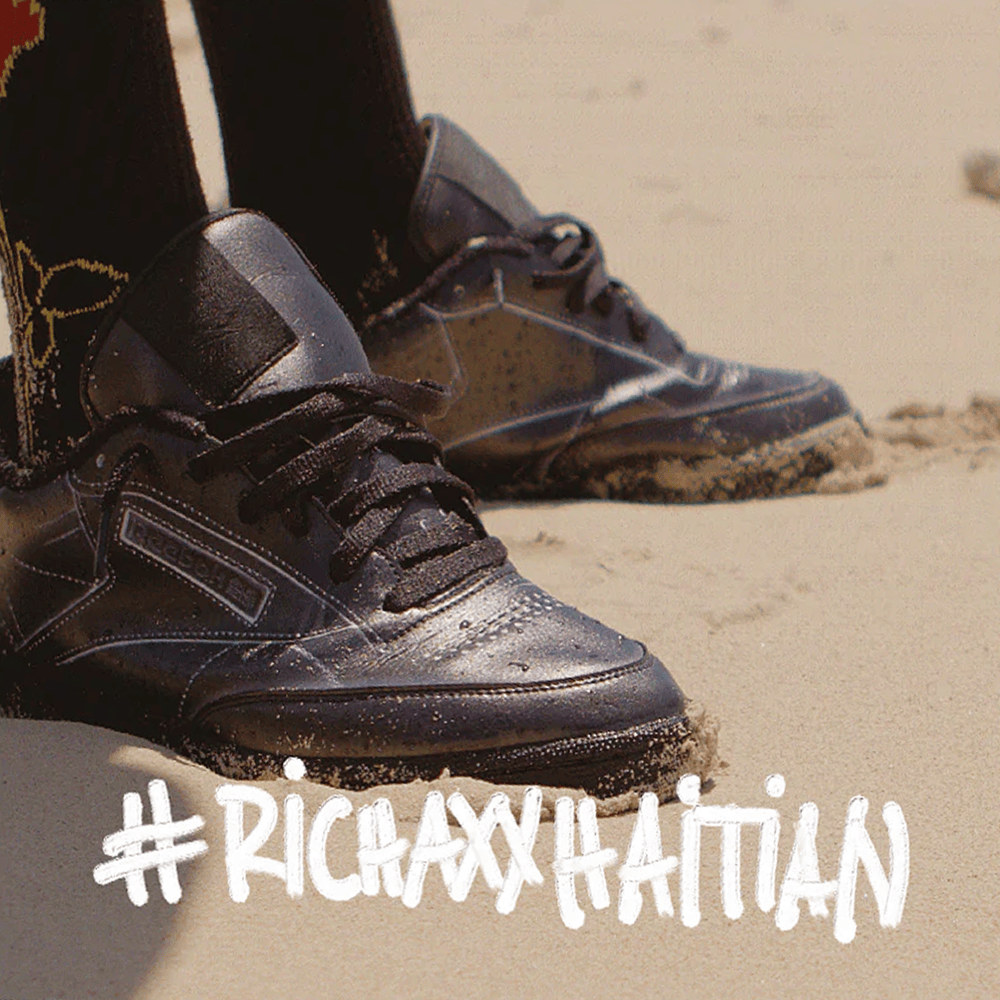
Similarly not suitable for the faint of heart is the reckoning of what is going down in the God-forsaken Caribbean country of Haiti right now. Just as the umpteenth forced foreign intervention is settling into the land in the hopes to stabilize it amidst a political vacuum and a guerrilla ruling through warlords, native transplant via New Jersey Mach-Hommy is riding on the coattails of his definitive homeland tetralogy installment, #RICHAXXHAITIAN. Out the same day as Please Don’t Cry, 17th May, one day before Haitian Flag Day—we weren’t kidding about May being stacked…—the album is Mach’s fourteenth to date. It’s a gesamtkunstwerk of insurrectionary socio-political vignettes, simultaneously doubling as the Haitian-American rapper’s most catchy and accessible. The oeuvre is a multi-lingual, multi-genre, and multi-cultural affair, cross-pollinating autochthonous Haitian traditions with gritty posse street rhymes, typically associated with the New York Tri-state area.
The Griselda Records-affiliate keeps it grimy throughout the seventeen tracks sequenced on the digital version of the album, clocking in at just shy of fifty minutes of runtime, but goes particularly hard on cuts such as “SONJE“, “COPY COLD” (amplified by a superlative tell-all verse by Black Thought), and “GUGGENHEIM JEUNE“. Elsewhere, he attains higher levels of earworminess—not exactly something we’d have thought we’d use to describe Mach-Hommy’s music—on “SUR LE PONT d’AVIGNON” and the titular lead single, aptly produced by fellow Haitian descendant KAYTRANADA (who is out with an impressive new tape of his own, just not strictly speaking a rap one to land on this list. Also no Knick wears #9 at the moment). Regardless, #RICHAXXHAITIAN is another full body of work experience for you, no cherry-picked finger food. It demands above-average listening prowess and command, but its rewards are so fulfilling that one might find themselves leaving the tape both spiritually and cerebrally re-aligned.
We sound like a broken record at this point, but the month of May shockingly managed to squeeze in one final musical coup de grâce before turning the calendar page. Long Beach rap laureate Vince Staples returned with his Def Jam swan song offering Dark Times on Friday the 24th, marking his sixth LP, a couple years after his double dipping with Vince Staples and Ramona Park Broke My Heart (2022). Perhaps the most singular and forlorn recommendation in this summer batch, the 35-minute statement comes as yet another reflective and contemplative series of essays. Less a cohesive concept album than a string of powerful short stories, the collection ventures in what’s arguably the vastest sonic range ever touched by the former Odd Future syndicate. While for all intents and purposes still filing this under a loud West Coast hip-hop file cabinet, it’s worth noting how numbers like “Shame on the Devil” flirts with jangly alt-pop instrumentals, while “Freeman” pushes experimental garage guitar licks way past the point one’d expect on a mainstream rap record.
Fair warning, if Slum Village’s F.U.N. is the most summer record on this list, Vince’s Dark Times is the least sunny one of the crop. I guess one could’ve figured that much from looking at their, album titles? Sometimes the proof really is in the pudding. However, fret not argonauts, since Vince’s got you and your feet covered with hot bops such as “Étouffée” and “Little Homies“—coincidentally the best, gnarliest, and most well rounded tunes on the whole record. In promoting the album, the 30-year-old LA-native asked fans not to overthink his songs, all to aware that is easier said than done when you happen to be one of the sharpest and critically acute pens of this generation’s rap cohort. Yet, that’s what makes this project a wicked collection of summer bars, too—aside from being Vince’s greatest, it’s also unassuming and easy listening to the ears, without sacrificing the usual poignancy and street wit folks have grown accustomed to expect from him.
Our sixth suggestion dropped halfway through June, a month that usually does not mess around when it comes to raising the mercury bar. In keeping with the sweltering heat brought by the official calendar kick off of the summer season, NxWorries’s highly-anticipated sophomore project Why Lawd? keeps us sweating from all pores. The American hip-hop super duo comprised of singer, rapper, and record producer Anderson .Paak and producer/songwriter Knxwledge followed up their critically acclaimed cult debut Yes Lawd! eight years later with an ultra crafty helping of 19 new joints. Released under legendary underground hip-hop label Stones Throw Records, the project manages to top its lauded predecessor, doubling down on quality songwriting, impeccable deliveries, and a trademark vintage sound that somehow still reverberates as fresh and unique, in spite of how deeply influential it’s been throughout the past decade.
Slowly rolled out throughout the past two years—lead single “Where I Go” featuring H.E.R. originally debuted as early as October 2022 (!)—and teased for even longer than that, the studio effort from the talented hip-hop duo was well worth the wait. Coasting through 45 minutes of runtime with the swagger and effortlessness of an off-season mixtape, this thing is extremely front-loaded, with one gorgeous slapper after another clocking in from second cut “86Sentra” through track number nine “FromHere“. A-list guests such as Charlie Wilson, Rae Khalil, and Earl Sweatshirt, as well as upheld catchiness make Why Lawd?‘s side B still well worth sticking around, in spite of a few dubs hinting at an even stronger record in there with a more focused editing. Nonetheless, cue this up if you’re in the market for some sexy, irreverent, and unhinged fun, all while summoning the Lord.
Lupe Fiasco‘s ninth studio LP Samurai is our penultimate tip off. Released just fresh outta the oven at the time of writing, this is a different kind of half hour to spend this summer. According to the groundbreaking Chicago MC, the project is “a loving & living portrait to and of one of my favorite artists, Amy Winehouse“. Because, sure, why not? The American rapper, record producer, and university professor’s successor to his otherworldly Drill Music in Zion (2022) has been highly anticipated—safe to say he did not phone it in. Once again entirely executive-produced by Drill Music chief sound orchestrator Soundtrakk, the concept for the record was grown from a voicemail left by the late English R&B singer for her producer Salaam Remi before her passing. In the note, the London-born singer/songwriter expressed her penchant for coming up with little, beautifully alliterated battle raps at the time, even likening herself to a Wu Tang Clan-inspired samurai.
Channelling all of the above, Lupe allowed for the story and album to take on a life of their own, kicking dances off with the title track as lead single halfway through May, before teasing the full project one more time with the infectious victory lap of “Cake“. The LP masterfully couches blistering highs and crushing lows all within eight records and half an hour of material, condensing subaltern scenarios and sketches of what a spitting Winehouse could have sounded like. Cuts such as “Palaces” at number four on the tracklist prove how easily the 42-year old alternative hip-hop pioneer can pen tunes so gorgeous they almost hurt, while “No. 1 Headband” acts as little reminder that he’s not forgotten how to have self-reflective fun, either. If you’re only sampling one project from this list of eight, and hinge on intellectually stimulating wordsmiths, make it this one.
Actually, maybe, make it Common and Pete Rock’s The Auditorium, Vol. 1. The only catch is that it’s not out yet, so don’t take our full word for it (methodical purity has left us long ago…). What is certain though, is that if we are to trust the first three teasers unearthed hitherto, “Wise Up“, “Dreamin’” and “All Kind of Ideas“, this is poised to be the signature hip-hop album of the summer, probably year. Marking the fifteenth solo studio LP for the Chicago conscious rap extraordinaire, The Auditorium, Vol. 1 is lucky enough to be enjoying Pete Rock’s unparalleled production chops throughout its projected fifteen cuts. A golden age East Coast hip-hop meeting of the minds, chopped and screwed in heaven. The full album is just mere days away, slated to drop everywhere on Friday 12th July. Here’s what we know for sure: it’s the summer, and there will be bars—guess the whole write up could’ve just been that verse.
We’d like to thank you sincerely for taking the time to read this and we hope to feel your interest again next time.
There’s a target on Mach-Hommy’s back. Dead or alive. Reward unknown; although the protraction of techno-feudalism and post-colonial hegemony are probably solid enough guesses. You ask the Haitian-American rapper and record producer yourself. As revealed in his recent public service plea, following shortly after the release of his fourteenth solo album #RICHAXXHAITIAN, there appear to be obscure industry forces at play attempting to curtail the propagation of his message conveyance. Self-released on the 17th May, one day before the momentous annual celebration of Haitian Flag Day, the 17-track project completes the New Jerseyan’s autochthonous album tetralogy—also inclusive of H.B.O. (2016), and 2021’s Pray for Haiti and Balens Cho (Hot Candles)—and was preceded by the eponymous lead single in early May.
Too bad that Google managed to botch the title track’s music video premiere on Mach-Hommy’s own YouTube channel, offering no conclusive explanation for it at all, leading to assume salacious intents behind the ‘unprecedented’ glitch. Too bad that mere days after the album’s public streaming release on DSPs, it mysteriously evaporated from leading outlet Spotify—the latter citing a takedown request from the artist’s camp itself, categorically denied by the Griselda syndicate in the aforementioned video explainer. In both cases, literally involving the largest streaming platform in the world (YouTube), and the on-demand audio service with the highest amount of global paying subscribers (Spotify), the explanations furnished left little to write home about.
In fact, Google’s troubleshooting yielded a complete and laughable non-starter. As outlined in the clip by Mach-Hommy, the internal investigation conducted by multiple layers of YouTube reps upon his flagging of the loss of admin privileges on his own account, as well as the temporary erasure of subscribers during the music video premiere window, returned a pathetic ‘we’ve got no clue as to what happened there, sorry’. Conversely, Spotify dug deeper into its more generous void of incongruous wiggle room in delivering their version of the root cause analysis, owing to the (wholly purposeful) digital record industry’s protocol entanglement. As mentioned, after both the Swedish streaming giant and an unnamed digital distributor washed their hands off by claiming the withdrawal request came from Mach-Hommy’s people, the East Coast MC was informed that his product, the #RICHAXXHAITIAN LP, was missing its Universal Product Code (UPC). An ontological fallacy, for not only was the release perfectly available on all other DSPs at the time, but as Mach rightfully cites in the video, the project wouldn’t have made it to Spotify servers in the first place without it.
Where affairs get even more nefarious is in the aggravating insult provided by the parties at play, who mentioned a now-deleted post by an faceless, nameless X user, interpreting #RICHAXXHAITIAN‘s disappearance from Spotify as a marketing stunt from Mach-Hommy, and fomenting doubts as to who watches the watchdogs in the online pursuits of the truth. The X user alleged that the MC’s strategy was to entice fans by sampling the album as a taster over release weekend, in the hope that they would turn to his webstore to purchase exclusive physical formats—going for a much higher price point. Once again, all of this getting debunked by the artist himself. Putting two and two together, one can’t help but think this is some sort of poetic injustice for a lyricist as concerned with historical revisionism, reparations, the Haitian diaspora, and the plague of colonialism in his ancestral country as he is. After all, retaliations might have assumed newer and more impenetrable forms in the modern age, but they are surely far from a holding pattern of inaction.
This all transpires as being particularly suspicious on account of not just the prolific rapper’s imperialistic establishment antagonism, but also his worthy industry literacy within contemporary digital music practices. Yes he is an actual multi-lingual prodigy thanks to his diverse cultural provenance, yet have you considered that the contemporary record industry’s intentionally dubious language is an idiom he can tally up as yet another atypical string in his bow? When he took legal DMCA action to have all of his works removed from online lyrics providers such as Genius in 2019, he knew he was stirring up a pretty big hornet’s nest. You will likely not be surprised to learn that Genius has long been finessing a number of licensing deals with DSPs under the hood; with one of the largest ones being with, guess whom? Spotify.
This is perhaps a good moment to afford us to elaborate on such content provisioning agreements. We wish we could go into more specifics, but please trust us when we say that we get Mach-Hommy. Without even delving into licensing deals involving the actual sound recordings couched within digital releases, aka the masters we all end up listening on the client side, the narrower lyrics and compositions provisioning business itself is riddled with enough jungly inaccessibility. Not unlike the wider record industry ecosystem, it’s a self-referential distribution funnel washed in a sea of conduits and intermediaries. Rightsholders—such as the self-released and self-published Mach-Hommy—are typically forced to strike deals with certain providers supplying other providers to at least a few degrees of separation before even making it to the end-consumer platforms such as Genius.
Not only does each of these agents retain a significant double-digit kickback on any royalty exploitation event, but within the lyrics consumption realm specifically, these are the kind of publishing deals operating under so-called ‘most-favored-nation’ (MFN) terms. In other words, allowing no room for negotiation or clout at the dealings table whatsoever. What’s even more disheartening within such copyright systems and their application within modern digital platforms is that legal frameworks around royalty rates and statutory regulations are a total mess. Most royalty payments are still remitted via lump sum settlements and upfront reconciliations, with little to no consideration for the actual mechanical reproduction figures for each work. In a way not too dissimilar from Mach’s warlord-stricken gang-centric Caribbean homeland, each end-user platform is free to enact their own price-regulated cartel, benefitting from the lack of international regulation and governance around fair trade.
Yet Mach-Hommy resists. He educates himself, learns the language of the oppressor, and fights with whatever he can. That’s why he’s wanted. That’s why he has a target on his back. And a very concrete countermeasure he enacts is seizing back control of his own art. What he does is that he increases the average consumption price point for each of his superfans, by selling physical formats for three-to-four digit $ price tags. For those versions, he retools the tracklist, too. In #RICHAXXHAITIAN‘s case, track number two “ANTONOMASIA” is titled “SOBRIQUET”, enlisting a guest verse from Tha God Fahim instead of Roc Marciano (allegedly a vox populi decision, as the rapper held a poll during a listening party earlier in the year). “BON BAGAY” at number four is a vinyl-exclusive, while the streaming-available “SONJE” is pushed back on the sequencing to act as the album’s coda. Crucially, “SUR LE PONT D’AVIGNON”, indeed available on streaming services, is wiped off the vinyl version as a quintessential middle finger to French post-colonial forces. Elsewhere on the waxing, “XEROX CLAT” gets retitled to “XEROX TWATS”, while “COPY COLD” and “PADON”—renamed “PARDON” with a Mach-Hommy verse in Tha God Fahim’s stead—are backtracked by a different instrumental beat than their digital counterparts.
In a press statement accompanying #RICHAXXHAITIAN, the wordsmith made the following clear:
I’ve always wanted to rep for Haiti and the cultural and intellectual richness we’ve provided the world. From our musical styles like kontradans that have influenced world music, our natural resources which provide so much raw material for so many important advancements in technology, our thinkers that pioneered philosophical movements and Black pride, and our spiritual leaders who kept the religious traditions of Guinea alive and intact, the religious traditions of Ayiti…
Musically, the album is a masterpiece. It’s a dense, wordy, intricate, disparate, and sticky affair—all at the same time. There’s a glacial undertone throughout the production that exhumes a dejected haziness fitting like a glove atop of Mach-Hommy’s boneless and contorted flows. Complication here is being offered as an act of resistance. Those who really listen, get it. In reviewing the record, good ole Professor Skye made the case for obscurity and incomprehension as a purposeful creative strategy for Mach-Hommy to fence off shoehorning and diluting industrial gentrification. While at the same doing justice to the richly profound social and cultural heritage of Haiti. It’s a valid heuristic, one that enables the New Jersey-native to always be one step ahead of reductive law enforcement. In his line of work, that happens to be private hedge fund-backed technology companies, purporting themselves as the arbiters of an emancipated creative ecosystem, fostering democratized access to all art. Sur le pont, d’Avignon…
We’d like to thank you sincerely for taking the time to read this and we hope to feel your interest again next time. And don’t forget to pray for Haiti.
2,597 days. That’s how much time will have passed since the release of Taking Back Sunday‘s last album Tidal Wave in 2016 by the time their eight studio project 152 comes out on 27th October. Announced yesterday in conjunction with their defiant and rabid second lead single “S’old“, the LP is slated to feature a scant ten songs, clocking in at just about half an hour and change of new music—officially making this their shortest album to date (for comparison, their seminal and raw emo-punk 10-track 2002 debut Tell All Your Friends is a whole two minutes longer). That is like around four minutes of new music on average for every year that has passed since Tidal Wave. Not exactly freehanded, but we’ll take it.
Riding on the fresh and reinvigorated coattails of the soaring and anthemic comeback single “The One” from a few months ago, the full length reveal broke the ice by way of injecting more speed and grittiness in earnest into the Long Islanders’ projected sound to come. Once again produced by radio-pop mainstay Tushar Apte (a connection via last year’s co-sign Steve Aoki, as it recently transpired) and mixed by Neal Avron, new cut “S’old” increases both pace and aggression compared to its softer and perhaps more agreeable predecessor, all the while relishing in a degree of carelessness rarely seen displayed by lead singer Adam Lazzara before: “You’re going to get s’old / You’re going to get so old / You’re gonna get so old either way“.
Undoubtedly, this second teaser packs a tighter and more nostalgic punch than “The One”, yet succeeds in couching enough of a lyrical arc into itself that ends up becoming even more gratifying, in spite of its shorter runtime—this both cathartically and lyrically: “Science never lies it only learns / I could use a bit of both / A little less your high hopes / A little more your love“. Standing as a spiritual love child between something off the edgiest moments on Happiness Is and Tidal Wave‘s “Death Wolf“, the exploit’s fierce delivery does not come at the expense of melody or replay value. Judging from these first two previews, on account of the somewhat unprecedented range displayed on them, most bets are off as to how the rest of the material on 152 is going to sound like.
That is, aside from the more surface-level remark about seven years having gone by since Tidal Wave (making this the largest gap between any two Taking Back Sunday releases to dare), a whole lot of life has happened for the band and its members in-between. For starters, there was Twenty in 2019, their career retrospective compilation celebrating twenty years as a band while keeping in touch with two previously unheard bonus tracks. Then there was the experimental, off-the-beaten path, vocal-only, lockdown-imposed side project Fuckin Whatever—we’re still owed some more explanation that can’t be chalked up to the pandemic cabin fever. Most importantly for the band, there was the departure of storied founding member and longtime rhythm guitarist Eddie Reyes in 2018. The umpteenth line-up change impacting the alt rock outfit, now officially a quartet (Adam Lazzara, John Nolan, Shaun Cooper, and Mark O’Connell).
In an attempt to make some sense of it all, their new US West Coast imprint Fantasy Record summarizes said ebbs and flows permeating the last seven years as catalysts for an album “[i]nspired by the long layoff and the cloud of uncertainty that blanketed the world (and music industry) these past few years”. Continuing by stating how “152 stands among the most genuinely reflective and emotionally pure efforts of Taking Back Sunday’s illustrious career“. Self-indulgent record industry jargon notwithstanding, a similar earnest sentiment seems to come straight from the horses’ mouth:
152 offers a lot more hope and light than we first realized when we were in the thick of it, putting it all together. We’ve been fortunate enough, through our music, to grow up with a lot of people going through the same things at the same time, and probably feeling the same way. Our hope is that you’re able to find a little bit of yourself in this new collection of songs, because you’re not alone, and neither are we.
You would think after 20 years, we knew what each other is going to do. But there were so many times making this record where I heard the initial idea and thought I knew where it would go, but then I was super surprised. It’s those kinds of surprises that make it so exciting. That’s why we all still want it so badly.
When we’re writing songs, the one thing we ask ourselves, ‘Is it capable of making people feel something?’ You try to make people feel emotion. That’s the one goal we went in with, and we think we did it.
In short: this thing is riddles with incognitos. Fantasy is a brand new label for the band (their fourth), putting out, amongst others, Americana, jazz, and R&B. Australia’s very own Tushar Apte is an unchartered and frankly unlikely choice to executively produce what’s arguably the most highly anticipated project of their career. For context, his production pedigree hitherto includes Chris Brown, Demi Lovato, and Nicki Minaj—not exactly scene pals to the emo rockers. And yet, there’s the 152. Even the occasional Taking Back Sunday fan knows about its symbolism and semantic, and in all likelihood has sculpted their own version of what it truly means. For what it’s worth, Fantasy saw fit to set the record straight by providing a somewhat diplomatic and collectively agreed upon answer, explaining how Exit 152 is “the section of road in North Carolina between Highpoint, Chapel Hill, and Raleigh where the band and their friends would meet up as teenagers“.
Regardless of what version one runs with, the lore surrounding 152 almost seems like the only familiar through line die hard fans can still cling on to, for now. Amidst so much wind of change for the New York group, another two months of patient wait before getting the full body of work looms as an agonizing gust at best. Here’s to hoping another teaser will see the light of day between now and late October. The boys seem very excited about the new record: they’ve been testing as many as the aforementioned two cuts off it live during their recent US headlining run at Sad Summer Fest—something almost unheard of for the band. What’s for sure is that, by and large, Taking Back Sunday has grown up. And that can’t but be a comforting beacon to rely on, still after so long.
We’d like to thank you sincerely for taking the time to read this and we hope to feel your interest again next time.
Metro Boomin might just have churned out the best long-form hip-hop listening experience of 2023. No hyperbole. Thirteen individual cuts, spread across 47 minutes of impactful, unbridled, and envelope-pushing music—all without hinging on tired or predictable recruits such as Drake, The Kid LAROY, or Post Malone. Now a little over two months old, his Across the Spider-Verse (Soundtrack from and Inspired by the Motion Picture) radiates as such a convincing body of work that no other major drop has seemingly been able to top it hitherto (even though Travis Scott’s UTOPIA, albeit irreconcilably different, gets scarily close). Dare we say it, with this compilation, the American record producer, executive, and DJ has sequenced the most accomplished popular soundtrack since arguably Black Panther (2018). But then, he’s so plugged into the cultural zeitgeist that one would be hard-pressed to think of someone better suited to score the marvelous adventures of Miles Morales, constituent of all the righteous values and virtues they emanate.
Sonically, the tight collection of tracks offers both an aptly gelled and unified listening experience, as well as radio-friendly heavy rotation potential from nearly all numbers tracklisted. Believe it or not, this thing weaves one sticky, swaggerish, and memorable exploit after another; all without sacrificing artistic bravery and stylistic exploration (one shouldn’t forget this thing is supposed to be attached to a ginormous Hollywood blockbuster). Modern trap, conscious hip-hop, alt-R&B, neo-soul, and flat out bubblegum pop; they are all welcome and at home here. Even when at times the score dances with devilish accusations of getting phoned in formulaic and a tad one-dimensional—such as on “Danger” or “Silk and Cologne“—enough perspective and a particular appreciation for the motion picture are quick to dissipate such affronts. That is, for instance those two songs might work less efficiently as standalone singles, yet in the context of the whole album they sound just as indispensable and necessary as the other eleven.
Not to mention the deeper cuts on here. Through his flavorsome and balanced taste making on moments such as the exquisite slice of high brow alt pop on the James Blake-assisted “Hummingbird“, the forlorn standout “Calling“, or even the tenderly sweet Coi Leray vocal flex “Self Love“, the 29-year old Missourian sculpted an acoustic stream of consciousness more akin to, say, Frank Ocean‘s Blonde, than the first Various Artists-downgraded Into the Spider-Verse OST. And to think that for reasons allegedly unknown (yet just as easily guessed), the Boominati Worldwide founder had to do without the inclusion of poppy wind in sail of Dominic Fike‘s “Mona Lisa“—released this past 2nd June as lead single for the whole multimedia Across the Spider-Verse venture. Granted, the track was reportedly always set to only be thrown onto the compilation’s deluxe edition. Yet with the benefit of twenty-twenty hindsight, Metro’s herculean creative effort transpired as more focused and zero’ed in without it.
Speaking of deluxe editions, the record’s Disc 2 counts five additional tracks. They are all well and fun, but frankly, do nothing but further prove and solidify Young Metro’s editing capaciousness as an on-demand executive producer. Mind you, none of the bonus joints are bad in and of themselves—they’re all perfectly decent and enjoyable while they’re on. However, the thirteen minutes of extra material are of a cutting room floor affectation for a reason, and did not make the main tracklist’s cut for evident causes. That is not to say that they don’t possess virtues: “Ansiedades” beautifully elevates the dreamy pipes of Puerto Rican singer Mora, potentially introducing him to a limitless audience. With that being said, aside from showcasing the St Louis native’s knack for musical experimentation, the bottom line is that their clubby, vibe-based, electronic prevalence would’ve caused them to stick out like sore thumbs—cases in point, “Take It To The Top” and “Infamous“. That’s a shame and pity a savvy and tasteful curator such as Metro could not have allowed.
Lest we all forget, the Republic Records-earmarked Across the Spider-Verse (Soundtrack from and Inspired by the Motion Picture) stands as mainstream companion piece to the more canonical incidental tunes released under Spider-Man: Across the Spider-Verse (Original Score), orchestrated and arranged by English composer Daniel Pemberton. For once, the Universal Music Group’s USA imprint should get its due flowers for the formidable environmental enablement they were able to grant Metro and his ambitious multi-licensing roster vision. As many as sixteen official featured performing acts in total are present on display credit-level here. They range from budding new guard picks like Roisee, EI8HT, and Coi Larey, and journey all the way to bona fide elder rap statesmen such as A$AP Rocky, Future, and Lil Wayne. Oh, and did we mention managing to enlist critical swan song co-sign from none other than genre GOAT Nas?
Not unlike some of the key constituencies of African philosophy Ubuntu, with integrity, responsibility, empathy, and focus, Coach Metro has mastered a call up of a winning sample of carefully functional picks. His team tactics surgically constructed a court tapestry mastering both defense and offense, both below-the-rim paint points and long-range triples. If the earned trust from such a stacked A-list line up—as well as that he placed on them—does not go to prove that the producer born Leland Tyler Wayne doesn’t have the clout and creative vision to claim a marquee seat at the hip-hop conversation table, then virtually nothing else will. As the genre celebrates half a century of cultural impact, appropriations, and misunderstandings on this very day, its spiritual founders and forefathers can take a wealth of comfort from the notion that its future-proofing keys are in safe and capable hands. Now go watch the film. Then re-watch it. More importantly, listen to Young Metro’s synchronized masterpiece, we might need to await another five years for such a good movie soundtrack.
We’d like to thank you sincerely for taking the time to read this and we hope to feel your interest again next time. And happy birthday to hip-hop this time around.
Dominic Fike is fine. He is fine with being back in his hometown of Naples, FL, after Hollywood didn’t need a reason to make him think he looked bigger than he was. He is fine with not pretending his newest album Sunburn isn’t anything other than a scattered collection of old loose tracks. He is fine with having made it out of the dirt, the hardship, and the struggle—rags to riches, felony conviction included. He is fine with survival’s guilt. Where Kendrick Lamar famously pained himself to explain “How Much a Dollar Cost“, Fike’s rebuttal stops at the otherworldly hive mind of “How Much Is Weed?“. He is fine with being a prodigal lonewolf amidst a tragically golden generation—he’s fine even with BROCKHAMPTON being no more.
Proudly and defiantly an anti-concept album, Sunburn is the 27-year old American singer-songwriter and actor’s second major label project, after instigating a cut through bidding war amongst several record companies from behind the cold confines of his penitentiary cell during the latter end of the last decade—with Columbia Records emerging victorious in 2018. So unlike his 2020 genre-mashing debut What Could Possibly Go Wrong, his latest is a warm, fun, and summer-winking compilation of disparate material, stemming from pretty much the same writing sessions as its predecessor. The lightness and effortlessness with which Fike almost dismisses his current excitement amidst Sunburn‘s promotional run, is refreshing at the very least.
Counterintuitively, that is part of what makes this beach mixtape so good. While some might still file it as a byproduct of cool cold-bloodedness, the former SoundCloud rap sensation’s indifference toward stoking fabricated enthusiasm by over-marketing the 15-cut LP actually makes way for the music to speak for itself. It’s not like one could forcibly blame Dominic, either. Almost every record on the Jim-E Stack-assisted sophomore outing dates back to about three years ago. At least a few of them have been floating around the deep Fike lore and ether since 2021, in either live or teaser form. And to think that the eclectic and sticky third lead single “Mona Lisa” wasn’t even written with the album in mind (initially previewing as OST crown jewel as part of Spider-Man: Across the Spider-Verse).
There’s an evident sense of appeasement and resolve in watching the former jailbird and victim of class feudalism speak and carry himself today—frankly, that’s something all of us can count as a dub. Fike exhumes a kind of seasonality and weariness that betrays both his young age and spotless babyface, one that only someone whose adolescence was stripped away by crime, addiction, and poverty-stricken milieus could possibly sport. Much like so many other burdened by similar disenfranchisement, Dominic turned to music for salvation. Owing to such a coping mechanism, he’s now proudly and nonchalantly wearing some of those late Nineties/early Noughties creative influences on his tattooed sleeves.
Thusly, it shouldn’t come as a blistering surprise that tasteful and breezy “Think Fast” at number three on the record sees a loud and loaded co-sign from none other than Weezer‘s Rivers Cuomo—with a true blue interpolation of the Los Angeles pop punk giants’ “Undone — The Sweater Song“, no less. Or that the elusive and catchiest number on Sunburn, “Frisky“, somehow succeeds at pouring out evident echoes of early 00s Black Eyed Peas mixed with Red Hot Chili Peppers. Meanwhile, the overrated and overproduced sensual pop of Justin Timberlake is an undeniable inspiration on “Bodies” halfway through the mixtape. Yet again, fourth lead single teasing the full release “Mama’s Boy” betrays ephemeral Strokes fingerprints all over its instrumental canvas. Get the point?
Dominic Fike is fine with staying true to himself, and not cracking under the ostracizing major label pressure of unnecessarily sugarcoating something that for him, truly, is passé. He is fine with some of his stans’ para-social behavior, stretching as far as digging up a whole other album‘s worth of unreleased material online. He is fine with understanding the subtle and nuanced specifics of latter day capitalism’s diminishing returns, letting the spate of irresistible hooks on the title track and “Dark” speak on his behalf instead. He is fine with reverting home and providing for his mother and siblings, now that he’s a multi-millionaire with a lot more music in the can. Music he’s actually psyched to talk about.
Perhaps Fike’s most telling and poetic middle finger to retrograde major circuit antics has got to be the way he (mis)handled the inclusion of groovy funk-rap standout “Mona Lisa” into Sunburn. Originally released as a standalone single attached to the theatric release of the eponymous blockbuster movie in early June, the cut was also naturally made available as part of the deluxe version of Metro Boomin’s watertight Presents Spider-Man: Across the Spider-Verse soundtrack album. At least this was the case for about a month. That is, on release day (7th July), the number inexplicably disappeared from Metro Boomin’s OST tracklist (although astute bloodhounds might still dig up idle versions with it on Spotify), only to mysteriously pop up on the 15-track version of Fike’s latest LP again—notably missing from his original 14-track issue.
While adding, removing, and switching individual tracks around on varying iterations of album sequences is nothing new per se in the modern streaming age, alas, one can’t but smile in schadenfreude at the thought of spree of Columbia record executives’ headaches and the wealth of eyebrows raised as Fike urged them to reinstate the track on his own solo project—probably invoking some right of first refusal last minute. One that scrambled lawyers had to hastily retrofit amidst consulting and negotiating with a plethora of sub labels, all contracted by Spider-Man soundtrack’s curator Republic Records. And we all know Sony Music Entertainment (Columbia) and Universal Music Group (Republic) aren’t exactly best friends. Yeah well, Dominic Fike is fine with all of that.
We’d like to thank you sincerely for taking the time to read this and we hope to feel your interest again next time.
Being a bona fide Taking Back Sunday stan has not been a breezy stroll in the park over the past seven years. Since their robust classic rock-indebted LP Tidal Wave in 2016—their seventh—the band’s musical output has all but run on slim picking leitmotivs. Maybe through a little bit of fault of their own. Like it or not, they didn’t capitalize on the latter end of the past decade’s emo revival, fell prey of not one, but two new nostalgia-fueling anniversary traps in-between, kept us trippy during the pandemic with their Fuckin Whatever side-project, and embarked on an eyebrow-raising yet sticky one-off joint with OTT electronic dance DJ Steve Aoki right around this time last year. Today, Friday 30th June, marks the day they’re back with their first slice of new original music in four years.
The Long Island outfit, now officially a quartet after the painful departure of founding member and longtime guitarist Eddie Reyes in 2018, has released “The One“, a number that embodies all guises so as to pass as the lead single in anticipation to a forthcoming eight studio album. Accompanied by a tongue-in-cheek and self-aware DJay Brawner-directed music video, and backed by new imprint Fantasy Records through Nashville-based indie circuit powerhouse Concord, the record finds Taking Back Sunday in a tender and content mood. Billed by the band as a “sweet love song—full-on John Cusack holding a boombox”, the alt rocking cut coasts through a soaring compositional dynamic, culminating in an emphatic post-chorus refrain aptly delivered by lead guitarist and backing vocalist John Nolan: “Now I’m close enough to reach you / All the walls that I could see through / Still the words that I can’t say go on and on and on“.
More than on any other recent sonic teaser dished out by the foursome, the trademark vocal call and response dynamic between frontman Adam Lazzara and Nolan is fiercely on point here. Underpinned by a spacious and expansive electric guitar-led soundbed, it’s the principal vocal delivery that pulls the biggest heavy-lifting for the track, both melodically and performance-wise. The songwriting is injected with a solid dose of romantic honesty, doubling as an unconditional tribute to one’s significant other—a thematic impetus acutely elevated by the broad and big Tushar Apte-assisted production, lending the main chorus a fitting revelatory closure: “Oh, I’m better off for betting / I’d be better off forgetting / Go big, or go home / If I was the one / Like you’re my one / You are the one / You arе the one / The onе“.
The overtly pop-oriented and former Chris Brown, BTS, and Demi Lovato-collaborator Apte is actually a fairly unorthodox production decision for the outfit, and one which could prove enthusing in charting a speculative new artistic direction the whole—yet to be formally announced—project might be leaning toward. After their watertight two-album run on California’s Hopeless Records over the past ten years with legendary underground New York producer Mike Sapone at the helm (2014’s Happiness Is and the aforementioned Tidal Wave), the band looks to be on the prowl for a different and riskier approach, perhaps nudged by the new incubating record label. Safe to say, it’s starting to show from this initial appetizer. Case in point, “The One”‘s got radio-friendly hooks, a lavish and perhaps overly sanitized mix, as well as an overall compositional arc arguably more at home with pop-first material, than a landmark Noughties emo band’s eight career album. The good news is that the overhauled format is neither off-putting nor impulse-warping, allowing for the band’s storied and signature songwriting to still bleed through in earnest.
Speaking of which, Taking Back Sunday had this to say about the initial pre-pandemic gestation of the single:
This song came from a riff that [bassist] Shaun Cooper wrote the day he lost his grandmother while she was in a nursing home at the start of the Covid pandemic. Devastated with overpowering sadness, he found comfort in writing music and initially titled the riff ‘Posivibes’ in an effort to find some light through the darkness. He never shared the story of the title or how that riff came together with us until after it was complete. Shaun didn’t want his story affecting the ultimate meaning of the song, because it’s actually an uplifting one.
The somewhat laid-back and unintrusive instrumentation committed to tape here suits the prime valence of the reclaimed sugary messaging, which takes yield over anything else. Such an understated ethos, slyly laced into the three minutes and change record, concedes only to a mightier and grander chorus—effectively preempting what could’ve been a flashier return to the scene after seven years. While the choice is an unexpected one to say the least, “The One” ultimately stands as an accomplished example of a group putting the song at the core of this tune first, over any embellishment or heady instrumentation—not necessarily something the band has historically always excelled at.
Furthermore, fans ought not mind the seeming void of ancillary leave behinds accompanying this latest single, without much pointing to a larger project coming in our later in the year; for the branding overhaul on Taking Back Sunday’s online properties—as well as a general tangible momentum surrounding this one drop—possesses all of the crucial signaling that past standalone single releases didn’t. If nothing else, with an imminent summer on the road in the USA headlining the touring Sad Summer Fest with fellow scene fixtures The Maine, PVRIS, and Hot Mulligan, it’s high time for the Long Islanders to usher into their next album cycle, with a new line up formation, and a restored creative phase. We missed them so much.
We’d like to thank you sincerely for taking the time to read this and we hope to feel your interest again next time.