
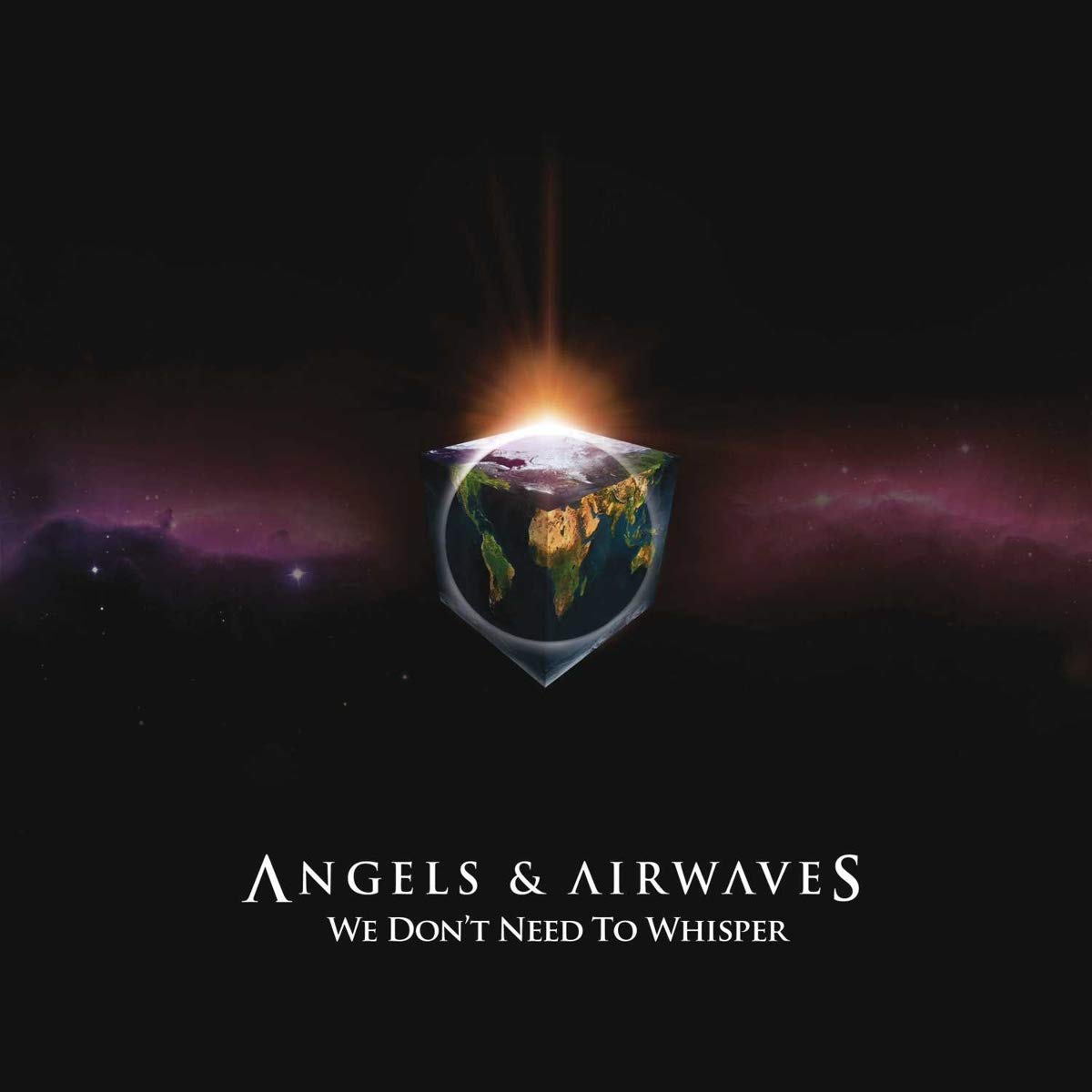
We all owe Tom DeLonge an apology. Don’t look now, but it’s been twenty full years since the 50-year old American musician and songwriter’s emphatic debut with Angels & Airwaves (AVA), We Don’t Need To Whisper. Granted, we’re not quite at the 30-year mark he’d set for himself as part of his efforts to “change the face of rock and roll” through the greatest musical revolution of our generation (nor at the more ambitious 24-year timeline he later upgraded), but two decades after the inaugural album by the self-proclaimed transmedia project about humanity feels like an opportune time for a long overdue midterm review.
Back to the apology though. Remember when Tom started shouting about UFOs during his incredibly successful blink-182 first act era and no one really took him seriously? Recall later, when the U.S. Navy confirmed the mysterious objects appearing in the footage DeLonge‘s tech start up To the Stars* helped get released via the New York Times were, in fact, UFOs? People weren’t exactly having a last laugh then. And yet, the biggest vindication the Poway, CA-native can lay claim on is arguably how much of a sea change moment AVA‘s formation and subsequent career was for, well, pretty much how the whole entire music industry operates nowadays.
Gestated right around the time when blink-182 went on their first hiatus in 2005, most initially assumed that Angels & Airwaves were just another side pet project to blow off steam from the contentious break up—sitting alongside his 2002 one-album-stint with Box Car Racer (he did after all re-recruit longtime childhood friend David Kennedy from that group to AVA). However, while the latter project had largely dabbled in similar, if rawer, sounds and aesthetics to early 2000s blink-182, AVA were a more flagrant, decisive, and drastic departure from the jump. Right out of the gate, the band’s announcement felt larger-than-life in scope, more serious and mature in lyrical focus, and tapping into a whole entire new side of DeLonge’s musical affinities, including arena rock, post-punk, and new wave.
If people thought DeLonge could come off pompous and irreverent while in blink, they must have flat out not been able to recognize the then just turned thirty gentleman. To say that he oozed braggadocios confidence would be an understatement—far from letting a multimedia concept band quietly announce itself to the world, Tom kept heralding it with the kind of puffy hyperbole that was almost asking for people to take a great deal of pleasure in knocking them down. Incidentally, many wasted little time before doing so once their stellar debut album was released in the year of our Lord 2006. Too bad they couldn’t understand how big of a watershed moment that represented for (alternative) music writ large.
First, there was the subdued move to independence and DIY. We Don’t Need to Whisper was almost entirely written, recorded, and produced at Tom’s makeshift San Diego home studio at the time, with just Atom Willard’s drums getting taped at Foo Fighters’ San Fernando Valley Studio 606 (as the final tracked instrument—another counterintuitive and innovative studio strategy flipping the typical recording assembly chain of starting with percussions). Yes, everyone and their mom self-records and self-produces in their bedroom nowadays, but in 2004-2005 that felt like a pretty radical move. Especially from a global superstar who had sold millions of records with his previous pop-punk band. Not the kind of equipment and set up downgrade you’d see at the order of the day back then.
As later revealed in the detailed ‘making-of’ chronicles of their debut LP as part of their 2008 documentary film Start the Machine, AVA was also ahead of the curve with respect with cybersecurity. Yes, as every average Joe is now forced to take an anti-phishing course other six months as part of their company’s security compliance, twenty years ago Tom and the band doubled as an inadvertent canary in the coalmine for leaking risks and vulnerabilities. As told by their oral histories in the aforementioned documentary, during the later stages of completing We Don’t Need to Whisper a “fan” managed to break into Tom’s emails, seeing fit to leak four songs from the project to the internet. Apparently, the first one they “chose” was what ended up being AVA’s lead promotional single, and their biggest tune to date: “The Adventure“. The group had inadvertently crowdsourced their marketing strategy to pirated intelligence.
There’s also the great deal of musical and iconographic influence waged by AVA at the time. Without a billboard splash like that of Tom and co., filled with interstellar imagery and grown up thematic foci, chances are we would have gotten no Black Parade, no Beautiful Lie, no Louder Now. At least not in the immaculate and timeless veneer those projects continue to carry. What’s for sure is that more than half of the so-called third wave emo and alternative rock bands wouldn’t have known where to start in terms of aesthetics and inspiration. Did we mention that with his apparel brands Atticus Clothing and Macbeth Footwear Tom also provided the bona fide wardrobe of record to the Scene?
Y’all see the point? There is no Golf Wang and Homer without Tom DeLonge. Tyler and Frank would probably be the first to concede this.
Here’s the kicker though. The largest business impact of Tom DeLonge’s visionary inventiveness might have actually happened behind the scenes—unbeknownst to most regular fans. Well you see, as part of Angels & Airwaves ambitious transmedia corollary—counting north of twenty works of art to date, including feature full length movies, comic books, novels, and a wealth of merchandising—he also built fan club community platform Modlife, a prescient tool that went on to be used by Pearl Jam, Kanye West, Nine Inch Nails, The Offspring, The White Stripes and Taking Back Sunday amongst dozens and dozens of other artists. Not exactly fringe acts in the modern musical zeitgeist.
Sure, we’ll be first to admit that the jury might still be out on whether AVA did end up becoming the “second coming of Jesus Christ” Tom had hailed it to be two decades ago. Yet much more probable is his attainment of the self-imposed goal of starting a creative revolution with the band. Today, AVA is completed by guitarist David Kennedy, bassist Matt Rubano (of former TBS and many others’ fame) as well as drums prodigy Ilan Rubin, sitting at the heart of a multimedia I-empire, having released six total studio albums—their latest being 2021’s excellent Lifeforms. Check out our full tier list here.
Depending on how exactly one counts, Tom and AVA still have either four or ten years to fully accomplish their revolutionary vision. As of October 2022, DeLonge reunited with blink-182 one more time and appears busy having fun on the road with them, with yet another world tour slated for next year. With AVA on some kind of a break for the foreseeable future, we’d be remiss if we didn’t catch you up on all things science, supernatural, and government intelligence Mr DeLonge has been up to in the last decade. Did we mention he’s an influential character?
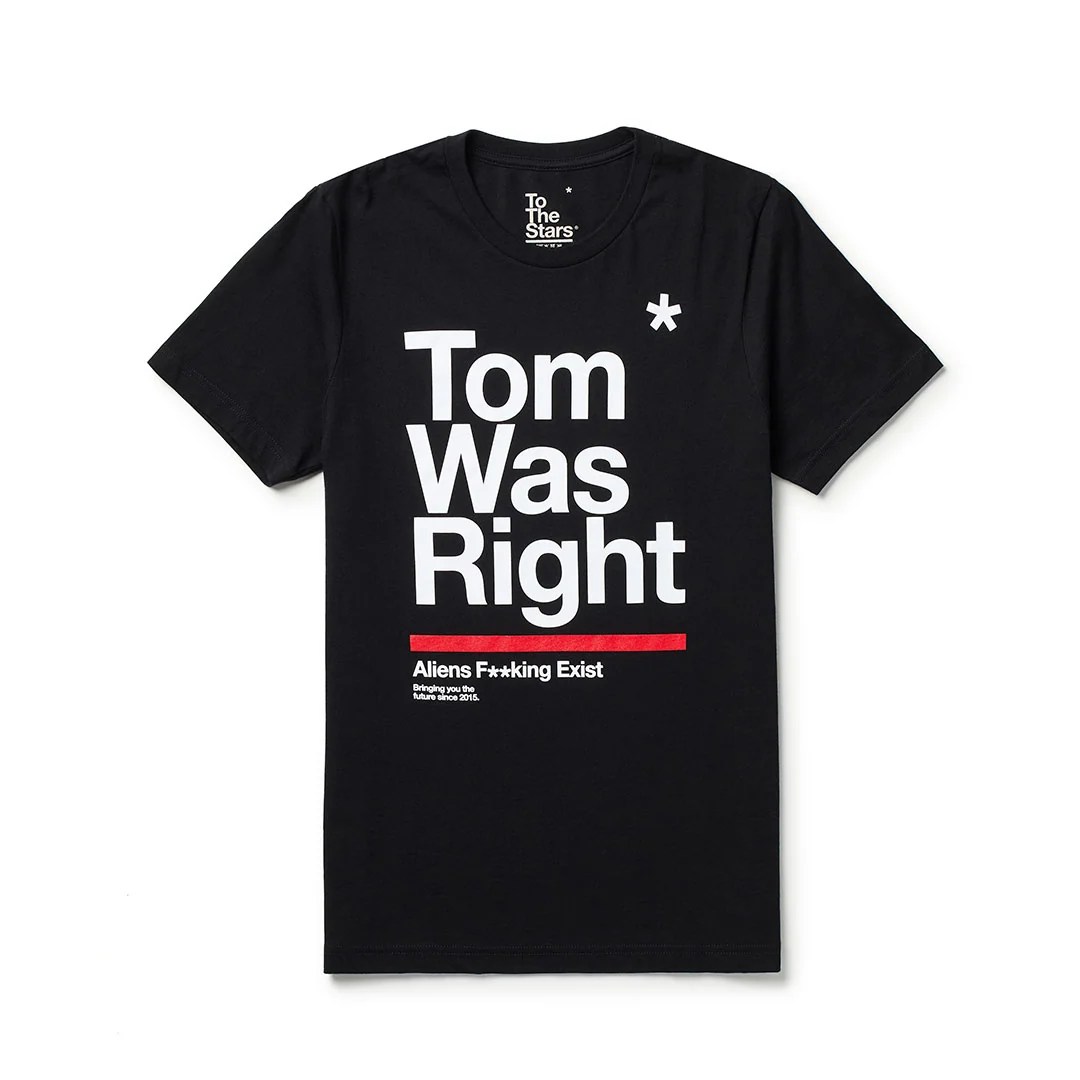
Staying true to his lifelong convictions, since founding the so-called To The Stars Academy of Arts & Science (TTSA) in 2017, Tom has continued to build an unusual-yet-stupendous hybrid of UFO advocacy and transmedia entertainment. Bringing together former government, intelligence, and aerospace personnel with creative talent, the venture’s original mission sought to merge scientific inquiry with storytelling. Its current catalogue operates like a shared intellectual-property universe blending facts with fiction: Sekret Machines spans both realms in the form of lengthy books; Poet Anderson expanded into graphic novels and animation; and titles such as Strange Times, Trinity, and Time Rider keep the blend of paranormal lore, science fiction, and purported real-world mysteries.
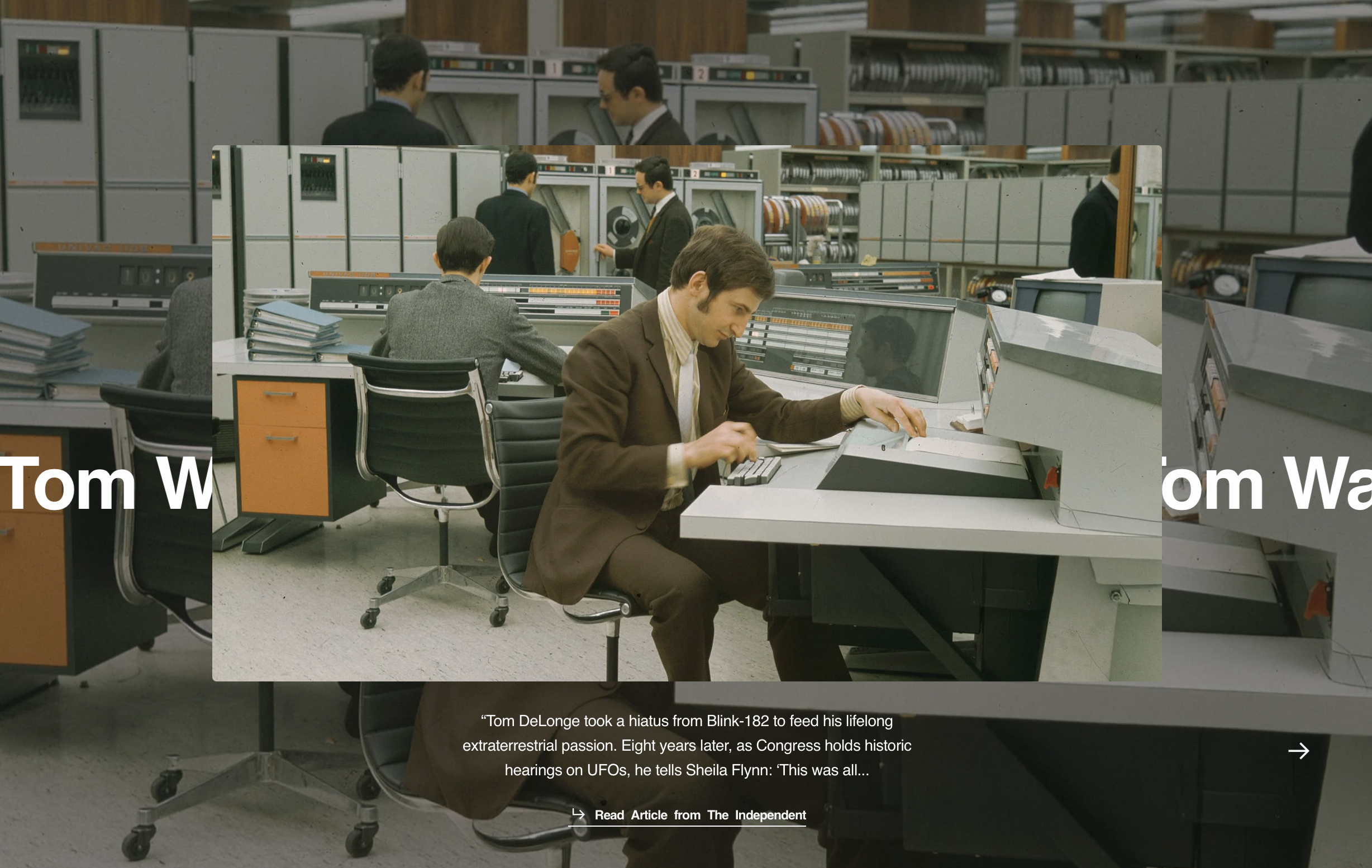
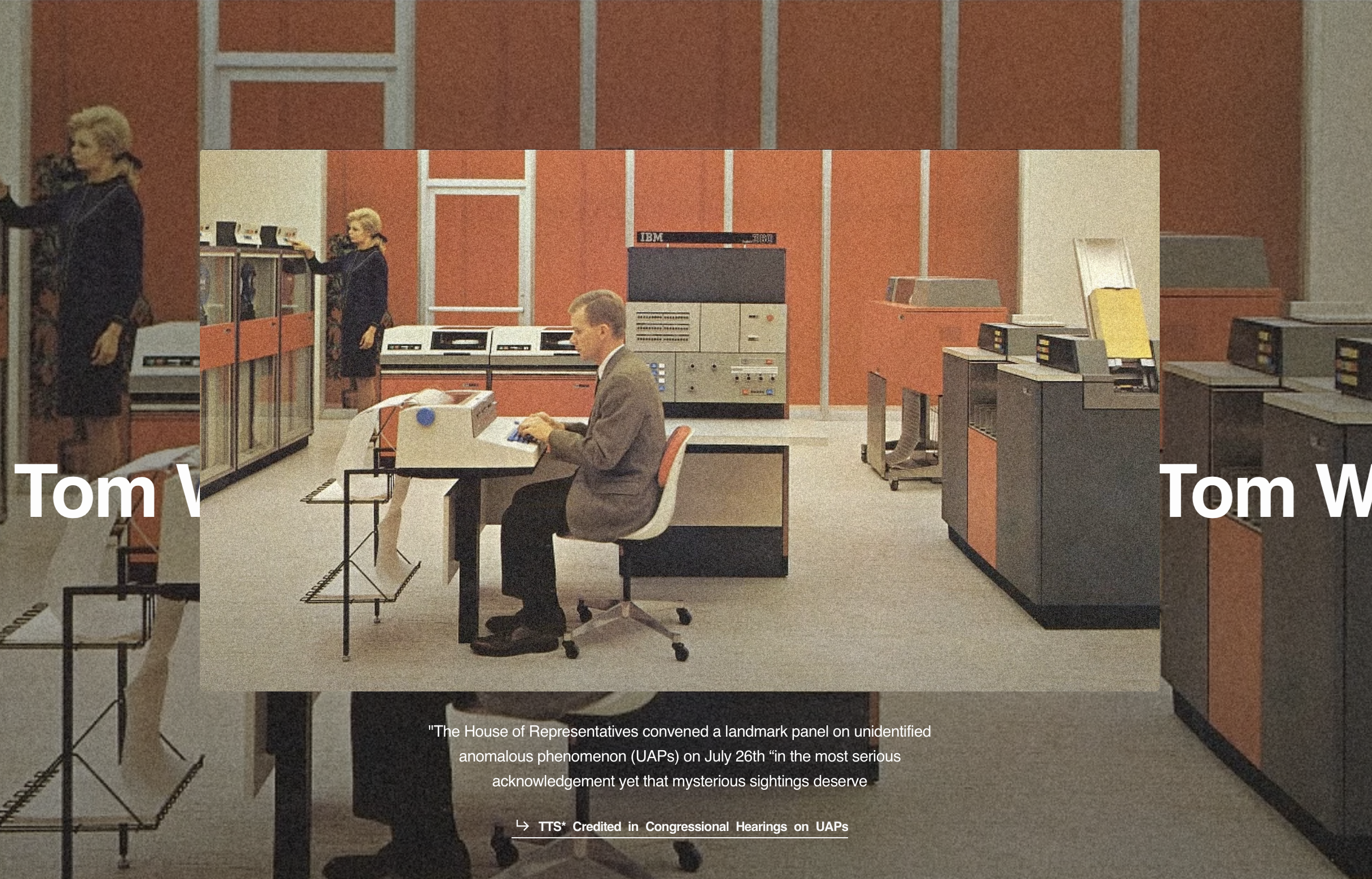
As mentioned previously, TTSA also pretty much singlehandedly helped propel unidentified aerial phenomena (UAP) into mainstream news coverage. In December 2017, a landmark New York Times investigation publicized three U.S. Navy videos alongside revelations about the Pentagon’s Advanced Aerospace Threat Identification Program. Frequently described as classified UFO footage, the videos were subsequently and reluctantly confirmed as genuine Navy recordings. The Department of Defense formally authorized their release in April 2020, however, explicitly stating that the phenomena remained unidentified—not necessarily that they were extraterrestrial in nature. TTSA also secured a 2019 research agreement with the U.S. Army, and further testing under the All-domain Anomaly Resolution Office’s oversight.
Around five years ago, the Academy’s research affectation started to shift identity toward entertainment, as the company announced it was scaling back science-and-technology commercialization to prioritize original film and TV content. It legally renamed itself To The Stars Inc. in November 2021 and consolidated its public-facing presence with To The Stars Media in 2022. DeLonge’s cinematic ventures include his solo directorial debut, Monsters of California (2023), the animated series Breaking Bear, released earlier this year, and a developing Sekret Machines TV-series adaptation. Although the UFO mission persists—how could it not, at this point?—entertainment and cross-platform intellectual property now seem to sit at the center of the business.
All the while Tom carries on cracking dick jokes and self-deprecating humor on the world’s biggest stages with blink-182. One revolution at the time.
We’d like to thank you sincerely for taking the time to read this and we hope to feel your interest again next time.
AV
Discover more from Everything Must Swing
Subscribe to get the latest posts sent to your email.

