Having it made past the preliminary round of the group phase at the Paris 2024 Olympics men’s basketball discipline, it strikes us as just as good a time as any to draw some initial reflections on what has gone down hitherto on French hardwood floor. Of the initial crop of twelve qualified countries, only eight are left. Spain, Japan, South Sudan, and Puerto Rico all have already boarded their respective flights home. With only one somewhat unconvincing win against a surprising Greece—ironically qualified for the knockout stages as one of two best thirds of the group phase—Spain is the obvious disappointment at this point in the tournament. While certainly no longer the global basketball powerhouse it once was during the past two decades, the Iberians bid adieu to the 2024 Summer Olympics with a lukewarm 1-2 record, and the second lowest amount of points scored amongst already eliminated nations.
Conversely, youngest country on the block South Sudan can be proud of the fluid and defiant ballin’ performance they showcased in Lille—netting a high scoring 3-game run (261 points made, the fifth best overall), peppered with relative low-margin losses against Gold medal favorites USA (103-86) and Serbia, the reigning Silver medalists at the 2023 FIBA World Cub (96-85). Generally, the shorter quarter clock limitations and spatial constraints of FIBA courts compared to the NBA’s have kept overall game scores between a moderate range—with a low of 66 (set by Brazil against France) and a high of 110 in the impressive US Basketball team’s debut against Serbia. What’s more, as many as eleven games out of a total of eighteen within the preliminary round ended with a scoring margin smaller than a twelve point-differential; just three games had a score spread higher than twenty points at the final buzzer. This is well-fought balling.
With four nations represented in the quarter-finals—Germany, Greece, France, and Serbia—Europe funnels into the knockout rounds with the most teams still in the race, followed by North America (USA and Canada), as well as South America and Oceania with one country each; Brazil and Australia, respectively. Reigning World Champions Germany and Tokyo 2020 winners USA have so far emerged as distinct favorites to snatch the most precious metal by quite a margin, playing the most spotless and dominant basketball of the bunch. Considering how the knockout rounds bracket locked in, one shouldn’t be surprised to find them tête-à-tête in the grand finale this coming Saturday 10th August. The Germans will go at length to honor their World Champion title, and surely are thirsty for revenge after the close game verdict of their spectacular exhibition game in London on 22nd July (88-92), leading up to the Summer Olympics kickoff.
The US-German folie à deux is followed a few miles behind by the ever promising young guard of Canada—third ranked at the latest FIBA 2023 World Cup in the Philippines, Japan, and Indonesia—yet perhaps a tad bit inconsistent throughout its three group wins. Granted, it got the job done and then some, but paradoxically each of its victories not only came by virtue a thin margin, but also highlighted concerning game lapses that could cost them dearly in a more unforgiving prize fight situation. Tournament host France is going to prove a hostile and arduous opponent for the Gilgeous-Alexander-led contingent, incidentally rounding up the cluster of suitable winners at this point into the competition, alongside Serbia. Australia, Greece, and especially Brazil all seem too flawed and talentless to aspire to make it all the way to Gold.
To go out on a limb, our premature prediction sees Germany cruise somewhat comfortably over Greece on the upper left corner of the bracket, only to meet a debilitated Canada having needed to move heaven and earth to knockout home country darlings France, in what might be the biggest upset of the elimination rounds. On the right hand side of the bracket, we reckon the Serbians will come away victorious over a disgruntled and downcast Australia, with an obviously rested and made up USA awaiting them in the semifinals on Thursday 8th August. On Saturday, before USA and Germany will face off at 9:30p CET in the prize fight and a revenge of their contested friendly match up a few weeks prior, Canada will probably huff and puff through multiple hounds of hell to deservedly repeat their bronze accolade from last year’s World Cup, edging off a worthy opponent in current NBA regular season MVP Jokić’s Serbia.
At the summit, it’ll be the shovel and lunch pail team spirit of Germany versus the indomitable talent of the American Dream Team—we’re tilting savagely on our limb, but we’ll co-opt an infamous Gary Lineker soccer quote to adorn our Gold medal prediction: “[Basketball] is a simple game: [ten] men chase a ball for [40] minutes and at the end, the Germans always win”.
We’d like to thank you sincerely for taking the time to read this and we hope to feel your interest again next time.
Lest you are to be led astray, this is not a map of some of the hottest season’s worthy drinking establishments in a city near you. No, this thing basically wrote itself on the heels of an impressive string of new exceptional hip-hop exploits, all released within short succession as we enter everyone’s favorite time of the year. The list is limited to eight selections dropped between May and July (yes, there’s a bit of a season’s cheat in there). It’s eight because that is also New York Knicks‘s small forward OG Anunoby’s official jersey number, whom a day after the uprising Manhattan franchise acquired Mikal Bridges from across the East River—reuniting La Cosa Nova from their Villanova Wildcats college heydays—reportedly came to terms with the pending free agent on a five-year contract worth more than $210 million.
So as June winds down, and Spike Lee celebrates the 35th anniversary of his critically-acclaimed joint Do The Right Thing via a block party on the very same street the film was shot in Bedford–Stuyvesant, Brooklyn, we would have been remiss not to elevate these superlative rap records. Kicking this whole thing off with marquee Detroit rap group Slum Village’s first new album in almost a decade, F.U.N. The J Dilla-surviving outfit’s tenth studio LP came out at the very beginning of May, but might in fact be the most true blue summer record of all in this batch. Faithful to its titling acronym—admittedly containing multitudes—the 12-track project packs a slew of sticky and immediate killers, no fillers; most of them disguising conscious lyrical urgency with disco dancey flows, as well as uplifting beats in earnest. F.U.N. is immaculately produced, its sound lavish and glossy, and if one’s to pass judgement on substance, nearly all of the songs hold quite a lot of compositional water too.
A tastefully handpicked line up of guests—including Larry June, Cordae, Karriem Riggins, and Robert Glasper—carefully elevates the sonic palette across the half hour of unhinged slappers on the project, without ever taking the boat out too far for the exploit to not have the usual Slum Village trademark stamp on it. Yes, the cover art is inexplicably ghastly and boyish, something you’d rather expect landing on a crestfallen young adult book sleeve, than on the Michigan veterans’s long awaiting comeback joint—but hey, it’s not like Slum Village have anything left to prove to anyone in the game at this point. This summer, expect to hear some of these numbers on the airwaves of any hip-hop stations that do the right thing.
Moving on, just a week after F.U.N., on the 10th of May 54-year-old rap game statesman Ghostface Killah saw fit to grace us with his twelfth solo studio project, Set the Tone (Guns & Roses): and boy it’s an adorned banquet ready for feast. Earmarked and distributed by Nas‘s influential imprint Mass Appeal, the album features co-sign appearances from fellow Wu Tang Clan peers Method Man and Raekwon, as well as Busta Rhymes, Kanye West, and the label boss himself—amongst many others. Unlike Slum Village’s neatly packed and focused thirty minutes of new material, Set the Tone is more bloated, pushing a full hour of runtime across its nineteen records (although four are interludes). Yet, its highlights are infectiously undeniable, like the New York City meeting of the mob minds on “Scar Tissue“, the gentle and sultry “Plan B” (featuring a standout vocal performance by Harl3y), or the silk sonic achieved on “Touch You“—tastefully interpolating the classic 00s R&B benchmark “Let Me Love You” by Mario.
Shamefully, the project seems to have flown a tad bit under the radar of most, and has left critics and mainstream fans alike largely unfazed. But not around here. This thing is a bona fide flawless exercise in feel good hit of the summer hedonism and excess. Stuffed with optimism, charisma, and flamboyance for good measure. Do not let this slip by you just because it’s not on your TikTok For You Page. Speaking of music that isn’t on your FYP, but definitely should, our third rec takes the impressionistic painting brushes and its inherent conceptualism up a few notches, courtesy of North Carolina-native Rapsody. Issued seven days after Ghostface’s exploit—yes, early May was stacked fam—Please Don’t Cry is the Roc Nation recording artist’s fourth full length offering. It’s as rich and textured as rap albums come: more and more a rarity in today’s commercial hip-hop climate, this is the album people wanted Rapsody to make, and now the dog has caught the car on this one.
Please Don’t Cry follows five years after the 41-year-old MC’s treaty on gender studies waxed on Eve (2019), and it’s our deep and bold storyteller time tip of note in the bunch. Conceding the heavy and costly comparison to drop, similarly to Kendrick Lamar‘s To Pimp a Butterfly, singling out individual standout tracks on here is somewhat of a fool’s errand. Instead, this is a wholesale course meal meant to be savored in vulnerable confluence. On the one hand, there’s a meta fourth wall to the project that couches the blood, sweat, and tears of Marlanna Evans amidst a cathartic macro concert arrangement of hip-hop, R&B, neo-soul, and jazz. In the same breath, each tune is a microcosm of emotional states and styles in and of itself—bookended by the narration-centric thematic centerpiece of “She’s Expecting You” and the sugary keys of the epic spoken word plea of “Forget Me Not” (featuring a deliciously warped sample of BROCKHAMPTON‘s “SUMMER“). In between, there’s a formidable tale as old as time, one of self-discovery through exposure, through fearless expression for the first time. Please Don’t Cry finds Rapsody at her best, not holding back: it’s not for the faint of heart.
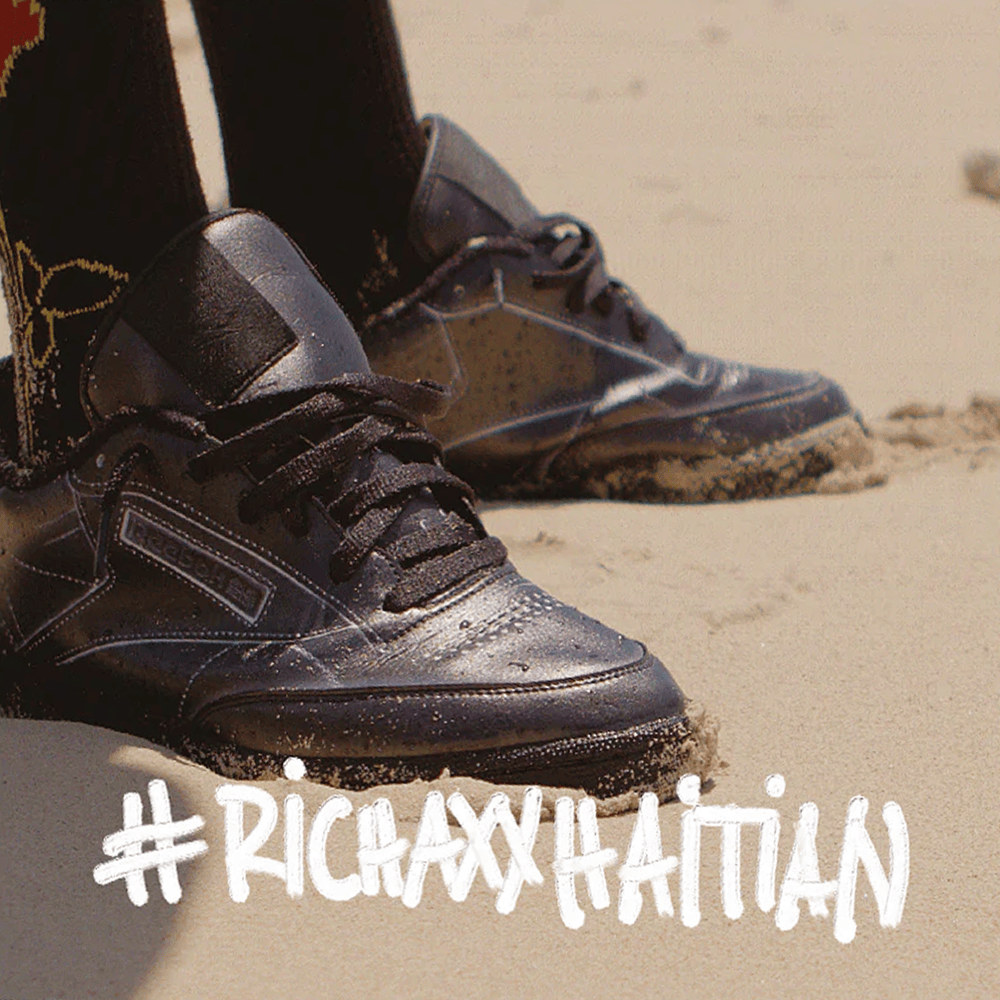
Similarly not suitable for the faint of heart is the reckoning of what is going down in the God-forsaken Caribbean country of Haiti right now. Just as the umpteenth forced foreign intervention is settling into the land in the hopes to stabilize it amidst a political vacuum and a guerrilla ruling through warlords, native transplant via New Jersey Mach-Hommy is riding on the coattails of his definitive homeland tetralogy installment, #RICHAXXHAITIAN. Out the same day as Please Don’t Cry, 17th May, one day before Haitian Flag Day—we weren’t kidding about May being stacked…—the album is Mach’s fourteenth to date. It’s a gesamtkunstwerk of insurrectionary socio-political vignettes, simultaneously doubling as the Haitian-American rapper’s most catchy and accessible. The oeuvre is a multi-lingual, multi-genre, and multi-cultural affair, cross-pollinating autochthonous Haitian traditions with gritty posse street rhymes, typically associated with the New York Tri-state area.
The Griselda Records-affiliate keeps it grimy throughout the seventeen tracks sequenced on the digital version of the album, clocking in at just shy of fifty minutes of runtime, but goes particularly hard on cuts such as “SONJE“, “COPY COLD” (amplified by a superlative tell-all verse by Black Thought), and “GUGGENHEIM JEUNE“. Elsewhere, he attains higher levels of earworminess—not exactly something we’d have thought we’d use to describe Mach-Hommy’s music—on “SUR LE PONT d’AVIGNON” and the titular lead single, aptly produced by fellow Haitian descendant KAYTRANADA (who is out with an impressive new tape of his own, just not strictly speaking a rap one to land on this list. Also no Knick wears #9 at the moment). Regardless, #RICHAXXHAITIAN is another full body of work experience for you, no cherry-picked finger food. It demands above-average listening prowess and command, but its rewards are so fulfilling that one might find themselves leaving the tape both spiritually and cerebrally re-aligned.
We sound like a broken record at this point, but the month of May shockingly managed to squeeze in one final musical coup de grâce before turning the calendar page. Long Beach rap laureate Vince Staples returned with his Def Jam swan song offering Dark Times on Friday the 24th, marking his sixth LP, a couple years after his double dipping with Vince Staples and Ramona Park Broke My Heart (2022). Perhaps the most singular and forlorn recommendation in this summer batch, the 35-minute statement comes as yet another reflective and contemplative series of essays. Less a cohesive concept album than a string of powerful short stories, the collection ventures in what’s arguably the vastest sonic range ever touched by the former Odd Future syndicate. While for all intents and purposes still filing this under a loud West Coast hip-hop file cabinet, it’s worth noting how numbers like “Shame on the Devil” flirts with jangly alt-pop instrumentals, while “Freeman” pushes experimental garage guitar licks way past the point one’d expect on a mainstream rap record.
Fair warning, if Slum Village’s F.U.N. is the most summer record on this list, Vince’s Dark Times is the least sunny one of the crop. I guess one could’ve figured that much from looking at their, album titles? Sometimes the proof really is in the pudding. However, fret not argonauts, since Vince’s got you and your feet covered with hot bops such as “Étouffée” and “Little Homies“—coincidentally the best, gnarliest, and most well rounded tunes on the whole record. In promoting the album, the 30-year-old LA-native asked fans not to overthink his songs, all to aware that is easier said than done when you happen to be one of the sharpest and critically acute pens of this generation’s rap cohort. Yet, that’s what makes this project a wicked collection of summer bars, too—aside from being Vince’s greatest, it’s also unassuming and easy listening to the ears, without sacrificing the usual poignancy and street wit folks have grown accustomed to expect from him.
Our sixth suggestion dropped halfway through June, a month that usually does not mess around when it comes to raising the mercury bar. In keeping with the sweltering heat brought by the official calendar kick off of the summer season, NxWorries’s highly-anticipated sophomore project Why Lawd? keeps us sweating from all pores. The American hip-hop super duo comprised of singer, rapper, and record producer Anderson .Paak and producer/songwriter Knxwledge followed up their critically acclaimed cult debut Yes Lawd! eight years later with an ultra crafty helping of 19 new joints. Released under legendary underground hip-hop label Stones Throw Records, the project manages to top its lauded predecessor, doubling down on quality songwriting, impeccable deliveries, and a trademark vintage sound that somehow still reverberates as fresh and unique, in spite of how deeply influential it’s been throughout the past decade.
Slowly rolled out throughout the past two years—lead single “Where I Go” featuring H.E.R. originally debuted as early as October 2022 (!)—and teased for even longer than that, the studio effort from the talented hip-hop duo was well worth the wait. Coasting through 45 minutes of runtime with the swagger and effortlessness of an off-season mixtape, this thing is extremely front-loaded, with one gorgeous slapper after another clocking in from second cut “86Sentra” through track number nine “FromHere“. A-list guests such as Charlie Wilson, Rae Khalil, and Earl Sweatshirt, as well as upheld catchiness make Why Lawd?‘s side B still well worth sticking around, in spite of a few dubs hinting at an even stronger record in there with a more focused editing. Nonetheless, cue this up if you’re in the market for some sexy, irreverent, and unhinged fun, all while summoning the Lord.
Lupe Fiasco‘s ninth studio LP Samurai is our penultimate tip off. Released just fresh outta the oven at the time of writing, this is a different kind of half hour to spend this summer. According to the groundbreaking Chicago MC, the project is “a loving & living portrait to and of one of my favorite artists, Amy Winehouse“. Because, sure, why not? The American rapper, record producer, and university professor’s successor to his otherworldly Drill Music in Zion (2022) has been highly anticipated—safe to say he did not phone it in. Once again entirely executive-produced by Drill Music chief sound orchestrator Soundtrakk, the concept for the record was grown from a voicemail left by the late English R&B singer for her producer Salaam Remi before her passing. In the note, the London-born singer/songwriter expressed her penchant for coming up with little, beautifully alliterated battle raps at the time, even likening herself to a Wu Tang Clan-inspired samurai.
Channelling all of the above, Lupe allowed for the story and album to take on a life of their own, kicking dances off with the title track as lead single halfway through May, before teasing the full project one more time with the infectious victory lap of “Cake“. The LP masterfully couches blistering highs and crushing lows all within eight records and half an hour of material, condensing subaltern scenarios and sketches of what a spitting Winehouse could have sounded like. Cuts such as “Palaces” at number four on the tracklist prove how easily the 42-year old alternative hip-hop pioneer can pen tunes so gorgeous they almost hurt, while “No. 1 Headband” acts as little reminder that he’s not forgotten how to have self-reflective fun, either. If you’re only sampling one project from this list of eight, and hinge on intellectually stimulating wordsmiths, make it this one.
Actually, maybe, make it Common and Pete Rock’s The Auditorium, Vol. 1. The only catch is that it’s not out yet, so don’t take our full word for it (methodical purity has left us long ago…). What is certain though, is that if we are to trust the first three teasers unearthed hitherto, “Wise Up“, “Dreamin’” and “All Kind of Ideas“, this is poised to be the signature hip-hop album of the summer, probably year. Marking the fifteenth solo studio LP for the Chicago conscious rap extraordinaire, The Auditorium, Vol. 1 is lucky enough to be enjoying Pete Rock’s unparalleled production chops throughout its projected fifteen cuts. A golden age East Coast hip-hop meeting of the minds, chopped and screwed in heaven. The full album is just mere days away, slated to drop everywhere on Friday 12th July. Here’s what we know for sure: it’s the summer, and there will be bars—guess the whole write up could’ve just been that verse.
We’d like to thank you sincerely for taking the time to read this and we hope to feel your interest again next time.
There’s a target on Mach-Hommy’s back. Dead or alive. Reward unknown; although the protraction of techno-feudalism and post-colonial hegemony are probably solid enough guesses. You ask the Haitian-American rapper and record producer yourself. As revealed in his recent public service plea, following shortly after the release of his fourteenth solo album #RICHAXXHAITIAN, there appear to be obscure industry forces at play attempting to curtail the propagation of his message conveyance. Self-released on the 17th May, one day before the momentous annual celebration of Haitian Flag Day, the 17-track project completes the New Jerseyan’s autochthonous album tetralogy—also inclusive of H.B.O. (2016), and 2021’s Pray for Haiti and Balens Cho (Hot Candles)—and was preceded by the eponymous lead single in early May.
Too bad that Google managed to botch the title track’s music video premiere on Mach-Hommy’s own YouTube channel, offering no conclusive explanation for it at all, leading to assume salacious intents behind the ‘unprecedented’ glitch. Too bad that mere days after the album’s public streaming release on DSPs, it mysteriously evaporated from leading outlet Spotify—the latter citing a takedown request from the artist’s camp itself, categorically denied by the Griselda syndicate in the aforementioned video explainer. In both cases, literally involving the largest streaming platform in the world (YouTube), and the on-demand audio service with the highest amount of global paying subscribers (Spotify), the explanations furnished left little to write home about.
In fact, Google’s troubleshooting yielded a complete and laughable non-starter. As outlined in the clip by Mach-Hommy, the internal investigation conducted by multiple layers of YouTube reps upon his flagging of the loss of admin privileges on his own account, as well as the temporary erasure of subscribers during the music video premiere window, returned a pathetic ‘we’ve got no clue as to what happened there, sorry’. Conversely, Spotify dug deeper into its more generous void of incongruous wiggle room in delivering their version of the root cause analysis, owing to the (wholly purposeful) digital record industry’s protocol entanglement. As mentioned, after both the Swedish streaming giant and an unnamed digital distributor washed their hands off by claiming the withdrawal request came from Mach-Hommy’s people, the East Coast MC was informed that his product, the #RICHAXXHAITIAN LP, was missing its Universal Product Code (UPC). An ontological fallacy, for not only was the release perfectly available on all other DSPs at the time, but as Mach rightfully cites in the video, the project wouldn’t have made it to Spotify servers in the first place without it.
Where affairs get even more nefarious is in the aggravating insult provided by the parties at play, who mentioned a now-deleted post by an faceless, nameless X user, interpreting #RICHAXXHAITIAN‘s disappearance from Spotify as a marketing stunt from Mach-Hommy, and fomenting doubts as to who watches the watchdogs in the online pursuits of the truth. The X user alleged that the MC’s strategy was to entice fans by sampling the album as a taster over release weekend, in the hope that they would turn to his webstore to purchase exclusive physical formats—going for a much higher price point. Once again, all of this getting debunked by the artist himself. Putting two and two together, one can’t help but think this is some sort of poetic injustice for a lyricist as concerned with historical revisionism, reparations, the Haitian diaspora, and the plague of colonialism in his ancestral country as he is. After all, retaliations might have assumed newer and more impenetrable forms in the modern age, but they are surely far from a holding pattern of inaction.
This all transpires as being particularly suspicious on account of not just the prolific rapper’s imperialistic establishment antagonism, but also his worthy industry literacy within contemporary digital music practices. Yes he is an actual multi-lingual prodigy thanks to his diverse cultural provenance, yet have you considered that the contemporary record industry’s intentionally dubious language is an idiom he can tally up as yet another atypical string in his bow? When he took legal DMCA action to have all of his works removed from online lyrics providers such as Genius in 2019, he knew he was stirring up a pretty big hornet’s nest. You will likely not be surprised to learn that Genius has long been finessing a number of licensing deals with DSPs under the hood; with one of the largest ones being with, guess whom? Spotify.
This is perhaps a good moment to afford us to elaborate on such content provisioning agreements. We wish we could go into more specifics, but please trust us when we say that we get Mach-Hommy. Without even delving into licensing deals involving the actual sound recordings couched within digital releases, aka the masters we all end up listening on the client side, the narrower lyrics and compositions provisioning business itself is riddled with enough jungly inaccessibility. Not unlike the wider record industry ecosystem, it’s a self-referential distribution funnel washed in a sea of conduits and intermediaries. Rightsholders—such as the self-released and self-published Mach-Hommy—are typically forced to strike deals with certain providers supplying other providers to at least a few degrees of separation before even making it to the end-consumer platforms such as Genius.
Not only does each of these agents retain a significant double-digit kickback on any royalty exploitation event, but within the lyrics consumption realm specifically, these are the kind of publishing deals operating under so-called ‘most-favored-nation’ (MFN) terms. In other words, allowing no room for negotiation or clout at the dealings table whatsoever. What’s even more disheartening within such copyright systems and their application within modern digital platforms is that legal frameworks around royalty rates and statutory regulations are a total mess. Most royalty payments are still remitted via lump sum settlements and upfront reconciliations, with little to no consideration for the actual mechanical reproduction figures for each work. In a way not too dissimilar from Mach’s warlord-stricken gang-centric Caribbean homeland, each end-user platform is free to enact their own price-regulated cartel, benefitting from the lack of international regulation and governance around fair trade.
Yet Mach-Hommy resists. He educates himself, learns the language of the oppressor, and fights with whatever he can. That’s why he’s wanted. That’s why he has a target on his back. And a very concrete countermeasure he enacts is seizing back control of his own art. What he does is that he increases the average consumption price point for each of his superfans, by selling physical formats for three-to-four digit $ price tags. For those versions, he retools the tracklist, too. In #RICHAXXHAITIAN‘s case, track number two “ANTONOMASIA” is titled “SOBRIQUET”, enlisting a guest verse from Tha God Fahim instead of Roc Marciano (allegedly a vox populi decision, as the rapper held a poll during a listening party earlier in the year). “BON BAGAY” at number four is a vinyl-exclusive, while the streaming-available “SONJE” is pushed back on the sequencing to act as the album’s coda. Crucially, “SUR LE PONT D’AVIGNON”, indeed available on streaming services, is wiped off the vinyl version as a quintessential middle finger to French post-colonial forces. Elsewhere on the waxing, “XEROX CLAT” gets retitled to “XEROX TWATS”, while “COPY COLD” and “PADON”—renamed “PARDON” with a Mach-Hommy verse in Tha God Fahim’s stead—are backtracked by a different instrumental beat than their digital counterparts.
In a press statement accompanying #RICHAXXHAITIAN, the wordsmith made the following clear:
I’ve always wanted to rep for Haiti and the cultural and intellectual richness we’ve provided the world. From our musical styles like kontradans that have influenced world music, our natural resources which provide so much raw material for so many important advancements in technology, our thinkers that pioneered philosophical movements and Black pride, and our spiritual leaders who kept the religious traditions of Guinea alive and intact, the religious traditions of Ayiti…
Musically, the album is a masterpiece. It’s a dense, wordy, intricate, disparate, and sticky affair—all at the same time. There’s a glacial undertone throughout the production that exhumes a dejected haziness fitting like a glove atop of Mach-Hommy’s boneless and contorted flows. Complication here is being offered as an act of resistance. Those who really listen, get it. In reviewing the record, good ole Professor Skye made the case for obscurity and incomprehension as a purposeful creative strategy for Mach-Hommy to fence off shoehorning and diluting industrial gentrification. While at the same doing justice to the richly profound social and cultural heritage of Haiti. It’s a valid heuristic, one that enables the New Jersey-native to always be one step ahead of reductive law enforcement. In his line of work, that happens to be private hedge fund-backed technology companies, purporting themselves as the arbiters of an emancipated creative ecosystem, fostering democratized access to all art. Sur le pont, d’Avignon…
We’d like to thank you sincerely for taking the time to read this and we hope to feel your interest again next time. And don’t forget to pray for Haiti.
What if each member on the core 2023-2024 New York Knicks line-up entering the NBA Playoffs was a song on Pearl Jam’s latest full length Dark Matter? With box score stats and roster standings updated as of the second game of the First Round best-of seven series against the Philadelphia 76ers in the Eastern Conference (NYK up 2-0), that is exactly what is going to happen here. To get our ducks in a row, the Seattle grunge rock legends’s 12th studio effort was released earlier this month on Republic Records, and comes four years after their 2020 mixed bag Gigaton. All cuts on the project were produced by new-gen West Coast rock historian and Eddie Vedder-worshipper Andrew Watt, clocking in at just shy of 50 minutes on new fierce, ironclad, and robust material.
Before we delve into the sequencing—a quick monition on the draft method used to select the New York Knicks players. We’d be remiss if we didn’t start by acknowledging the perhaps painful omission of 25-year-old center Jericho Sims (#45) from the tracklist. In our operationalization’s defense, the album has only got eleven tracks, so a cursory season playtime extraction coupled with a lower musical match make him the proverbial twelfth man cut from this rock band team. For similar, yet less controversial reasons, further Knicks bench players on the official roster list this season, such as Jacob Toppin (#00), Duane Washington Jr (#1), Charlie Brown Jr (#4), Daquan Jeffries (#8), Shake Milton (#13), Mamadi Diakite (#21), are also excluded from being considered for this shortlist.
1.Scared of Fear — Bojan Bogdanović (#44) | Credit his naturally alarmed glance, or conversely, the gregarious approach he must’ve adopted to break through in the world’s top basketball league hailing from God-forsaken Croatia, but the 35-year-old small forward veteran feels like the best place to start with the PJ record. Slowly coming into this own after the February trade from the Detroit Pistons, he has so far undoubtedly been the more impactful of the two partners at the Law Firm of Burks & Bogdanović. The track’s full-throttle percussions and piercing guitars act as a fitting metaphor for his full-court hustle and shooting prowess, while the sonic plateau culled in the song’s bridge stands to represent the ebbs and flows experienced with the Knicks jersey hitherto. Still, the robust runtime at four minutes and a half nonetheless denotes Bogey’s stoic and earnest style of play on the floor.
2. React, Respond — Miles ‘Deuce’ McBride (#2) | “Don’t let the sky hook beat you to submission / Maybe it’s the price of price of our admission / Ain’t no fucking roses to our condition / Turn this anger into nuclear fission, yeah, baby, baby“. What better set of lyrics to describe the improbable ascent of what is now officially the floor general of the Knicks’s second unit? After a somewhat underwhelming first half of the season—bottlenecked by a wealth of players trumping him in coach Tom Thibodeau’s formation rankings—something unlocked in earnest around the NBA All-Star break for the former West Virginia Mountaineers youngster. McBride is arguably a top three ball handler on the team, and as a nod to the opening song stanza, has never let his smaller size be a limiting factor in his NBA hooping shenanigans. He was ready to seize his chance, and that has led him to become the second pure playmaking guard choice in the line-up—right after none other than breakout team star Jalen Brunson.
3. Wreckage — OG Anunoby (#8) | Befitting his first name shortening acronym, this Englishman in New York plays with the grace, poise, and wisdom of a multi-decade seasoned statesman, belying his mid-twenties age registry. A star trade in the winter transfer market season across the whole league, the Knickerbockers hold a stupidly impactful 20-3 winning record when Anunoby is on the floor (Playoff games included). A wreckage was both the athletic juncture he joined the Manhattan team in—with key starting players Robinson and Randle reported out for the rest of the season at the time—and the clinical picture of his right elbow during that fearful February-March stint, where he himself had to be sidelined, met by most Knicks fan’s exorcisms. The levity, emotion, and lightness with which he plays mirror the track’s sunny and carefree spirit, while the wholesome flair on the lyrical front as well as a soaring and catchy refrain recalling his vastly underrated jams at the rim.
4. Dark Matter — Julius Randle (#30) | For all intents and purposes, the greatest and most popular player on the team. The titular album track is not only its lead single, but its defining and equalizing driving force too. Congruently to its musical twin, Randle is the only element on the list that truly transcends the current team’s zeitgeist, as a three-time NBA All-Star and a two-time All-NBA player—on top being the NBA’s Most Improved Player Award in 2021. Now, scientific method sticklers might be quick to point out how his being out since the end of January due to his right shoulder dislocation should make him ineligible for this tracklist. Yet let us be serious, no Knicks roster list to speak of can afford to neglect its marquee player—especially during a statement season averaging 24 points a game, a whooping five more than his career average of 19. It’s plain and simple: the cut slaps, goes hard, and defines Dark Matter, so does (a healthy) Julius Randle.
5. Won’t Tell — Mitchell Robinson (#23) | The comic relief. Track number five on the album is the most uplifting, its most solar and joyous. Then again, do not get it twisted, Pearl Jam is stuffed with negative space and melancholy, even in its brighter moments. The song’s chorus motif chanting “You can find me here / Waiting for your message to come” seems like an indirect homage to Mitchell’s sweet spot stomping ground under the rim, while his unofficial role as the team’s prankster and meme master lends even more credence to him matching the record’s lightheartedness. We can’t skip the part where we acknowledge the cosmic balance found in this being Dark Matter‘s fifth track, and the traditional center role on a basketball court being labeled as ‘the five’. If you don’t read any more track-to-player pairings past this point, let this be proof this parallelism is worth humoring.
6. Upper Hand — Isaiah Hartenstein (#55) |The team’s tireless workhorse, he who played all 82 regular season games last year—reflected by an ambitious, expansive, and triumphant 6-minute opus. Heralded as way more than a luxury reserve for starting center Mitchell Robinson, Hartenstein kept the Knicks afloat during that critical February-March period, where they didn’t seem able to catch a break in their own town—alas, only to capitulate himself for a brief period under his own Achilles trials and tribulations. Much like the tune, Isaiah can be a smidge inconsistent at times, yet he never falters in blood, sweat, and tears, and most times he does manage to prevail and come out on top. As his signature defensive move, turn to this recent savage in-motion block of Tyrese Maxey’s surefire layup, denying the 76ers a certified win with only seconds left on the game clock during game 2 of the ongoing Playoff series.
7. Waiting for Stevie — Alec Burks (#18) | This one is rough. The second Knicks coming of 32-year-old shooting guard Alec Burks this winter was not supposed to turn out this way. After a somewhat average start in January and February—with sizable minutes as part of coach Thib’s end of 1st and end of 3rd quarter second unit rotation—the AWOL partner of the Law Firm of Burks & Bogdanović gradually faded into the team’s anonymous background, with a measly 30 minutes of combined playtime on the floor during the last ten Knicks games to date, and an even more dreadful 5 total points scored during the same timespan, for bad measure. Swap the “Stevie” for “Alec” on the similarly underwhelming, contrived, and rough around the edges album track’s title, and that tells you everything you need to know here. Mediocrity-fest.
8. Running — Josh Hart (#3) | A clear case for when a one-word song name fits a player like a glove. Josh Hart has low-key been the true blue-collar revelation of this New York Knicks season. The definition of an industrious all-around role player, this guy’s regularly playing 40+ minutes each game, and not batting an eye. Eddie Vedder’s opening verse on the cut, “Got me running, got me running, but the race, it never ends / Got me running, or else I’m done in / You got me coming as you’re going and the chase, it never ends / I’ll be running ’til the second coming” legit sounds like it was written about the versatile 29-year-old Maryland native. Hands down the best rebounding guard of the whole NBA, and its most ruthless birdwatchers’s murderer, Josh Hart epitomizes all the little actions and plays that don’t quite end up in the box score, but that make teams win games, and (hopefully) leagues. The track is a two-minute incendiary blister that cuts throats and claws listeners by their ears, not without splashing specks of melody and introspection. The h(e)art and soul of the project.
9. Something Special — Precious Achiuwa (#5) | The quintessential providential player. Nigerian-American Precious Achiuwa was there when no one else was. A ductile player and homegrown New Yorker—via Miami and Toronto—he is able to seamlessly play each of the five positions on the floor. In those few and far-in between games where Robinson, Randle, Anunoby, and Hartenstein were all down, he rose from the ashes and stood up for the city, carrying the whole quintet’s presence under the basket on his shoulders. Arguably the most underrated overachiever on this Knicks version, it was his outstanding locked-in performance during those cold winter months that made it possible for fans to quickly forgive and forget RJ Barrett and Immanuel Quickley for jumping ship during the trade window—not exactly the easiest kicks to fill. As better and stronger songs come back to relevance on the tracklist, Achiuwa finds himself retreating to warming up the bench a bit more—albeit never forgotten. Not the most skilled, talented, or dexterous player on the list, but boy is he something special.
10. Got to Give — Donte DiVincenzo (#0) | The Knicks sniper with a diesel engine. Big Ragu went from borderline disappointing summer trade wannabe-highlight to fixture shooting guard starter on the 2nd seed team of the Easter Conference in around six months. Whilst at that, he saw fit to set the all-time franchise record for three-pointers in a single regular season with 283 (joining Stephen Curry, James Harden, Klay Thompson, Paul George, Buddy Hield and Luka Doncic as the only players to make 280+ in a season). Coinciding with the tune’s crescendo build, DiVo successfully learned how to make himself indispensable, much like this back-end album highlight. Catchy, agreeable, and so damn trademark Knicks; together with the aforementioned Hart and Jalen Brunson he represents that Villanova Wildcats college basketball core that is daring the Mecca of Basketball to dream big this year. “I’ll be the last one standing / I’ll be the first to forgive, yeah“—if one is to trust Pearl Jam, the sniper’s aim is sharper than ever.
11. Setting Sun — Jalen Brunson (#11) | Last, but not least. Song number eleven for #11. Yes, Randle might be the New York Knicks poster child, but Brunson is their prodigal son. The indisputable leader and top scorer on this team, thanks to his formidable performances and sensational contributions to the Knicks once-in-a-generation season record, Jalen was named an All-Star Player this past February. Like his sonic counterpart, he is beautiful to watch, universally impactful, and the undeniably constituent part of the whole. The guy is averaging 29 points and 7 assists per game this season, for God’s sake. We couldn’t imagine Dark Matter without this wall-to-wall acoustic enchantment coda, and so can’t we the New York Knicks without his 27-year-old point guard. Without being a prisoner of the moment, Jalen Brunson is poetry in motion. Jalen Brunson was born to play basketball.
We’d like to thank you sincerely for taking the time to read this and we hope to feel your interest again next time. And good luck to the Knicks in the Playoffs this time around.
Essaying to introduce audiences to a body of work whose first of six installments debuted more than thirty years ago might seem like an oxymoron to most. Yet, considering the multi-hyphenate and still to this day vastly under-appreciated career of hip-hop MC extraordinaire Keith Edward Elam—aka Guru, a backronym for Gifted Unlimited Rhymes Universal—we claim this framework to be based and useful to some. The exceptionally talented American recording artist, producer, and actor, whose career was tragically cut short in 2010, is best known for his long-lasting impact as one half of superstar alt-rap duo Gang Starr, accompanied by DJ Premier on decks and production duties. Fewer people have the Boston, MA-native’s solo career trajectory on their radar though, particularly as it pertains to his contributions as the host of the unsung collaborative live jazz-rap project series dubbed Jazzmatazz. In his own words: “an experimental fusion of hip-hop and live jazz”.
While on a break in-between Gang Starr albums in 1993, the East Coast rapper saw fit to temporarily diverge from his storied trademark partnership with DJ Premier and venture into collaborations with both old-school and new-school postmod jazz stylists. The first 21-track chapter result of the series, Guru’s Jazzmatazz, Vol. 1: An Experimental Fusion of Hip-Hop and Jazz, saw the light of day that same year, and featured notable collaborations with none other than Donald Byrd, N’Dea Davenport, MC Solaar as well as Roy Ayers. While overall positively received at the time, the exploit reveals vast amounts of comfortable smoothness beyond what meets the eye; that both aged incredibly well, and belied Guru’s otherwise streetwise toughness.
To be clear, the sampling and interpolation of jazz segments into rap joints was nothing new to Gang Starr or even other prominent hip-hop collectives at the time. However, the way Guru executes that marriage throughout the six-episode Jazzmatazz series results in much more intricate, slamming, and gently seductive records than their street-anchored ones. Doubling down on his successful series opener, Guru’s Jazzmatazz, Vol. 2: The New Reality followed suit a few years later (1995), with as much as an hour and fifteen minutes of new material, counting an expanded stylistic horizon inclusive of Chaka Khan, Ramsey Lewis, Branford Marsalis and Jamiroquai amongst its ranks. The project ended up commercially outperforming its predecessor, peaking at number 71 on the Billboard 200 chart (Vol. 1 had to make do with number 94) and number 16 on the Top R&B/Hip-Hop Albumslist, lending marketable credibility to Guru’s trailblazing vision at the time.
Amazingly, Guru’s Jazzmatazz, Vol. 3: Streetsoul—the following offering in the run arriving five years later—did even better across its sixteen cuts than the previous two albums did. Departing even more drastically from the intelligent hardcore lessons set to incidental jazz on the first two chapters, Vol. 3 embraced more neo-soul and R&B-centric aesthetics, recruiting both genres heavyweights such as Angie Stone, Bilal, Craig David, Donell Jones, and Erykah Badu. Notwithstanding a perhaps more lukewarm critical reception from the reviewing intelligentsia, the album peaked at #32 and #8 on the Billboard 200 and Top R&B/Hip-Hop Albums charts, respectively. Evidently, there existed at the time an audience appetite and marketability for the previously unchartered territory of direct taping live instrumentation to underscore sixteen bars over sixteen bars, aptly spat by a generationally impactful and revered MC.
Initially inspired to pursue his vision by a trip to Europe in the late 1980s, during which his eyes opened to the so-called ‘fusion scene’ where hip-hop breakbeats got grafted onto live jazz sonic mantels, Guru was all too aware that his ongoing undertakings with Gang Starr were loaded with too much pretext and expectation for them to be the right conduits for Jazzmatazz. So, leaning into a softer edge, he fully committed to experimentation under his own name instead. The East Coast hip-hop staple left no stone unturned in pledging allegiance to such cause, ranging from the more obvious instrumental layer all the way to his lyrical content. By his own admission, verses and flows on his Jazzmatazz series are more laidback, more easy listening, although still message-oriented. Moreover, he had no small chip on his shoulder—one grappling with the trials and tribulations that came with the record industry of the time.
Lamenting how the lack of radio hit records with Gang Starr was less attributable to the music’s inherent palatability than to label executives’ shortsighted understanding of what the art stood for, the wordsmith actively sought alliance from jazz and its cats on account of what he saw as a shared cultural curse. Both genres are art forms that are highly relevant and intrinsic to black culture and experience, and they both deal with real emotions. As the rapper learned of the different ways the grandparental record industry tampered and warped jazz in an attempt to increase its commercial appetite in the past, he immediately saw the value in uniting in order to speak truth to power. In a poetic twist of fate (and perhaps not coincidentally), major label Virgin Records, that had earmarked his Jazzmatazz endeavors hitherto, stopped supporting Guru’s recorded affairs after Vol. 3. So he went ahead and founded his own imprint in response; 7 Grand Records.
Guru’s Jazzmatazz, Vol. 4: The Hip Hop Jazz Messenger: Back to the Future—his sixth solo studio LP to date (in-between Vol. 3 and 4., he dropped the standalone projects Baldhead Slick & da Click and Version 7.0: The Street Scriptures)—took a whole other seven years to come to fruition, only to clock in at just shy of an hour of runtime as it was released by 7 Grand Records in 2007. Officially billed as the final installment in the Jazzmatazz canon event, the full length was entirely produced by Solar, and features guest appearances from Blackalicious, Bobby Valentino, Slum Village, Common, and Damian Marley amongst others. However, in a move that put even Frank Ocean‘s 2016 millennium label deal finessing to shame, Guru and 7 Grand saw fit to surprise drop a raw companion mixtape on the same 31st July Vol. 4 came out: Guru’s Jazzmatazz: The Timebomb Back to the Future Mixtape. So much for making a statement of intent directed at the majors.
Ironically, the industrious approach ended up backfiring, turning the right heads in the major label circuit. A mere year later, on the heels of Guru’s growing legacy and influence both within and outside of his Gang Starr lane, dearly departed Virgin Records kind of proved his original point entirely by throwing together a puffy, rushed, and haphazard Jazzmatazz greatest hits compilation. It’s too bad that owing to the EMI/Universal Music Group controlling stake of the body of work’s front-end, the best-of collection only featured 18 cuts, limited to the first three Jazzmatazz volumes. Not exactly the faithful rearview mirror doing justice to the whole creative vision on Guru’s part. Only two years later, and not without having released his swan song solo LP Guru 8.0: Lost and Found, Keith Edward Elam passed away from myeloma at the premature age of 48. Although his carnal manifestation might’ve moved on, his visionary impact is forever. Amidst a genre-less and experimentation-prone contemporary musical zeitgeist, Guru’s Jazzmatazz was both prescient and incisive—as Nate Patrin so eloquently outlines for Stereogum:
Jazzmatazz isn’t nearly as outlandish an idea as its creators might have thought at the time. That seems to matter less than the fact it still bumps, though, and slotted between the two Gang Starr classics that bookend it, it captures one of the all-time greatest MCs at a creative peak. Maybe the more important takeaway is this: it’s always worth celebrating when hip-hop finds a way to do the job of preservation that the conservative purists never really could do alone. And the future belongs to those who know where to take the past.
We’d like to thank you sincerely for taking the time to read this and we hope to feel your interest again next time. RIP Guru.
AV
Below listed and displayed are Guru’s Jazzmatazz volumes (1993-2008):
Guru’s Jazzmatazz, Vol. 1: An Experimental Fusion of Hip-Hop and Jazz (Chrysalis, 1993)
Guru’s Jazzmatazz, Vol. 2: The New Reality (Chrysalis, 1995)
It’s the feel-good heat of the summer and the laureate poet of Willow Lane has a new site, so it only felt right to come on here and blabber about a string of singles that recently saw the light of day and fiercely stand to represent lead promo anticipation for hyped up full length projects from a couple of acts on the rise (both the record label and figuratively, as in starting to climb their career ladder showing promising signs of imminent explosion and audience adoption). We thought we’d collate and scrutinise a gauntlet of songs that caught and left our attention over the past month or so, worthy of critical appraisal by way of short, straightforward, passionate, biased opinions. Sonically, it’s everything but the kitchen sink, illustrating works of art ranging from the anthemic arena rock of California alternative band Angels & Airwaves (aka AVA) all the way to the indie R&B synth-pop sensibilities of singer/songwriter Dominic Fike, as well as the quintessential electronic retro nostalgic vaporwave orchestrations of the stylistic meetings of the minds between Virginia-native George Clanton and 311’s Nick Hexum.
When Tom DeLonge is not busy figuring out astrobiology and breaking life in space via his para-governmental scientific think tank venture To The Stars… Academy, his principal day job for the last fifteen years or so—notwithstanding his erratic and dysfunctional blink-182 reunions in-between—has consisted in masterminding, fronting, and furthering the realm for multi-media douchy artistic project AVA, whose meaningful musical output in the 2010s had to be significantly kneecapped by his extracurricular commitments both inside and outside the music sphere. So much so that aside from a couple lukewarmly received EPs, dating sometime during the decade’s back-end, their sole, true, proper front-to-back album and relative promotional cycle was 2014’s The Dream Walker—one no less exclusively written by Tom with the only help of multi-instrumentalist extraordinaire Ilan Rubin, sans founding member and fellow guitarist David Kennedy (who, fair enough, was probably very preoccupied running and nurturing his entrepreneurial stick via his artisan and handcrafted coffee brand in San Diego).
2019 brought along rosey eventualities for AVA fans though, as the band not only saw fit to officially reunite with Mr Kennedy, but also enlisted prominent and reputable bass guitar virtuoso Matthew Rubano (of Taking Back Sunday and All-American Rejects fame) for a host of live shows in the USA spanning the fall of that same year. On the heels of a new partnership with BMG Rights-owned underground indie imprint Rise Records, and in conjunction with the mini tour announcement which came in April 2019, Tom and co. unveiled two new crisp and synth-laden exploits, poised to tease and preview an upcoming album slated presumably for some time in the near future. First was the carefree, sticky, and electro-poppy “Rebel Girl“, followed up shortly during the summer by the washed out and tongue-in-cheek “Kiss & Tell“, two unequivocal indications of a band’s heightened flirt with catchier melodies and emotive radio-friendliness, perhaps stemming from residual occupational hazards from many of the project members’ past budding experiences in the upper echelons of the American pop-punk canon.
So next thing we know 2020 rolls along, and with it various irreversible ecological cataclysms, an unprecedented public health crisis, and existential insurrectionary racial protests plaguing virtually the whole Western hemisphere—these not just completely jeopardising the music industry’s lifeblood and sustainability, but also obviously putting gargantuan brakes on any creative process’ progression due to take place during this year’s first cursed half. Nonetheless, some time in April amidst peak pandemic mode, AVA chose to reveal a third single in anticipation to its yet-to-be-announced sixth studio LP, coming in the shape of the four minute atmospheric stadium rock number “All That’s Left Is Love“. This cut strips back the abundant tapestries of electronic layering that so pronouncedly ornamented their first two singles in this series, in favour of a rawer and more organic six-string sonic funnelling coupled with unsurprisingly outstanding drumming from Rubin, throwing listeners back to some of the collective’s earlier efforts (as heard particularly on their debut LP We Don’t Need to Whisper). However, what causes the tune to not stick its landing, leaving much to be desired, is Tom and Rubin’s uninspired songwriting here—falling flat on a strident lack of structure and spotty vocal lines. Bottom line, the tune at the core of this song needs fixing and more TLC.
Queued up next in this track roundup review bonanza is the inaugural offering from American singer and ex-rapper Dominic Fike‘s highly-anticipated upcoming debut album, which shall to this day remain untitled (although not un-tracklisted). After singlehandedly spurring a multi-million record contract bidding war amongst major industry players off the back of his grassroots SoundCloud hype and the clout surrounding his later re-released indie rock project Don’t Forget About Me, Demos, before lending his creative and vocal imprint on the BROCKHAMPTON collective, and dropping a handful standalone singles during the course of last year, the 24-year-old Floridian seems finally ready to unearth his long awaited first outing on major label Columbia Records. An initial robust hint in this direction was the release of the dead-beat and hypnotic R&B bedroom jam “Chicken Tenders” on 26th June—a teasing slice of what the full blown out project might hold attached to a hazy, hallucinating, and playful music video. Granted, this thing is far from a stunner or even a significant step up from the pre-existing sublime songwriting skills and instrumental proficiency he showcased on previous outputs, but it does hold inherent replay value and rocks an irresistibly exhilarating refrain, just mildly quenching our thirst while we await for the full album to drop: “Chicken tenders in my hotel, yeah / Christina’s in my bed watchin’ TV shows / When she hit the remote with her legs shakin’, that’s good love makin’ / Watchin’ wherever my head facin’, it’s for bugs, baby“.
Moving on from there—it’s time for vaporwave’s own self-declared David BowieGeorge Clanton, who turned the underground electronic music scene on its head in 2018 as he gave birth to his synthwave retro-nostalgia-soaked magnum opus Slide and legit started to turn heads in the industry, flirting with influential tastemakers, more mainstream circles, and even going as far as launching the first vaporwave-approved music festival in the world, 100% ElectroniCON. Ever the indie Internet underdog kid and founder of influential Bandcamp-generation full-service record label 100% Electronica, Clanton is also known by the monikers Mirror Kisses and ESPRIT 空想, under which he has been dishing out slightly different yet extremely adjacent stripes of cloudy electronic musings since the late Noughties. Meanwhile, late last year the Richmond, VA-native surprise-announced an exclusive creative collaboration with USA reggae-rock band 311’s singer and guitarist Nick Hexum—incidentally and by his own admission one of Clanton’s biggest musical influences. Initially, this resulted in the carelessly euphoric and angelic double single “Crash Pad / King for A Day“, featuring songwriting and production from Clanton hugging gnarly staccato deliveries by Hexum. This winning authored formula got preserved for a following streak of new singles in relatively fast succession, including the sublimely divine dream-state extravaganza of “Under Your Window“, the colder, insipid and lacklustre “Out of the Blue“, as well as a five-track EP dubbed Aurora Summer, unveiled at the end of May and bundling all previously debuted tracks plus the inclusion of the crunchy and gratifying synthetic moods of the self-titled opening piece.
Next thing we know, “Aurora Summer” the song gets downgraded to B-side on yet another two-track single from the top dawg-duo titled “Topanga State of Mind“, released at the end of June in what appears to be the last sonic teaser before a full length 100% Electronica-earmarked project drops on 24th July. This last preview offering might be the most unapologetically ‘vaporwave-y’ of them all, soaked and drenched as it is in gelid reverbed synth menageries, slickly working in joyous guitar riffs whilst comfortably nestling some of the most reductive and simplistic sets of lyrics heard on a Clanton tape to date: “Sunburn in a place I’ve never been before / When I get out here I feel like I know the score / Why’s it gotta be people can’t unwind? / You can’t move along until you’re righting the wrong / Even if you just put it in a song / Topanga state of mind“. Admittedly, once the self-titled debut comes out later this month, there won’t be much left to the listeners’ imagination, considering that a beefy six out of nine projected songs on the LP have already been unchained in some form or another over the span of the last ten months. Yet, it is always a joy and never a chore to re-delve into Clanton’s otherworldly and ontological auditory journeys—and while Hexum’s overproduced and mid-range-adoring singing is an acquired taste, arguably best left to this one-off collaborative effort, at this point the genius can’t be put back in the bottle.
I’d like to thank you sincerely for taking the time to read this and I hope to feel your interest again next time.
EMS has partnered with the good people over at Share PRO and is now officially accepting music submissions seeking unbiased critical appraisals—send us all your joints good and bad at this page and we will get back to you with a review in 48 hours.
I’d like to thank you sincerely for taking the time to read this and I hope to feel your interest again next time.
Fortuity, spontaneity, and intuition might not be your conventional attributes used to portray the causational origin behind a significant new supergroup, let alone in nowadays’ hypernormalized times—yet as far as recent Epitaph Records-signees Fake Names are concerned, those might just be the utmost apt ones. The American-Swedish quartet is composed of gargantuan Washington D.C. punk rock mainstays Brian Baker (of Minor Threat and Bad Religion fame) and Michael Hampton (S.O.A., Embrace, One Last Wish), who linked up in 2016 initially simply to jam and mess around with one another, without any thought furthering anything more than that. However, after they swiftly realised that their songwriting process and output yield was appearing to be flowing way more smoothly than expected, they landed on the temptation of putting an actual outfit together. So that’s how they figured they’d call up radical Johnny Temple from Girls Against Boys and Soulside, whom they knew from elementary school, and by their own admission seamlessly fit right in with their passion for what the bassist refers to as “loud, angry, visceral music”. One practice and writing session led to another, and by the end of the year the new formed punk Mount Rushmore enlisted iconic Refused frontman Dennis Lyxzén on rage-fuelled vocal duties, thanks to a serendipitous run-in at the same year’s Riot Fest edition in Chicago.
After a socially-distanced record crafting gestation lasting several years, before social-distancing became trendy and en vogue, the foursome saw fit to drop their self-titled debut LP Fake Names on 8th May—their alias doubling as a nod to both 1987 American crime comedy picture Raising Arizona and the relentless proliferation of false news items and statements, equal courtesy of both FAANG and Donald Trump. Allegedly recorded analogue and directly to tape in New York, and enjoying a little help from their friends Geoff Sanoff (A Perfect Circle, Jawbox) on production and Matt Schulz on drums and percussions performances, Fake Names is a straight-as-an-arrow, concise, and cohesive collection of ten meat-and-potatoes numbers clocking in just shy of half an hour. The album and ancillary band announcement were previewed with the insurrectionary blistering sing-along anthem “Brick“, unveiled to the whole wide world at the end of March in the heat of a full C-19 pandemic mode. The galloping and unnerved stunner barely reaches two minutes of runtime, yet manages to pack in it voracious lyrical content (“Took down the names of everyone in my little red book / Here comes revenge for everything that you ever took / Shots heard all around the world yeah you’re gonna bleed / Ever seen the face of revolution? It looks like me“), fiery distorted guitar play, and an exhilaratingly catchy refrain.
This project’s lead single acquires an even heightened sense of purpose when taken in context with the full track listing, sequenced as it is at number four between album highlight “Being Them“—a superior slice of garage rock-meets-power pop where Lyxzén proves just how he hasn’t skipped a beat when it comes to penning infectious hooks since his early Refused days—and the pensive, reflective tormented croonerisms of “Darkest Days” (“Here we storm into the darkest times / Stole our souls then they drained our minds / An epidemic of stupidity / Let us here left us all to bleed“). Other distilled examples of tracks furthering the self-proclaimed and actively sought-after objective of producing and recording straight to tape, without the help of guitar pedals or any manipulated sound effects (Fake Names go as far as making sure every song on the LP is credited as having “No synthesizers”), are groovy and visceral album opener “All For Sale” as well as its correlated ostracised hymn for the disenfranchised “Heavy Feather“, belonging at number six to the crop of songs on the shorter end of the runtime spectrum.
While both Baker and Hampton provide luscious and compelling backing vocal harmonies to Lyxzén’s biting and soar laments pretty much throughout this whole thing—incidentally lending that poppier flair that so strongly trademarked their previous pivotal scene bands in spite of their abrasive hardcore wrapping—two understated standouts portraying such functional texturing are both “Driver” at number two on the tracklist and the badass “Weight“. The latter so wonderfully underlines the overbearing six-strings chemistry between the two punk legends. In fact, the undeniable magic spellbound by Baker and Hampton and their instrumental dialectic in the studio had the group very aware they were in the midst of witnessing something nothing short of historical—sitting on the decades of influential dues paid by the two guitarists in the American hardcore punk scene. So bassist Temple on this fellow bandmates’ collaboration: “It’s two lead guitar players who really know how to work together, with such an incredibly fluid meshing of their individual styles, and there’s never a moment where they’re competing over who’s playing the catchiest riff. I’ve never seen a hint of anything like that before”.
For better or worse, Fake Names’ conscious decision to refrain from any audio-enhancing techniques employment in delivering their no-frills true blue punk rock directness and pathos does show through in multiple occasions on the full length, at times rendering the overall mix a tad too thin and bare bone for its own good. This can be experienced on the nonetheless adult alternative radio-friendly penultimate cut “This Is Nothing“, doubtlessly one of the lulls on this thing alongside formulaic frenetic LP closer “Lost Cause“, showcasing some of Lyxzén’s most uninspired and underwhelming pen game in recent memory: “Some kind / Some kind of violence / Something sacred something pure / Some kind / Some kind of wonder / Everything we’ve waited for / Hold on / Gotta hold on to this lost cause“. At the same time, it’s not like this back-to-basics sonic mantra is anything new for punk rock, and while the broader heavier music canon struggles to desperately try to re-invent itself via foreign electronic sounds and aimless genre crossovers amidst a wrenching existential crisis that displaced it afar from influential mainstream conversations, to much of critics’ dismay, Fake Names rely on elevating the inherent importance of each tape-tracked instrument, demanding listeners to pay a little bit closer attention to the final master. Not a bad trick for someone conveying not-so-disguised leftist prophecies and anti-capitalist sermons set to enthralling distortion.
It’s exactly this matter-of-factly demeanour and the singular way this music carries itself throughout its 28 minutes that make Lyxzén and co stand out, not only when compared to the overboard and exaggerated fringes of alternative music acts hopelessly engaging in loudness wars today, but also when placed shoulder-to-shoulder with their insular punk rock genre contemporaries. To this end, the Swedish frontman is not shy in highlighting the complete absence of spin doctoring that has driven the band since their inception in 2016: “A lot of times with bands there’s an agenda, and people often have very different ideas on what you need to do to succeed. But with this band there’s no agenda at all: it’s a project completely driven by lust for the music, and the simple fact that we just truly love playing together”. Raging against late stage-capitalism and diminishing returns has never sounded so catchy.
I’d like to thank you sincerely for taking the time to read this and I hope to feel your interest again next time.