I’d like to thank you sincerely for taking the time to read this and I hope to feel your interest again next time. And happy holidays this time around.
Having recently celebrated half a century alive on this big fat rock, North Carolinian singer/songwriter Ryan Adams took it upon himself to bookend this sad, strange, beautiful year with the official release of his long-awaited, indefinitely-shelved cult item BLACKHOLE. After making good on the promise of his ultra-epic PaxAm album tetralogy this past New Year’s Day (seeing the simultaneous release of four new studio LPs: 1985, Sword & Stone, Heatwave, and Star Sign), on this recent 6th of December he completed the longtime coming dispatch of his lost 2005 studio gem. With its widespread digital release following a few weeks after the delivery of its physical formats, the sough-after collection came through as an 11-track record, clocking in at just about 35 minutes of runtime. This new album marks his THIRTIETH, 3-0, solo full length since the 2000 breakthrough exploit Heartbreaker.
Speaking of his smash debut project, the former Whiskeytown founder recently announced an ambitious world tour for 2025, celebrating 25 years since its release, and spanning nearly sixty dates across eight months of the calendar year (March through October). Adams appears to be enjoying keeping himself untenably busy, for he’s literally just concluded his own other acoustic solo tour of the US this fall, highlighting additional anniversaries of career standout LPs such as Love Is Hell (twenty years) and his Self-Titled (ten years). It’s just too bad that nearly no cuts off either album were actually played during his 3+ hour, 30-song setlist, having recently witnessed his final tour stop in person at New York’s Carnegie Hall.
Back to BLACKHOLE—with an oral history dating the initial writing sessions for it as far back as 2005, it’s safe to say that the record has not only had fans salivate for its release for nearly twenty years, but it has also long been lauded as his one true masterpiece by pockets of hardcore stans. To fan them flames, the 7-time Grammy Awards-nominated artist famously noted how BLACKHOLE “took 4 years to make […] and to me it is basically Love Is Hell, Pt. 3“, adding how ‘it’s like Love is Hell’s sister. In every way. In the most profound way. My most beautiful electric guitar: Johnny Marr-inspired guitar. It’s just all in there“. Now that the gift has been unwrapped, that is certainly not untrue. It’s also interesting though how sonically, this record does not feel out of place amidst the recent spat of consecutive releases, either (particularly when placed side-by-side with outings like Chris, FM, and Devolver)—lest one forgets, Ryan Adams has unveiled as many as sixteen different projects since his marvelously austere Wednesdaysin late 2020.
Now, this realization certainly begs a question with one of two possible answers; i) either has BLACKHOLE been receiving some late-stage studio retooling and retouching (further corroborated by the apparent last-minute omission of previously announced deep cut “Disco Queen“, dropped on the cutting room floor), or ii) some of the projects he’s been releasing in the past couple years actually date back a few decades recording-wise. Truly and honestly, by virtue of both his relentless prolificness, and his endlessly deep catalog, either has merit and robust chances of being true. At the end of the day, it doesn’t quite matter, for BLACKHOLE is no ‘new music’ by any stretch of the imagination—yet future historians will look at the 6th of December 2024 as its birthdate, so we might as well treat it as such and give it a little appraisal.
Musically, albeit a tad bit more polished and sanitized compared to, say, the roughness of Heatwave, 1985, or his recent coverseriestrifecta, the record leans heavier on the dirty garagey-end of his catalog spectrum, as opposed to the sterilized grandeur of his major label-joint venture era of Prisoner and Big Colors. Of course, it’s still drenched in good ole chorus effects and magnitudes of reverb. While no lead single was announced as part of the roll out, the best songwriting at the core of these tunes is probably found on “Call Me Back“, “Starfire” (“Without leaving a trace / I watch her disappear / Come hold me in the rain / Come take away my fears“), and “Catherine“. Yet the most well-rounded and focused record of the bunch might just be “Tomorrowland“, at number nine on the tracklist—the way Adams renders some of his biggest influences in his own unique way, like The Replacements or Bruce Springsteen, typically so overtly worn on his sleeves, is simply gorgeous. Also, the carefulness and intention with which this cut is produced and engineered also have served as the album’s yardstick, yet many other tracks fell short of achieving that.
Elsewhere, opening jam “The Door” as well as “Help Us” and “Likening Love to War” on the front-end A-side of the disc, sound just like they stem right out of the Prisoner B-sides studio sessions—at the very least instrumentally. On account of the uncanny similarities, and by the same token as a result of the cleaner six-string arrangements, these three numbers tend to reverb a smidge out of place with the rest of BLACKHOLE. They do end up growing with each listen though; their sequencing at the beginning of the project undoubtedly helps them mould the auditory experience in their favor. “Just You Wait“, placed halfway through the record, is perhaps the most Love Is Hell-esque reference centerpiece, with its unhinged pen and self-destructive ennui (“It’s funny how she’s so fucked up, she has the nerve to judge somebody else so obviously pure / Listen up, it’s ok / Fuck em all / Be yourself / You know the good ones are always the freaks“). Start here if you’re a puritan and blind follower of the word in the Gospel of Adams, indeed hailing a Love Is Hell, Pt. 3.
To round the tracklist up, “For The Sun” at number seven strikes a fun balance between his mid-00s hit “This House Is Not for Sale” and something off Rock N Roll, whereas penultimate offering “Runaway” is in turn a much bigger, prettier, and immaculately produced bop, one that he should’ve handed over to The Killers instead? Yet, DRA decided to keep it, so this should’ve been the album outro—for the actual BLACKHOLE swan song, “When I Smile“, is just… weird. With its ostensibly upbeat and funky groove, paired with somewhat forgettable hive-mind surface-level lyrics (“All of the birds up in thе tees / All of these trees / All of these trees / They’re like birds“), how this song didn’t end up on freakin’ FM, or as a PaxAm-only vinyl-exclusive bonus track, simply beats us.
At the same time, it’s quite symptomatic and actually on-brand for the late-stage type of Ryan Adams we’re experiencing. And for BLACKHOLE as a project: it’s attractive, memorable, rough around its edges. But it answers no question unequivocally (except for that nope, this album isn’t his one true lost magnum opus). Which in turn might lend a dignified and honest nature to this collection of tracks—it’s earnest and sincere. It captures what the poet laureate legitimately felt. Perhaps it’s time we lost veneered expectations of who Ryan Adams the artist really is, and surrendered ourselves to the grip of the blackhole’s jaws.
We’d like to thank you sincerely for taking the time to read this and we hope to feel your interest again next time.
Okay, then tell me the truth Every individual is only a version of you How can they forgive when there’s no forgiveness in your heart?
Kendrick Lamar Duckworth low-key stole Thanksgiving by surprise-releasing his highly-anticipated sixth studio album Grand National Experimental, GNXin short, halfway through the day on the Friday prior. Such an act of Congress evidently recalibrated the mainstream music discourse to its core, riding on the coattails of a momentously triumphant year-to-date for the 37-year-old Compton, CA native. Congruently to being unveiled without much fanfare, GNX is a relatively short and sticky musical affaire, considering the existing discography of the pgLang co-founder. Yet, its immediacy and appeal don’t come at the expense of its inherent messaging. One’s gotta dig though. It’s no spoon-feeding. What else did we expect, after all?
The opening salvo above, lifted from the LP’s pièce de résistance, “reincarnated“, which in turn tastefully and carefully flipped Tupac’s 1997 “Made N****z”, is a short sequence of bars that not only essentializes his creed, but goes as far as triaging one of the highest teaching from the Book of Kendrick (New Testament). In a late-stage capitalist climate that commodifies antagonism and seeks prize fighting, in a complete symbiosis with the rap game celebrating K.Dot as the undisputed heavyweight champion, he hits us with the softest, most passive-aggressive jab he can. After all, he’d already employed a whole double-album real estate to imperfectly sketch it all out raw for us, on Mr Morale & the Big Steppers.
By admitting that battling your competitors equals to battling yourself—not unlike Lacanian understandings of self-liberation perhaps best captured in mainstream through Fight Club—Kendrick exhumes a surprisingly inclusive message of universalism. Call it the law of our identity averaging those of the five people we spend most time with, chalk it up to affable Christianity; the cause here matters less than its effect. Here’s a tiny monition though: the former Top Dawg Entertainment recording artist can afford to seemingly contradict himself precisely because he’s the winner, not in spite of it. The implicit equity of a king admitting the peoples into the castle and telling them they’re all the same is outright superior to that of a moribund going out in spiritual style.
GNX is about agency and structure. It’s both an albatross and its excommunication. “wacced up murals” is its best tune, “squabble up” and “tv off” easily the funnest and stickiest, “heart pt. 6” perhaps the most gorgeous; yet if you only intend to press play on one of the cuts on this thing, make it “reincarnated”. It’s the study notes to Kung Fu Kenny’s whole entire career message. In our hyper-normalized, globalized, mediated landscape, most people can sure use shortcuts. The 2018 Pulitzer Prize for Music winner stands as a symptom, as a reaction to the erratic world, the one agent purported to help dismantle its structuralism. We all know panaceas are not known for being pretty. They’re far from unblemished.
On that note, what a distinctive and subtle way to silence detractors, hypocritically pointing at the inherent contradictions of parts of his gospel reconciling with Kodak Black and Dody6 features, as well as Dr. Dre mentorships. Desertion from pretentious yuppie outlets abound—he who is without sin cast the first stone, anyone? Jealousy is presumably a big one, too. With some internalized racism sprinkled on top, just for good measure. How is any pundit to keep a straight face lamenting GNX‘s self-esteem as ghastly, while Post Malone and Taylor Swift win their umpteenth meaningless award? As fellow contemporary heavyweight crown contenders resort to puffy and sterilized exculpatory devices, Kendrick Lamar lays it all out bare.
The very notion of reincarnation comes up several times within the latest batch of Lamar oeuvre. It features in the creative powering through the literal half-hour of promotion before GNX dropped on the 22nd November—mind you, on a snippet for a record that didn’t even make the final cut on the official tracklist. It’s of course the titular theme on the aforementioned standout, but it’s also mentioned prominently on the “squabble up” bop. The Los Angeles rapper spends the whole of track number six dishing out the inevitability of death and rebirth (one could canvas this as “soul pt. 6”, to reference its heart-centric companion on the album’s back-end). The transformative cycle of life as the only trustworthy upcycling process—devoid of specific allegiances to preconceived cloths, in spite of its biblical references (“You fell out of Heaven ’cause you was anxious / Didn’t like authority, only searched to be heinous / Isaiah fourteen was the only thing that was prevalent / My greatest music director was you“).
What the former Black Hippy ringleader is telling us is that he contains multitudes, which in turn include a part of all of us (who here remembers the ‘I Am. All of us.’ from “The Heart Part 5“?). The good thing is that we are a version of him, too. I could tell you where I’m going / I could tell you who you are. Although it’s clearly him who’s at the steering wheel of our daily journaling 1987 Buick GNX, there’s plenty of room for all of us to ride shotgun. On two Kendrick world conditions; one, that shall remain the sole reference to weapons throughout. Two, he’s condignly in charge.
We’d like to thank you sincerely for taking the time to read this and we hope to feel your interest again next time.
Putting socio-economical urges and indomitable vox populi to the side, the world needs JID‘s new album. Kind of… now. Regardless of how one might interpret the artist born Destin Choice Route’s multi-year teasing of a next project—be that the highly-anticipated final album trilogy installment Forever & A Day, or his joint Metro Boomin exploit—the truth of the matter is that the necessity exists. The fact that around three weeks from now a whole entire US Presidential election is on the line, is only partly coincidental. America is hurting. The world of hip-hop is in its most frail, fragmented, and existential juncture in decades. And in spite of what certain sheepish media gatekeepers will have you believe, we aren’t necessarily better off than our parents. What’s certain, is that there seem to be so many externalities that precede our reputations, walking down the street of one’s neighborhood. Affluence, status, class, ethnicity, creed, attire—that’s neither how we build a never nor a forever story.
At this point, we all know JID is the type of rapper who takes his time to perfect his craft and packaging. Not for nothing his discography only sports three full length studio albums in the span of a near fifteen-year career as a recording artist. Yet, it’s been feeling like the 33-year-old Atlanta wordsmith has had material in spades couched in his holster for a while; which in a way makes the wait hurt even more. Amidst the slew of IG Live bombshells and scattered loosies dropped over the past couple years—with the brilliant “31 (Freestyle)” as just the most recent case in point—the hip-hop community from sea to shining sea has been salivating for more pretty much since the day his pièce de résistance The Forever Story came out in 2022. And honestly, JID, we can only take so many palate cleansers. If we add on the string of both high and low-brow features the Dreamville act has been rocking with during the same timespan, that’s adding insult to injury…
Textual, cinematic, integrated—ever since his stunning and revelatory 2017 debut LP The Never Story, JID has always required the main player joystick on the full creative canvass in order to deliver his most accomplished and consequential work. Look at his stupendous DiCaprio 2 (2018) as canonical living proof. Yes sure, his Dreamville and Spillage Village mixtapes peppered throughout the years are all fine and dandy. Good filler content for all intents and purposes, but they’re no solo JID project. That type of work reaches higher powers, and it’s three for three from downtown so far. That’s a 100% 3-point field goal percentage. Don’t get us wrong, we’ll also take all the contractually fulfilling one-offs and check-ins in the form of featured guest slots (or even that rumored collab album with Denzel Curry), but if one thing’s for sure is that JID needs his own inherent and native wireframe from within which to upcycle his art.
As a viable map for the lost to navigate the prism of the former American Football prodigy’s next big thing, one could unpack the aforementioned Hollywood Cole-produced “31 (Freestyle)” throwaway released earlier this month. “Gun in hand, I ain’t threatin’ it, ’cause it’s a promise / Gonna plan, you ain’t takin’ nothin’ I’ve accomplished / Come in, step outside, it’s all violence / I should resurrect Abe and get slavery abolished“: is this not a statement of masterful intent? Is this not a complete embrace of the industry hype and critical acclaim surrounding the Georgian artist? JID knows all too well that hip-hop is the most necessarily competitive industry of all music genres and styles. While one might maintain that this is no different than any dime-a-dozen album roll out anticipation; there’s something to be said about the stakes being higher if your name is JID.
On the same cut, the Atlanta native reveals how “[…] I don’t politic with the policies of the parliament / Pardon JID, part of my ni**as comin’ from all sides / Place your top five in the archive / Besides all of the rap guys findin’ another rapper dick to ride / Bunch of sperm bank workers and y’all been drinkin’ on the job / Oh God, try offer him tides for a peace of mind“. Now, to regroup both mentally and spiritually ahead of an allegedly huge album drop with not-so-veiled allusions to both rap battles to crown the best in the game (“Place your top five in the archive“), as well as ambulance chasing trend-followers (“[…] all of the rap guys findin’ another rapper dick to ride“), is a sight to behold. It’s relevant stuff. Again, everyone can and will trash talk during the game, yet the only tapes we play back for posterity are Jordan’s and Bryant’s. It’s different when the kid does it.
Because everything Destin dishes out is so minutely thought through, layered, and intentional, there is more to dissect from this freebie number. There’s a sense that the MC is speaking to us in tongues and subliminals, fanning the hungry flame for new material through a strategic deployment of auditory samples. The opening recording on “31 (Freestyle)”, lifted from a song by the 1960s Harlem poetry collective The Last Poets, recites “Ni**as and negros, y’all and all better get right / At this time, while the time is good / ‘Cause it might not be no next time“. That lends itself as another a groovy tautological aid to our pledge here. Through it, JID lets us know that he feels the urgency, the poignancy, too. Peeling back the source sample even further in its original recording, “Time”, one can’t but notice additional second-degree references to the climate the American rapper, singer, and songwriter finds himself within.
Stop us if you feel like we’re edging off the deep end here, but in it we find allusions to his own government name (“Time, time is a ship on a merciless sea / Drifting toward an abyss of nothingness / Until it can be recharted for its own destin[y]“), forlorn descriptions of our dystopian technocratic times (“Time is being caught up in a web of fetal self / Until you become inhuman, something to be controlled“) as well as flat out nihilist incursions into the abhorrently vapid entertainment industry complex: “Like Hollywood ni**as who ain’t got nothing better to do with their time than keep their heads glued between the thighs of some Hollowwood bitch who has gonorrhea of the mouth and syphilis dripping from their mind“. This is JID for you, in a nutshell—just by placing the right seconds-long sample in a free giveaway track to pass the time, he invites you to trojan-horse yourself into a multi-leveled solar system of lyrical puncturing. This is why, to this day, there is still no shortage of perspectives and vantage points being shared and deliberated online about his nine-year-old debut album.
Whether JID’s next project comes in the form of Forever & A Day, or a joint record with Metro—just go listen to “Danger” off their Across the Spider-Verse (Soundtrack from and Inspired by the Motion Picture) collab right now—or even that Denzel Curry mash up, one need not really have to worry. We should just worry about getting that a lot sooner rather than later. Rumor has it JID could’ve made a career in American football. Lots of rap pundits say JID could have been much bigger than he already is. That he should have been much bigger than he is. God willing, JID could’ve been President. Yet, where he’s from, JID could have also been so much worse. Life’s tragicomic inertia is balanced on a fine lever, but it tends to bend toward justice. On his next project, we just ask him to be himself—the rest will fall into place.
We’d like to thank you sincerely for taking the time to read this and we hope to feel your interest again next time.
Things are heating up something fierce in the United States of America. With just two months separating the country from a decade-defining election, it’s only right that multi-hyphenate artist-activist Jason Aalon Alexander Butler throws a monkey wrench into the puffy and sterilized political timeline ahead. On Friday 4th of October—pretty much one month before the 2024 US Presidential election to the day—the 38-year-old Inglewood, CA-native will be releasing DARKER WHITE, the second studio full length by his insurrectionary creative collective FEVER 333. Since its thunderous 2019 LP debut STRENGTH IN NUMB333RS, the former letlive.-messenger in Chief has gone through a tempestuous five-year juncture, including founding his own 333 WRECKORDS CREW label, side-gigging for Southern Californian hardcore outfit Pressure Cracks, dropping the socially-conscious and racially-loaded EP WRONG GENERATION (2020), as well as disbanding and then getting the band back together—albeit under a new and improved guise.
The hardcore-rap extraordinaire has been warning people that the fever has been coming since their incendiary presentation to the world in 2017, incubated by a makeshift U-Haul truck stationed at famed Los Angeles establishment Randy’s Donuts parking lot on Independence Day. Highlighting and elevating the tripe C-mantra of community, charity, and change ever since—C being the third letter in the English alphabet—his artistic vessel of FEVER 333 is now locked and loaded, ready to come back with a whole entire new backbone. Now a quartet, including Brandon Davis on guitars, April Kae on bass duties, and Thomas Pridgen on percussions, the project is about to be back in the saddle just as their home country needs it most. Not that the political soul punk band ever really stayed quiet, though; since their Grammy-nominated 2018 first collection of statements, Made an America, FEVER 333 has been putting in the grassroots work, sweating it and hustling from sea to shining sea. In the midst of it all, Butler even found the wherewithal to debut a straight up hip-hop record of his own, the racial gun violence-condemning “Bulletproof” (2020).
DARKER WHITE is the highly-anticipated 14-track socio-political proclamation the Californian project has chosen to materialize at such a critical time, not just for their motherland, but most parts of an ideologically scavenged West too. This latest iteration of FEVER 333, finally rocking a stable studio and live bass constituency, first re-introduced itself in May last year with the standalone at-the-time-unannounced-LP teaser “$WING“. They followed that abrasive helping of distorted catchiness with another non-album single, “READY ROCK“, this past February—an outing putting back some respect on the often-ignored Black rock pioneers’s name. Although not having made the final cut on DARKER WHITE‘s tracklist, the record offered another expression of savage rage and sonic grooving, that stands to encapsulate the quartet’s brand new audio imprint.
Things really started to get seriously official with the announcement of “NEW WEST ORDER” the day before Juneteenth. The number is an anthemic signature soundtrack doubling as the definitive musical manifesto for where the collective is at in 2024 and beyond. The gospel-indebted hard-rock sermon of “HIGHER POWER” followed suit about a month later, very much sticking to Butler’s racially-celebrating script since before FEVER 333 ever became a realization: “To all my people, my beautiful black skin people / If we are born equal, how can someone be illegal? / Black, Brown, Asian, don’t forget who built this nation/ They done broke the foundation, but won’t pay for the reparations“. Yet the big headline came with the release of sticky-singalong punk-rap cut “NO HOSTAGES“, proudly accompanied by the announcement of the full-length project’s unveiling in early October. Lest the lead gets buried in the bells and whistles, with it the Los Angeles-band best proved how it’s not lost its penchant for incisive songwriting—repurposing and retooling an old right-wing, NRA-bred adagio with a subtle twist: “Guns don’t kill people / People kill people / Guns don’t kill people / Cops kill people“.
In a similar vein, on account of the initial dozen of minutes sampled off DARKER WHITE hitherto, it’s safe to say audiences are in for a poignant and momentous benefaction, touching on themes of ethnicity, politics, marginalization, and bottom-up emancipation. All soaked in wet layers of distortion, bouncy funk grooves; this is going to be rage music in spades. What else did we expect? Whether that’s “NO HOSTAGES”‘s umpteenth stark reminder that law enforcement doesn’t protect us, as “I wasn’t worried ’til I came across the news / A black father was murdered by some killers dressed in blue“, or the opening track’s era-defining refrain chanting “Pulled up outside in an all-black ride / Screaming “333” til’ the day we die / There’s a fever coming / Let them know there’s a fever coming“, the spectrum-pigmented group’s timing choice as to when to release their first album in five years can’t be coincidental. They too understand how much is at stake this November; curtailed by political, technological, and climactic forebodings bestowing extinction-like gravitas to how the world’s next five years will pan out.
A gargantuan, and essential, part of how FEVER 333 preaches its message of community, charity, and change has always been through their blitzkrieg live shows. Formerly known as demonstrations, these are now officially elevated to faith-like functions. Incidentally, a few weeks after their second LP drops in October, the quartet is to embark on a worldwide tour that will keep them busy on the road through the rest of the year. Considering both letlive.’ and FEVER 333’s storied global appeal, we wouldn’t be surprised if the itinerary were to extend onto additional corners of the planet in 2025, such as Russia, Asia, Australia, and Latin America. Although the explicit cardinal geographical reference might be pointing in the Western direction, the message of inclusion, unity, and mutual support conveyed by Butler’s pen retains a universal application at heart. That’s what has always made him so earnest and believable. Whether that’s through his DIY entrepreneurial ethos manifesting in GIRL, his seminal and influential output with post-hardcore fixtures letlive., or just how he generally keeps it a buck. This is the type of election interference we need.
We’d like to thank you sincerely for taking the time to read this and we hope to feel your interest again next time. And don’t forget to let them know… there’s a fever coming.
Having it made past the preliminary round of the group phase at the Paris 2024 Olympics men’s basketball discipline, it strikes us as just as good a time as any to draw some initial reflections on what has gone down hitherto on French hardwood floor. Of the initial crop of twelve qualified countries, only eight are left. Spain, Japan, South Sudan, and Puerto Rico all have already boarded their respective flights home. With only one somewhat unconvincing win against a surprising Greece—ironically qualified for the knockout stages as one of two best thirds of the group phase—Spain is the obvious disappointment at this point in the tournament. While certainly no longer the global basketball powerhouse it once was during the past two decades, the Iberians bid adieu to the 2024 Summer Olympics with a lukewarm 1-2 record, and the second lowest amount of points scored amongst already eliminated nations.
Conversely, youngest country on the block South Sudan can be proud of the fluid and defiant ballin’ performance they showcased in Lille—netting a high scoring 3-game run (261 points made, the fifth best overall), peppered with relative low-margin losses against Gold medal favorites USA (103-86) and Serbia, the reigning Silver medalists at the 2023 FIBA World Cub (96-85). Generally, the shorter quarter clock limitations and spatial constraints of FIBA courts compared to the NBA’s have kept overall game scores between a moderate range—with a low of 66 (set by Brazil against France) and a high of 110 in the impressive US Basketball team’s debut against Serbia. What’s more, as many as eleven games out of a total of eighteen within the preliminary round ended with a scoring margin smaller than a twelve point-differential; just three games had a score spread higher than twenty points at the final buzzer. This is well-fought balling.
With four nations represented in the quarter-finals—Germany, Greece, France, and Serbia—Europe funnels into the knockout rounds with the most teams still in the race, followed by North America (USA and Canada), as well as South America and Oceania with one country each; Brazil and Australia, respectively. Reigning World Champions Germany and Tokyo 2020 winners USA have so far emerged as distinct favorites to snatch the most precious metal by quite a margin, playing the most spotless and dominant basketball of the bunch. Considering how the knockout rounds bracket locked in, one shouldn’t be surprised to find them tête-à-tête in the grand finale this coming Saturday 10th August. The Germans will go at length to honor their World Champion title, and surely are thirsty for revenge after the close game verdict of their spectacular exhibition game in London on 22nd July (88-92), leading up to the Summer Olympics kickoff.
The US-German folie à deux is followed a few miles behind by the ever promising young guard of Canada—third ranked at the latest FIBA 2023 World Cup in the Philippines, Japan, and Indonesia—yet perhaps a tad bit inconsistent throughout its three group wins. Granted, it got the job done and then some, but paradoxically each of its victories not only came by virtue a thin margin, but also highlighted concerning game lapses that could cost them dearly in a more unforgiving prize fight situation. Tournament host France is going to prove a hostile and arduous opponent for the Gilgeous-Alexander-led contingent, incidentally rounding up the cluster of suitable winners at this point into the competition, alongside Serbia. Australia, Greece, and especially Brazil all seem too flawed and talentless to aspire to make it all the way to Gold.
To go out on a limb, our premature prediction sees Germany cruise somewhat comfortably over Greece on the upper left corner of the bracket, only to meet a debilitated Canada having needed to move heaven and earth to knockout home country darlings France, in what might be the biggest upset of the elimination rounds. On the right hand side of the bracket, we reckon the Serbians will come away victorious over a disgruntled and downcast Australia, with an obviously rested and made up USA awaiting them in the semifinals on Thursday 8th August. On Saturday, before USA and Germany will face off at 9:30p CET in the prize fight and a revenge of their contested friendly match up a few weeks prior, Canada will probably huff and puff through multiple hounds of hell to deservedly repeat their bronze accolade from last year’s World Cup, edging off a worthy opponent in current NBA regular season MVP Jokić’s Serbia.
At the summit, it’ll be the shovel and lunch pail team spirit of Germany versus the indomitable talent of the American Dream Team—we’re tilting savagely on our limb, but we’ll co-opt an infamous Gary Lineker soccer quote to adorn our Gold medal prediction: “[Basketball] is a simple game: [ten] men chase a ball for [40] minutes and at the end, the Germans always win”.
We’d like to thank you sincerely for taking the time to read this and we hope to feel your interest again next time.
Lest you are to be led astray, this is not a map of some of the hottest season’s worthy drinking establishments in a city near you. No, this thing basically wrote itself on the heels of an impressive string of new exceptional hip-hop exploits, all released within short succession as we enter everyone’s favorite time of the year. The list is limited to eight selections dropped between May and July (yes, there’s a bit of a season’s cheat in there). It’s eight because that is also New York Knicks‘s small forward OG Anunoby’s official jersey number, whom a day after the uprising Manhattan franchise acquired Mikal Bridges from across the East River—reuniting La Cosa Nova from their Villanova Wildcats college heydays—reportedly came to terms with the pending free agent on a five-year contract worth more than $210 million.
So as June winds down, and Spike Lee celebrates the 35th anniversary of his critically-acclaimed joint Do The Right Thing via a block party on the very same street the film was shot in Bedford–Stuyvesant, Brooklyn, we would have been remiss not to elevate these superlative rap records. Kicking this whole thing off with marquee Detroit rap group Slum Village’s first new album in almost a decade, F.U.N. The J Dilla-surviving outfit’s tenth studio LP came out at the very beginning of May, but might in fact be the most true blue summer record of all in this batch. Faithful to its titling acronym—admittedly containing multitudes—the 12-track project packs a slew of sticky and immediate killers, no fillers; most of them disguising conscious lyrical urgency with disco dancey flows, as well as uplifting beats in earnest. F.U.N. is immaculately produced, its sound lavish and glossy, and if one’s to pass judgement on substance, nearly all of the songs hold quite a lot of compositional water too.
A tastefully handpicked line up of guests—including Larry June, Cordae, Karriem Riggins, and Robert Glasper—carefully elevates the sonic palette across the half hour of unhinged slappers on the project, without ever taking the boat out too far for the exploit to not have the usual Slum Village trademark stamp on it. Yes, the cover art is inexplicably ghastly and boyish, something you’d rather expect landing on a crestfallen young adult book sleeve, than on the Michigan veterans’s long awaiting comeback joint—but hey, it’s not like Slum Village have anything left to prove to anyone in the game at this point. This summer, expect to hear some of these numbers on the airwaves of any hip-hop stations that do the right thing.
Moving on, just a week after F.U.N., on the 10th of May 54-year-old rap game statesman Ghostface Killah saw fit to grace us with his twelfth solo studio project, Set the Tone (Guns & Roses): and boy it’s an adorned banquet ready for feast. Earmarked and distributed by Nas‘s influential imprint Mass Appeal, the album features co-sign appearances from fellow Wu Tang Clan peers Method Man and Raekwon, as well as Busta Rhymes, Kanye West, and the label boss himself—amongst many others. Unlike Slum Village’s neatly packed and focused thirty minutes of new material, Set the Tone is more bloated, pushing a full hour of runtime across its nineteen records (although four are interludes). Yet, its highlights are infectiously undeniable, like the New York City meeting of the mob minds on “Scar Tissue“, the gentle and sultry “Plan B” (featuring a standout vocal performance by Harl3y), or the silk sonic achieved on “Touch You“—tastefully interpolating the classic 00s R&B benchmark “Let Me Love You” by Mario.
Shamefully, the project seems to have flown a tad bit under the radar of most, and has left critics and mainstream fans alike largely unfazed. But not around here. This thing is a bona fide flawless exercise in feel good hit of the summer hedonism and excess. Stuffed with optimism, charisma, and flamboyance for good measure. Do not let this slip by you just because it’s not on your TikTok For You Page. Speaking of music that isn’t on your FYP, but definitely should, our third rec takes the impressionistic painting brushes and its inherent conceptualism up a few notches, courtesy of North Carolina-native Rapsody. Issued seven days after Ghostface’s exploit—yes, early May was stacked fam—Please Don’t Cry is the Roc Nation recording artist’s fourth full length offering. It’s as rich and textured as rap albums come: more and more a rarity in today’s commercial hip-hop climate, this is the album people wanted Rapsody to make, and now the dog has caught the car on this one.
Please Don’t Cry follows five years after the 41-year-old MC’s treaty on gender studies waxed on Eve (2019), and it’s our deep and bold storyteller time tip of note in the bunch. Conceding the heavy and costly comparison to drop, similarly to Kendrick Lamar‘s To Pimp a Butterfly, singling out individual standout tracks on here is somewhat of a fool’s errand. Instead, this is a wholesale course meal meant to be savored in vulnerable confluence. On the one hand, there’s a meta fourth wall to the project that couches the blood, sweat, and tears of Marlanna Evans amidst a cathartic macro concert arrangement of hip-hop, R&B, neo-soul, and jazz. In the same breath, each tune is a microcosm of emotional states and styles in and of itself—bookended by the narration-centric thematic centerpiece of “She’s Expecting You” and the sugary keys of the epic spoken word plea of “Forget Me Not” (featuring a deliciously warped sample of BROCKHAMPTON‘s “SUMMER“). In between, there’s a formidable tale as old as time, one of self-discovery through exposure, through fearless expression for the first time. Please Don’t Cry finds Rapsody at her best, not holding back: it’s not for the faint of heart.
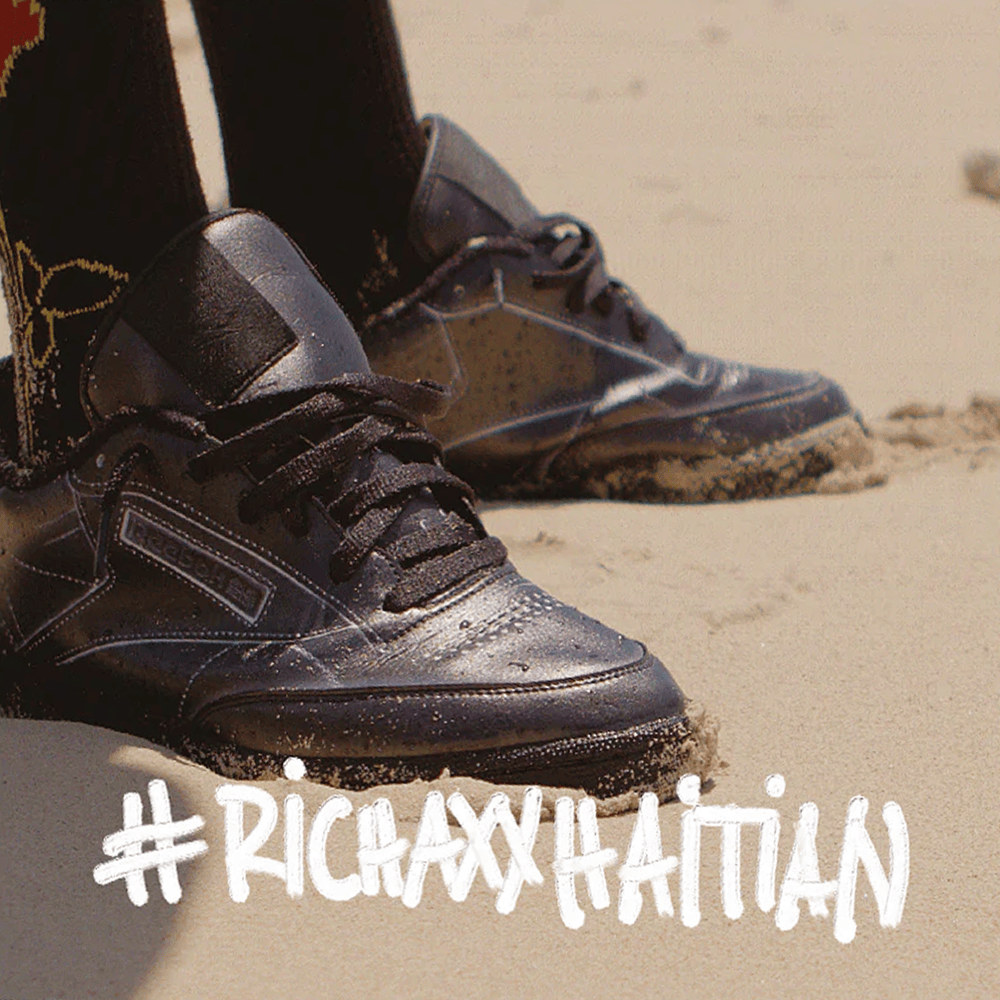
Similarly not suitable for the faint of heart is the reckoning of what is going down in the God-forsaken Caribbean country of Haiti right now. Just as the umpteenth forced foreign intervention is settling into the land in the hopes to stabilize it amidst a political vacuum and a guerrilla ruling through warlords, native transplant via New Jersey Mach-Hommy is riding on the coattails of his definitive homeland tetralogy installment, #RICHAXXHAITIAN. Out the same day as Please Don’t Cry, 17th May, one day before Haitian Flag Day—we weren’t kidding about May being stacked…—the album is Mach’s fourteenth to date. It’s a gesamtkunstwerk of insurrectionary socio-political vignettes, simultaneously doubling as the Haitian-American rapper’s most catchy and accessible. The oeuvre is a multi-lingual, multi-genre, and multi-cultural affair, cross-pollinating autochthonous Haitian traditions with gritty posse street rhymes, typically associated with the New York Tri-state area.
The Griselda Records-affiliate keeps it grimy throughout the seventeen tracks sequenced on the digital version of the album, clocking in at just shy of fifty minutes of runtime, but goes particularly hard on cuts such as “SONJE“, “COPY COLD” (amplified by a superlative tell-all verse by Black Thought), and “GUGGENHEIM JEUNE“. Elsewhere, he attains higher levels of earworminess—not exactly something we’d have thought we’d use to describe Mach-Hommy’s music—on “SUR LE PONT d’AVIGNON” and the titular lead single, aptly produced by fellow Haitian descendant KAYTRANADA (who is out with an impressive new tape of his own, just not strictly speaking a rap one to land on this list. Also no Knick wears #9 at the moment). Regardless, #RICHAXXHAITIAN is another full body of work experience for you, no cherry-picked finger food. It demands above-average listening prowess and command, but its rewards are so fulfilling that one might find themselves leaving the tape both spiritually and cerebrally re-aligned.
We sound like a broken record at this point, but the month of May shockingly managed to squeeze in one final musical coup de grâce before turning the calendar page. Long Beach rap laureate Vince Staples returned with his Def Jam swan song offering Dark Times on Friday the 24th, marking his sixth LP, a couple years after his double dipping with Vince Staples and Ramona Park Broke My Heart (2022). Perhaps the most singular and forlorn recommendation in this summer batch, the 35-minute statement comes as yet another reflective and contemplative series of essays. Less a cohesive concept album than a string of powerful short stories, the collection ventures in what’s arguably the vastest sonic range ever touched by the former Odd Future syndicate. While for all intents and purposes still filing this under a loud West Coast hip-hop file cabinet, it’s worth noting how numbers like “Shame on the Devil” flirts with jangly alt-pop instrumentals, while “Freeman” pushes experimental garage guitar licks way past the point one’d expect on a mainstream rap record.
Fair warning, if Slum Village’s F.U.N. is the most summer record on this list, Vince’s Dark Times is the least sunny one of the crop. I guess one could’ve figured that much from looking at their, album titles? Sometimes the proof really is in the pudding. However, fret not argonauts, since Vince’s got you and your feet covered with hot bops such as “Étouffée” and “Little Homies“—coincidentally the best, gnarliest, and most well rounded tunes on the whole record. In promoting the album, the 30-year-old LA-native asked fans not to overthink his songs, all to aware that is easier said than done when you happen to be one of the sharpest and critically acute pens of this generation’s rap cohort. Yet, that’s what makes this project a wicked collection of summer bars, too—aside from being Vince’s greatest, it’s also unassuming and easy listening to the ears, without sacrificing the usual poignancy and street wit folks have grown accustomed to expect from him.
Our sixth suggestion dropped halfway through June, a month that usually does not mess around when it comes to raising the mercury bar. In keeping with the sweltering heat brought by the official calendar kick off of the summer season, NxWorries’s highly-anticipated sophomore project Why Lawd? keeps us sweating from all pores. The American hip-hop super duo comprised of singer, rapper, and record producer Anderson .Paak and producer/songwriter Knxwledge followed up their critically acclaimed cult debut Yes Lawd! eight years later with an ultra crafty helping of 19 new joints. Released under legendary underground hip-hop label Stones Throw Records, the project manages to top its lauded predecessor, doubling down on quality songwriting, impeccable deliveries, and a trademark vintage sound that somehow still reverberates as fresh and unique, in spite of how deeply influential it’s been throughout the past decade.
Slowly rolled out throughout the past two years—lead single “Where I Go” featuring H.E.R. originally debuted as early as October 2022 (!)—and teased for even longer than that, the studio effort from the talented hip-hop duo was well worth the wait. Coasting through 45 minutes of runtime with the swagger and effortlessness of an off-season mixtape, this thing is extremely front-loaded, with one gorgeous slapper after another clocking in from second cut “86Sentra” through track number nine “FromHere“. A-list guests such as Charlie Wilson, Rae Khalil, and Earl Sweatshirt, as well as upheld catchiness make Why Lawd?‘s side B still well worth sticking around, in spite of a few dubs hinting at an even stronger record in there with a more focused editing. Nonetheless, cue this up if you’re in the market for some sexy, irreverent, and unhinged fun, all while summoning the Lord.
Lupe Fiasco‘s ninth studio LP Samurai is our penultimate tip off. Released just fresh outta the oven at the time of writing, this is a different kind of half hour to spend this summer. According to the groundbreaking Chicago MC, the project is “a loving & living portrait to and of one of my favorite artists, Amy Winehouse“. Because, sure, why not? The American rapper, record producer, and university professor’s successor to his otherworldly Drill Music in Zion (2022) has been highly anticipated—safe to say he did not phone it in. Once again entirely executive-produced by Drill Music chief sound orchestrator Soundtrakk, the concept for the record was grown from a voicemail left by the late English R&B singer for her producer Salaam Remi before her passing. In the note, the London-born singer/songwriter expressed her penchant for coming up with little, beautifully alliterated battle raps at the time, even likening herself to a Wu Tang Clan-inspired samurai.
Channelling all of the above, Lupe allowed for the story and album to take on a life of their own, kicking dances off with the title track as lead single halfway through May, before teasing the full project one more time with the infectious victory lap of “Cake“. The LP masterfully couches blistering highs and crushing lows all within eight records and half an hour of material, condensing subaltern scenarios and sketches of what a spitting Winehouse could have sounded like. Cuts such as “Palaces” at number four on the tracklist prove how easily the 42-year old alternative hip-hop pioneer can pen tunes so gorgeous they almost hurt, while “No. 1 Headband” acts as little reminder that he’s not forgotten how to have self-reflective fun, either. If you’re only sampling one project from this list of eight, and hinge on intellectually stimulating wordsmiths, make it this one.
Actually, maybe, make it Common and Pete Rock’s The Auditorium, Vol. 1. The only catch is that it’s not out yet, so don’t take our full word for it (methodical purity has left us long ago…). What is certain though, is that if we are to trust the first three teasers unearthed hitherto, “Wise Up“, “Dreamin’” and “All Kind of Ideas“, this is poised to be the signature hip-hop album of the summer, probably year. Marking the fifteenth solo studio LP for the Chicago conscious rap extraordinaire, The Auditorium, Vol. 1 is lucky enough to be enjoying Pete Rock’s unparalleled production chops throughout its projected fifteen cuts. A golden age East Coast hip-hop meeting of the minds, chopped and screwed in heaven. The full album is just mere days away, slated to drop everywhere on Friday 12th July. Here’s what we know for sure: it’s the summer, and there will be bars—guess the whole write up could’ve just been that verse.
We’d like to thank you sincerely for taking the time to read this and we hope to feel your interest again next time.
There’s a target on Mach-Hommy’s back. Dead or alive. Reward unknown; although the protraction of techno-feudalism and post-colonial hegemony are probably solid enough guesses. You ask the Haitian-American rapper and record producer yourself. As revealed in his recent public service plea, following shortly after the release of his fourteenth solo album #RICHAXXHAITIAN, there appear to be obscure industry forces at play attempting to curtail the propagation of his message conveyance. Self-released on the 17th May, one day before the momentous annual celebration of Haitian Flag Day, the 17-track project completes the New Jerseyan’s autochthonous album tetralogy—also inclusive of H.B.O. (2016), and 2021’s Pray for Haiti and Balens Cho (Hot Candles)—and was preceded by the eponymous lead single in early May.
Too bad that Google managed to botch the title track’s music video premiere on Mach-Hommy’s own YouTube channel, offering no conclusive explanation for it at all, leading to assume salacious intents behind the ‘unprecedented’ glitch. Too bad that mere days after the album’s public streaming release on DSPs, it mysteriously evaporated from leading outlet Spotify—the latter citing a takedown request from the artist’s camp itself, categorically denied by the Griselda syndicate in the aforementioned video explainer. In both cases, literally involving the largest streaming platform in the world (YouTube), and the on-demand audio service with the highest amount of global paying subscribers (Spotify), the explanations furnished left little to write home about.
In fact, Google’s troubleshooting yielded a complete and laughable non-starter. As outlined in the clip by Mach-Hommy, the internal investigation conducted by multiple layers of YouTube reps upon his flagging of the loss of admin privileges on his own account, as well as the temporary erasure of subscribers during the music video premiere window, returned a pathetic ‘we’ve got no clue as to what happened there, sorry’. Conversely, Spotify dug deeper into its more generous void of incongruous wiggle room in delivering their version of the root cause analysis, owing to the (wholly purposeful) digital record industry’s protocol entanglement. As mentioned, after both the Swedish streaming giant and an unnamed digital distributor washed their hands off by claiming the withdrawal request came from Mach-Hommy’s people, the East Coast MC was informed that his product, the #RICHAXXHAITIAN LP, was missing its Universal Product Code (UPC). An ontological fallacy, for not only was the release perfectly available on all other DSPs at the time, but as Mach rightfully cites in the video, the project wouldn’t have made it to Spotify servers in the first place without it.
Where affairs get even more nefarious is in the aggravating insult provided by the parties at play, who mentioned a now-deleted post by an faceless, nameless X user, interpreting #RICHAXXHAITIAN‘s disappearance from Spotify as a marketing stunt from Mach-Hommy, and fomenting doubts as to who watches the watchdogs in the online pursuits of the truth. The X user alleged that the MC’s strategy was to entice fans by sampling the album as a taster over release weekend, in the hope that they would turn to his webstore to purchase exclusive physical formats—going for a much higher price point. Once again, all of this getting debunked by the artist himself. Putting two and two together, one can’t help but think this is some sort of poetic injustice for a lyricist as concerned with historical revisionism, reparations, the Haitian diaspora, and the plague of colonialism in his ancestral country as he is. After all, retaliations might have assumed newer and more impenetrable forms in the modern age, but they are surely far from a holding pattern of inaction.
This all transpires as being particularly suspicious on account of not just the prolific rapper’s imperialistic establishment antagonism, but also his worthy industry literacy within contemporary digital music practices. Yes he is an actual multi-lingual prodigy thanks to his diverse cultural provenance, yet have you considered that the contemporary record industry’s intentionally dubious language is an idiom he can tally up as yet another atypical string in his bow? When he took legal DMCA action to have all of his works removed from online lyrics providers such as Genius in 2019, he knew he was stirring up a pretty big hornet’s nest. You will likely not be surprised to learn that Genius has long been finessing a number of licensing deals with DSPs under the hood; with one of the largest ones being with, guess whom? Spotify.
This is perhaps a good moment to afford us to elaborate on such content provisioning agreements. We wish we could go into more specifics, but please trust us when we say that we get Mach-Hommy. Without even delving into licensing deals involving the actual sound recordings couched within digital releases, aka the masters we all end up listening on the client side, the narrower lyrics and compositions provisioning business itself is riddled with enough jungly inaccessibility. Not unlike the wider record industry ecosystem, it’s a self-referential distribution funnel washed in a sea of conduits and intermediaries. Rightsholders—such as the self-released and self-published Mach-Hommy—are typically forced to strike deals with certain providers supplying other providers to at least a few degrees of separation before even making it to the end-consumer platforms such as Genius.
Not only does each of these agents retain a significant double-digit kickback on any royalty exploitation event, but within the lyrics consumption realm specifically, these are the kind of publishing deals operating under so-called ‘most-favored-nation’ (MFN) terms. In other words, allowing no room for negotiation or clout at the dealings table whatsoever. What’s even more disheartening within such copyright systems and their application within modern digital platforms is that legal frameworks around royalty rates and statutory regulations are a total mess. Most royalty payments are still remitted via lump sum settlements and upfront reconciliations, with little to no consideration for the actual mechanical reproduction figures for each work. In a way not too dissimilar from Mach’s warlord-stricken gang-centric Caribbean homeland, each end-user platform is free to enact their own price-regulated cartel, benefitting from the lack of international regulation and governance around fair trade.
Yet Mach-Hommy resists. He educates himself, learns the language of the oppressor, and fights with whatever he can. That’s why he’s wanted. That’s why he has a target on his back. And a very concrete countermeasure he enacts is seizing back control of his own art. What he does is that he increases the average consumption price point for each of his superfans, by selling physical formats for three-to-four digit $ price tags. For those versions, he retools the tracklist, too. In #RICHAXXHAITIAN‘s case, track number two “ANTONOMASIA” is titled “SOBRIQUET”, enlisting a guest verse from Tha God Fahim instead of Roc Marciano (allegedly a vox populi decision, as the rapper held a poll during a listening party earlier in the year). “BON BAGAY” at number four is a vinyl-exclusive, while the streaming-available “SONJE” is pushed back on the sequencing to act as the album’s coda. Crucially, “SUR LE PONT D’AVIGNON”, indeed available on streaming services, is wiped off the vinyl version as a quintessential middle finger to French post-colonial forces. Elsewhere on the waxing, “XEROX CLAT” gets retitled to “XEROX TWATS”, while “COPY COLD” and “PADON”—renamed “PARDON” with a Mach-Hommy verse in Tha God Fahim’s stead—are backtracked by a different instrumental beat than their digital counterparts.
In a press statement accompanying #RICHAXXHAITIAN, the wordsmith made the following clear:
I’ve always wanted to rep for Haiti and the cultural and intellectual richness we’ve provided the world. From our musical styles like kontradans that have influenced world music, our natural resources which provide so much raw material for so many important advancements in technology, our thinkers that pioneered philosophical movements and Black pride, and our spiritual leaders who kept the religious traditions of Guinea alive and intact, the religious traditions of Ayiti…
Musically, the album is a masterpiece. It’s a dense, wordy, intricate, disparate, and sticky affair—all at the same time. There’s a glacial undertone throughout the production that exhumes a dejected haziness fitting like a glove atop of Mach-Hommy’s boneless and contorted flows. Complication here is being offered as an act of resistance. Those who really listen, get it. In reviewing the record, good ole Professor Skye made the case for obscurity and incomprehension as a purposeful creative strategy for Mach-Hommy to fence off shoehorning and diluting industrial gentrification. While at the same doing justice to the richly profound social and cultural heritage of Haiti. It’s a valid heuristic, one that enables the New Jersey-native to always be one step ahead of reductive law enforcement. In his line of work, that happens to be private hedge fund-backed technology companies, purporting themselves as the arbiters of an emancipated creative ecosystem, fostering democratized access to all art. Sur le pont, d’Avignon…
We’d like to thank you sincerely for taking the time to read this and we hope to feel your interest again next time. And don’t forget to pray for Haiti.
What if each member on the core 2023-2024 New York Knicks line-up entering the NBA Playoffs was a song on Pearl Jam’s latest full length Dark Matter? With box score stats and roster standings updated as of the second game of the First Round best-of seven series against the Philadelphia 76ers in the Eastern Conference (NYK up 2-0), that is exactly what is going to happen here. To get our ducks in a row, the Seattle grunge rock legends’s 12th studio effort was released earlier this month on Republic Records, and comes four years after their 2020 mixed bag Gigaton. All cuts on the project were produced by new-gen West Coast rock historian and Eddie Vedder-worshipper Andrew Watt, clocking in at just shy of 50 minutes on new fierce, ironclad, and robust material.
Before we delve into the sequencing—a quick monition on the draft method used to select the New York Knicks players. We’d be remiss if we didn’t start by acknowledging the perhaps painful omission of 25-year-old center Jericho Sims (#45) from the tracklist. In our operationalization’s defense, the album has only got eleven tracks, so a cursory season playtime extraction coupled with a lower musical match make him the proverbial twelfth man cut from this rock band team. For similar, yet less controversial reasons, further Knicks bench players on the official roster list this season, such as Jacob Toppin (#00), Duane Washington Jr (#1), Charlie Brown Jr (#4), Daquan Jeffries (#8), Shake Milton (#13), Mamadi Diakite (#21), are also excluded from being considered for this shortlist.
1.Scared of Fear — Bojan Bogdanović (#44) | Credit his naturally alarmed glance, or conversely, the gregarious approach he must’ve adopted to break through in the world’s top basketball league hailing from God-forsaken Croatia, but the 35-year-old small forward veteran feels like the best place to start with the PJ record. Slowly coming into this own after the February trade from the Detroit Pistons, he has so far undoubtedly been the more impactful of the two partners at the Law Firm of Burks & Bogdanović. The track’s full-throttle percussions and piercing guitars act as a fitting metaphor for his full-court hustle and shooting prowess, while the sonic plateau culled in the song’s bridge stands to represent the ebbs and flows experienced with the Knicks jersey hitherto. Still, the robust runtime at four minutes and a half nonetheless denotes Bogey’s stoic and earnest style of play on the floor.
2. React, Respond — Miles ‘Deuce’ McBride (#2) | “Don’t let the sky hook beat you to submission / Maybe it’s the price of price of our admission / Ain’t no fucking roses to our condition / Turn this anger into nuclear fission, yeah, baby, baby“. What better set of lyrics to describe the improbable ascent of what is now officially the floor general of the Knicks’s second unit? After a somewhat underwhelming first half of the season—bottlenecked by a wealth of players trumping him in coach Tom Thibodeau’s formation rankings—something unlocked in earnest around the NBA All-Star break for the former West Virginia Mountaineers youngster. McBride is arguably a top three ball handler on the team, and as a nod to the opening song stanza, has never let his smaller size be a limiting factor in his NBA hooping shenanigans. He was ready to seize his chance, and that has led him to become the second pure playmaking guard choice in the line-up—right after none other than breakout team star Jalen Brunson.
3. Wreckage — OG Anunoby (#8) | Befitting his first name shortening acronym, this Englishman in New York plays with the grace, poise, and wisdom of a multi-decade seasoned statesman, belying his mid-twenties age registry. A star trade in the winter transfer market season across the whole league, the Knickerbockers hold a stupidly impactful 20-3 winning record when Anunoby is on the floor (Playoff games included). A wreckage was both the athletic juncture he joined the Manhattan team in—with key starting players Robinson and Randle reported out for the rest of the season at the time—and the clinical picture of his right elbow during that fearful February-March stint, where he himself had to be sidelined, met by most Knicks fan’s exorcisms. The levity, emotion, and lightness with which he plays mirror the track’s sunny and carefree spirit, while the wholesome flair on the lyrical front as well as a soaring and catchy refrain recalling his vastly underrated jams at the rim.
4. Dark Matter — Julius Randle (#30) | For all intents and purposes, the greatest and most popular player on the team. The titular album track is not only its lead single, but its defining and equalizing driving force too. Congruently to its musical twin, Randle is the only element on the list that truly transcends the current team’s zeitgeist, as a three-time NBA All-Star and a two-time All-NBA player—on top being the NBA’s Most Improved Player Award in 2021. Now, scientific method sticklers might be quick to point out how his being out since the end of January due to his right shoulder dislocation should make him ineligible for this tracklist. Yet let us be serious, no Knicks roster list to speak of can afford to neglect its marquee player—especially during a statement season averaging 24 points a game, a whooping five more than his career average of 19. It’s plain and simple: the cut slaps, goes hard, and defines Dark Matter, so does (a healthy) Julius Randle.
5. Won’t Tell — Mitchell Robinson (#23) | The comic relief. Track number five on the album is the most uplifting, its most solar and joyous. Then again, do not get it twisted, Pearl Jam is stuffed with negative space and melancholy, even in its brighter moments. The song’s chorus motif chanting “You can find me here / Waiting for your message to come” seems like an indirect homage to Mitchell’s sweet spot stomping ground under the rim, while his unofficial role as the team’s prankster and meme master lends even more credence to him matching the record’s lightheartedness. We can’t skip the part where we acknowledge the cosmic balance found in this being Dark Matter‘s fifth track, and the traditional center role on a basketball court being labeled as ‘the five’. If you don’t read any more track-to-player pairings past this point, let this be proof this parallelism is worth humoring.
6. Upper Hand — Isaiah Hartenstein (#55) |The team’s tireless workhorse, he who played all 82 regular season games last year—reflected by an ambitious, expansive, and triumphant 6-minute opus. Heralded as way more than a luxury reserve for starting center Mitchell Robinson, Hartenstein kept the Knicks afloat during that critical February-March period, where they didn’t seem able to catch a break in their own town—alas, only to capitulate himself for a brief period under his own Achilles trials and tribulations. Much like the tune, Isaiah can be a smidge inconsistent at times, yet he never falters in blood, sweat, and tears, and most times he does manage to prevail and come out on top. As his signature defensive move, turn to this recent savage in-motion block of Tyrese Maxey’s surefire layup, denying the 76ers a certified win with only seconds left on the game clock during game 2 of the ongoing Playoff series.
7. Waiting for Stevie — Alec Burks (#18) | This one is rough. The second Knicks coming of 32-year-old shooting guard Alec Burks this winter was not supposed to turn out this way. After a somewhat average start in January and February—with sizable minutes as part of coach Thib’s end of 1st and end of 3rd quarter second unit rotation—the AWOL partner of the Law Firm of Burks & Bogdanović gradually faded into the team’s anonymous background, with a measly 30 minutes of combined playtime on the floor during the last ten Knicks games to date, and an even more dreadful 5 total points scored during the same timespan, for bad measure. Swap the “Stevie” for “Alec” on the similarly underwhelming, contrived, and rough around the edges album track’s title, and that tells you everything you need to know here. Mediocrity-fest.
8. Running — Josh Hart (#3) | A clear case for when a one-word song name fits a player like a glove. Josh Hart has low-key been the true blue-collar revelation of this New York Knicks season. The definition of an industrious all-around role player, this guy’s regularly playing 40+ minutes each game, and not batting an eye. Eddie Vedder’s opening verse on the cut, “Got me running, got me running, but the race, it never ends / Got me running, or else I’m done in / You got me coming as you’re going and the chase, it never ends / I’ll be running ’til the second coming” legit sounds like it was written about the versatile 29-year-old Maryland native. Hands down the best rebounding guard of the whole NBA, and its most ruthless birdwatchers’s murderer, Josh Hart epitomizes all the little actions and plays that don’t quite end up in the box score, but that make teams win games, and (hopefully) leagues. The track is a two-minute incendiary blister that cuts throats and claws listeners by their ears, not without splashing specks of melody and introspection. The h(e)art and soul of the project.
9. Something Special — Precious Achiuwa (#5) | The quintessential providential player. Nigerian-American Precious Achiuwa was there when no one else was. A ductile player and homegrown New Yorker—via Miami and Toronto—he is able to seamlessly play each of the five positions on the floor. In those few and far-in between games where Robinson, Randle, Anunoby, and Hartenstein were all down, he rose from the ashes and stood up for the city, carrying the whole quintet’s presence under the basket on his shoulders. Arguably the most underrated overachiever on this Knicks version, it was his outstanding locked-in performance during those cold winter months that made it possible for fans to quickly forgive and forget RJ Barrett and Immanuel Quickley for jumping ship during the trade window—not exactly the easiest kicks to fill. As better and stronger songs come back to relevance on the tracklist, Achiuwa finds himself retreating to warming up the bench a bit more—albeit never forgotten. Not the most skilled, talented, or dexterous player on the list, but boy is he something special.
10. Got to Give — Donte DiVincenzo (#0) | The Knicks sniper with a diesel engine. Big Ragu went from borderline disappointing summer trade wannabe-highlight to fixture shooting guard starter on the 2nd seed team of the Easter Conference in around six months. Whilst at that, he saw fit to set the all-time franchise record for three-pointers in a single regular season with 283 (joining Stephen Curry, James Harden, Klay Thompson, Paul George, Buddy Hield and Luka Doncic as the only players to make 280+ in a season). Coinciding with the tune’s crescendo build, DiVo successfully learned how to make himself indispensable, much like this back-end album highlight. Catchy, agreeable, and so damn trademark Knicks; together with the aforementioned Hart and Jalen Brunson he represents that Villanova Wildcats college basketball core that is daring the Mecca of Basketball to dream big this year. “I’ll be the last one standing / I’ll be the first to forgive, yeah“—if one is to trust Pearl Jam, the sniper’s aim is sharper than ever.
11. Setting Sun — Jalen Brunson (#11) | Last, but not least. Song number eleven for #11. Yes, Randle might be the New York Knicks poster child, but Brunson is their prodigal son. The indisputable leader and top scorer on this team, thanks to his formidable performances and sensational contributions to the Knicks once-in-a-generation season record, Jalen was named an All-Star Player this past February. Like his sonic counterpart, he is beautiful to watch, universally impactful, and the undeniably constituent part of the whole. The guy is averaging 29 points and 7 assists per game this season, for God’s sake. We couldn’t imagine Dark Matter without this wall-to-wall acoustic enchantment coda, and so can’t we the New York Knicks without his 27-year-old point guard. Without being a prisoner of the moment, Jalen Brunson is poetry in motion. Jalen Brunson was born to play basketball.
We’d like to thank you sincerely for taking the time to read this and we hope to feel your interest again next time. And good luck to the Knicks in the Playoffs this time around.