
ALEX REVIEWS MUSIC (ARM): RYAN ADAMS – SELF PORTRAIT | 2026-01-05

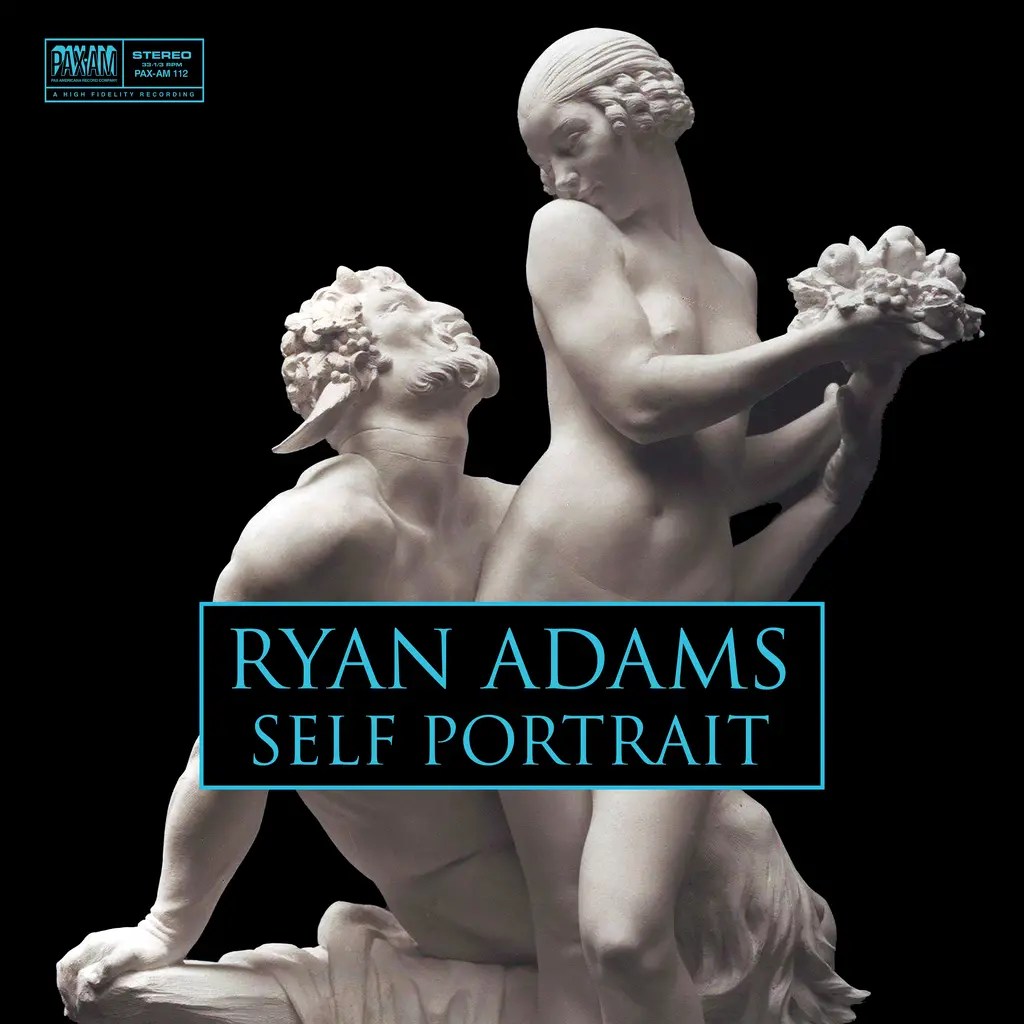
Depending on how exactly you count, Self Portrait should be Ryan Adams’s 31st full length solo effort. Unlike a few of the intervening releases that separate it from BLACKHOLE—2024’s long-awaited and long-presumed indefinitely-shelved cult drop—his new 1st December 2025 exploit is a 24-cut double LP of previously unreleased studio material, including three (and a half) cover songs. Granted, the word ‘studio’ is being used extremely loosely here. No need to beat around the bush: this site’s been up for over ten years at this point, and we have pretty much covered every single piece of new music the 51-year old Jacksonville, NC native has made publicly available since 2015. Sure, we did take a few passes on e.g. his Return to Carnegie Hall (2023) or Another Wednesday (2025) live albums (not to mention his vinyl-only compilation Changes from last June). Similarly, we did not see fit to focus on his 25th Anniversary Edition Heartbreaker reissue several months ago. By and large, that was all due to the fact that none of the aforementioned projects contained no new musical numbers to speak of.

The reason we’re employing the ‘studio’ attribute loosely is because, arguably, since his extraordinary 2021 LP Big Colors none of the subsequent ten projects feel very much like they were gestated in a true blue studio recording environment. From Chris (2022) to Self Portrait (2025), the through line has for the most part been home-spun and mixtape-like. And to think that this comes without counting as many as eight other collections since Big Colors that were either of the aforementioned anniversary reissues (Heartbreaker), live tapes (Return to Carnegie Hall, Prisoners, Another Wednesday) or wall-to-wall album-play cover records (Nebraska, Blood on the Tracks, Morning Glory, Changes). Mind you, this is not to say that this is necessarily a bad thing, yet one that warrants an epistemological acknowledgement. For before discoursing about the merits and flaws of his latest, it’s strikes us as perhaps decisive to lean into the paratext that the PaxAm founder is sending us with his release strategy.

He titled this 31st studio LP Self Portrait—does it mean that this low-fidelity, erratic, and hodgepodge-y version of the DRA is his actual true self? At the very least during this third act? After all, this record does match the post-2020-2022 album trilogy modus operandi; one need not even read into that much tea leaves depth. What is sure is that with now as many bedroom low-fidelity compilations released as big league major label albums in his commercial heyday—ten in total for both classes, ranging from his seminal 2000 splash Heartbreaker to 2017’s exquisite Prisoner—the question is meritorious and bears significant valence.

So who is the real Ryan Adams in 2026? Is it the author of three lengthy novels in as many years? Or is it the alt-country prodigal son so resentfully clamored by his entitled Reddit fanbase? For what it’s worth, let us bake some method into this investigation in order to look at what the Self Portrait data tells us. To recap, the LP boasts 24 individual records amounting to almost an hour and fifteen minutes of music, which we’ll go ahead and arbitrarily claim is enough circumstantial evidence to begin drawing some representative conclusions. What we did is listen to each of the cuts on the tracklist in isolation and mapped them to the most likely and faithful originally housing post-2020 Ryan Adams studio album. Mostly, this was done by way of judging the recording quality, ethos, aesthetics, and environment of each cut, attempting to match that sonic identikit—as well as the primary writing style of the melodic toplines—to the album timbre resembling it the most. Here’s what we found:

Virginia in the Rain“, “Stormy Weather“, “Thunderstorm Tears“, “Try Again Tomorrow“, “Theo” — Romeo & Juliet The largest batch of songs sounds like it was inherited from the PaxAm founder’s twentieth studio album as a solo act (2022), which is saying something considering the wild range of sonic styles and explorations on that record. Clocking in at over an hour of material with already 19 songs in the mix, these are likely loosies and throwaways from those writing sessions. Considering the album length and format pace the DRA has been keeping of late, few pundits would have bat an eye had these five been quietly laced into the tracklist to make it another 24-track opus like Self Portrait.

Bye Bye Balloons“, “Fools Game“, “Lovers Under the Moon” — Wednesdays Admittedly more informed by the songwriting at the core of these tunes than the production quality, these three bare naked unplugged and acoustic numbers wouldn’t have felt out of place on his 2020 comeback record—perhaps as extra material thrown on top of a country-specific drop. The fact that none of them actually made the bonus tracks cut at the time—especially factoring in how generous Adams typically is with non-LP numbers and outtakes—speaks to the somewhat lukewarm quality and staying power they possess.

Too Old to Die Young“, “I Am a Rollercoaster“, “Look What You Did” — Chris This different crop of Self Portrait songs sports a distinctive Chris kind of musical vibe. Mind you, the highly-anticipated final installment in his powerful 2020-2022 album trilogy—completed by Wednesdays and Big Colors—already showcases some of Ryan Adams’s more immediate and catchiest, if disjointed, songwriting of the past fifteen years. Nonetheless, with yet another bloated tracklist coming in just shy of sixty minutes of runtime, it’s easy to cut him some slack and understand why these three didn’t quite make it onto any of the commercially released versions at the time. In twenty-twenty hindsight, we would have loved to see either Too Old to Die Youngor “I Am a Rollercoastergetting the official upgrade, or at the very least being offered as bonus tracks instead of the hair metal-adjacent “Don’t Follow” that the poet laureate actually ended up churning.

Saturday Night Forever”, “Please, Shut the Fuck Up“, “At Dawn” — Big Colors These three LP standouts err on the shinier and glossier end of the production spectrum (not exactly an awfully high bar lately we know…), while displaying a strong lineage with what’s perhaps the best and most accomplished record in the North Carolinian’s recent discography. Although they don’t quite possess all the required sanitized nooks and crannies to be default-grandfathered into their parent album, their more careful mixing and focused songwriting handily elevate them as amongst the most enjoyable on Big Colors. “Saturday Night Forever” is gorgeous and sounds like the (even) darker coin flip B side of “In It For the Pleasure”, while “At Dawn” could go neck to neck with “Summer Rain” as the ultimate DRA album swan song—an incredibly tall order.

Take the Money“, “Not Trash Anymore” — FMTake the Money” was literally teased and promoted as an FM outtake around the time his power-pop affair dropped in 2022, so that’s a given and perhaps even more of a head scratcher than other jams on here. The non-LP labeling feels fair game and the right outcome for that one, but “Not Trash Anymore” is a strong and muscular tune through and through. It’s a shame it wasn’t included in it four years ago ,as it comes across as a bit of a sore thumb on Self Portrait. 

Blue Monday“, “The One I Love“, “Shiny Happy People” — Morning Glory The cover songs for the cover album. From their homespun recording mix to the actual instrumentation committed to tape, these new renditions of New Order and REM classics were in all likelihood cut during the same DIY arrangement and recording sessions as the incredibly hushed and creative Oasis album reimagining. Let’s just say we’re glad Ryan kept these standalones, for they bear less to write home about than pretty much anything on his 2020s album covers series.

Throw It Away” — Devolver The late 2022 Rock N Roll-spiritual next-of-kin release remains a peppy and underrated project in the alt-country phenom’s canon; this similarly vivacious and inspired cut bears all its songwriting and production fingerprints on it. Considering the more condensed original tracklist—with no single record clocking in at longer than 3:14—this should have been on it.

Castles in the Sand” — Blood on the Tracks If you know you know, but there’s a specific brand of sound capture and playback temperature to the wall-to-wall re-recording of Bob Dylan’s masterpiece, given away for free as a 2022 Christmas present. This ambitious 6-minute jam, somewhat randomly, oozes all the hallmarks of what presumably was another home studio set up at the time. Clearly not a potential candidate for the aforementioned covers record, this one-off belter seems to have been sculpted as a torch bearer for the looser and more impromptu kind of Ryan Adams drawl.

Someone On My Mind“, “I Am Dracula“, “Honky Tonk Girl” — Others These are long tail renegades. We couldn’t quite naturally map any of these three bops to any of his past records. They all pretty much sound like they were cut during the same writing session(s) though, so one is left wondering what kind of different record lies behind them. Their garage-y and more upbeat ethos very much situate them up one of Adams’s street. If our theory that what he sees when he looks in the mirror today is the sprawling, unedited, and primarily low-fidelity singer/songwriter of the past six years is correct, their inclusion appears based.

Notwithstanding the above blow-by-blow granularity, alas the sequencing on Self Portrait continues to be rough. All over the place, once more. Staccato transitions and EQ unbalances render this collection of tunes more like another mixtape, than a cohesive or even conceptual album. Think Chris, rather than Prisoner. Its further shortcomings include the annoying audio static on most of this thing’s mix, as well as many hackneyed bits of Ryan counting-in the songs. Although the latter is of course not necessarily a bad thing when done intentionally and contextually, the abundant times it appears on here feel unnecessary and haphazard at best. Also, too often one can hear Ryan’s pick hitting the acoustic guitar body before or after the performance—another clue pointing to a self-recorded affair. Indeed, as many seem to speculate online, Self Portrait sounds like yet another album cobbled together by the DRA himself, while left to his own devices. That would mean no major label studio-grading recording engineer in the picture—nor an external curator consigliere to help him guide song selection and sequencing.

Yet, for as much as his fans seem to think otherwise, the fact of the matter is that Ryan remains in control of his own creative output. He has the complete God-given right to steer the bull by its horns in whichever direction he prefers. Regardless of album creation heuristics, what stays indelible at the end of the day are his artistic choices and the way they can be interpreted by listeners. Ever the self-aware, contrarian, and ironic auteur, one’s gotta sprinkle some humor and affability for accuracy on top though. So while we shall never really find out for sure what his mirrored image looks like, or what he thinks it looks like, titling your 31st studio album Self Portrait feels daring and evanescent at the same time. Is it a giant f**k you to snob and presumptuous superfans who won’t stop crying digital tears until he remakes Heartbreaker and Jacksonville City Nights over and over, or a faithful statement of artistic intent as he evolves throughout the third decade of the new millennium? Like it or not, we’re not so sure the man even knows himself.

We’d like to thank you sincerely for taking the time to read this and we hope to feel your interest again next time.

AV
RYAN ADAMS

SELF PORTRAIT

2025, PAXAM

https://ryanadamsofficial.com

A DEAR IN HEADLIGHTS | 2025-07-20

It appears as though we’re in the midst of another summer of bars, ladies and gentlemen. With new full lengths from everyone from Rome Streetz, Wayne, Kevin Abstract, Boldy James, Clipse, Open Mike Eagle, Tyler the Creator, Freddie Gibbs & Al, Joey Bada$$, and JID all within the span of two months and change, there sure remains little room during the year of our Lord 2025 for any other outings to stick their head out. Unless they’re… head-lights. Very unassumingly, 32-year old American musician, producer, and singer-songwriter Alex G, a proud Philadelphia native, dared to swing his indie toy axe at the moon and challenge the aforementioned hip-hop avalanche by revealing his tenth studio LP Headlights right in the midst of that enemy crossfire. We’re pleased to report that both him and his music came out unscathed.

The project was released this past 18th July, couched right in-between the hallmark summer rap drops of Clipse and Tyler, the Creator, amongst others—not exactly two negligible acts at the turn of this decade. Believe it or not, Headlights is Mr Giannascoli’s major-label debut, marketed by Sony Music-owned RCA Records, and it follows the iconic and accomplished four-album deal run on British indie stalwart Domino Recording Company, between 2015 and 2022. That particular stint included perhaps his best overall, 2019’s House of Sugar, and culminated a few years ago in what at the time was his most well-rounded and wholesome effort with God Save the Animals. His latest offering is twelve tracks long, and clocks in at just about forty minutes of runtime: Alex G self-produced most of it himself, with additional help recruited in Unknown Mortal Orchestra’s bass guitarist Jacob Portrait (who had previously worked with Giannascoli on his aforementioned previous two studio albums). Less excitingly, before kicking off the Headlights cycle, the artist FKA (Sandy) Alex G also found time to score two official soundtrack albums for Jane Schoenbrun’s indie flicks We’re All Going to the World’s Fair (2022) and I Saw the TV Glow (2024).

On this record, Alex G confirms he’s a naughty, albeit friendly, singer/songwriter. One that very deliberately exhumes public images of himself as if shunning away from the spotlight, and perhaps even suffering from it—all the while appearing more comfortable with this laidback set up than diving headfirst into the distribution and promo machinery that a major label would call for. Mind you, this is not inherently bad, and he is well within his rights to spin doctor such a framing onto his prime creative endeavor, particularly as it fits a narrative continuum started fifteen years ago. Hear us out on this though—as anticipatory singles for this project he plucks “Afterlife“, a pretty and catchy gem out in late May alongside the project announcement (featuring the drumming of none other than the E Street Band‘s Max Weinberg!), the kind “June Guitar” a month later, and finally the soft-spoken “Oranges” a day before street date. Are these three the best tracks on Headlights by quite a margin? Yes, probably.

Who does that, though? Who picks the cleanest, lushest, and glossiest numbers and de-contextualizes them from their housing record as teasers, if you’re Alex G? Everything from the gentle acoustic and electric guitar flourishes, the enveloping strings, and the timeless piano keys on these three cuts are something to behold. Were they a short single bundle issued by, like, James Taylor or Neil Young, people would scream for them to put out a whole album’s worth of this shit. Truly, all three are incredible exploits of pristine folk-pop, without Alex G’s trademark homespun low-fidelity enriching or spoiling them—depending on what side of the lore fence one stands on. Moreover, their lyrical ineffability transcends anything he has done before: “Love ain’t for the young anyhow / Something that you learn from fallin’ down“, “Let me write down / Every word / Once I was a mockingbird / Not an angel / But I’m your man“, and again “Wash in the river with the one I love / Every good thing with a little bad luck / You can cry baby, now, I ain’t bluffing / Wash in the river on bended knee“. I mean, come on?

One can tell Headlights is an Alex G record by the LP’s vicarious middle section, though. It’s the Pepsi test. Cuts like the loose and scattered “Spinning” sounds uncannily like a House of Sugar-adjacent cutting room floor extra, while the following “Louisiana” at number six on the tracklist harkens back to the legendary pre-Domino era of self-released hypnotic Bandcamp drops. It’s so direct and on the nose that one would think it’s bidding farewell to that DIY zeitgeist, for good. Perhaps it is. Regardless, it fits on the record, and it matters. Meanwhile, “Bounce Boy“, at number seven, comes close to us fantasizing how Alex G saw fit to dust off some of the guitar effects and pedal pre-sets he so unceremoniously championed on Frank Ocean‘s Blonde and Endless almost ten years ago. Yet he’s doing so in a self-referential and, yes let’s use that word, experimental way. Bottom line is, can anyone name us any major label artist who puts something like “Oranges” and this thing on the same marquee record? Well, in 2025 that might be less of a tall order, but still. You get the point.

What hasn’t changed throughout Headlights is Mr Giannascoli’s childlike naïveté, the earnest innocence at the core of these sound recordings. And yes, his extremely pleasant to the ear melodic layering is still in these tunes, too. Such pureness continues to belie distinct creative choices, though. For instance, he chiefly misses the mark on the record’s third act. But that’s ok. For we’re not going as far as declaring the tangible drop in quality from track number nine onwards as intentional, because that’s precisely Alex G’s inscrutably mystical quality. He comes across as knowing better than committing to tape the nasal and contrived vocal delivery on “Far and Wide“, yet does he really? Absent the self-indulgent and rowdy live take of album outro “Logan Hotel“—he isn’t new to bookending a project with a live version, see House of Sugar—and conceding that the title track is a bit of a grower with inherent replay value, “Far and Wide” and penultimate cut “Is It Still You in There?” are simply too lukewarm for his standards. Let us not forget, this is his tenth studio album after all.

Yet, part of it is what makes him so endearing and gentle to the outer world. Deep down we (wanna) know he does have the full album of pristine folk-pop in his bag, but either willingly or unwillingly, he opts for linear evolution over abrupt revolution. However, does he realize he’s playing in the major label leagues now? Most likely. On the dire and forlorn front-end standout “Beam Me Up“, he nods both that degree of revelatory self-awareness (“Some things I do for love / Some things I do for money / It ain’t like I don’t want it / It ain’t like I’m above it“), and sketches a long-shot metaphor borrowing from American football, not a foreign signifier to him: “Coach, I’m on the rocks / Coach, I’m threading needles / I leave it on the field“. We like to think that the titular headlights he finds himself surrounded by are the ultralight beams of the mainstream music circuit—while for someone like him it would be tempting to withdraw and burrow even more deeply, he instead chose to fight back with love and kindness. This album is proof.

We’d like to thank you sincerely for taking the time to read this and we hope to feel your interest again next time.

AV
THOUGHTS ON SPRINGSTEEN’S LOST ALBUMS | 2025-06-26

The Boss is back in towns. Bruce Springsteen and his E Street Band returned to the road earlier last month for their only as-of-yet scheduled shows this year, bringing what has been re-dubbed the grand Land of Hope & Dreams Tour to more than half a million fans in six countries throughout summer, after being forced to cut short their European leg due to illness last year. Beginning with a three-show run in mighty Manchester, UK, these re-scheduled dates serve as the culminating finale to the two-year-long run of what were Springsteen and co’s first live performances in almost seven years. And while an E Street Band roadtrip is always sure to turn a fair amount of industry heads, particularly when your ringleader is 75, this latest one managed to garner an extra notch of attention thanks to some inadvertent promo from none other than the sitting President of the United States.

During his tour opener, on 14th May, Springsteen let out a few less-than-flattering speeches about the current executive branch governing his home country. In response, US President Donald Trump posted an unhinged statement going at the Boss’s appearance and intelligence, while also demanding an investigation into former Presidential candidate Kamala Harris’s endorsements that came from Springsteen himself, as well as a slew of other A-list celebrities. Not even a full week later, the New Jersey success story saw fit to release a whole brand new live EP—conveniently titled Land of Hope & Dreams—taped at that momentous Manchester tour opener. And yes, he included those ad libs. As the good people over at Apple Music put it: no shade to the four defiant songs captured during the gig, but this may well be the first live record surprise-dropped for its stage banter.

We might’ve buried the lead though. For the real kicker this #BruceSummer have got to be the seven previously-unheard studio full lengths dropping for the first time tomorrow, Friday 27th June. The widely-rumored, long-anticipated Tracks II: The Lost Albums—a spiritual successor to the 1998 cult four-disc Tracks collection that has become the ultimate non-studio album fan favorite over the years—is a gargantuan set spanning 83 songs (74 of which never-before-heard). Conspicuously filling in essential chapters of Springsteen’s expansive timeline, Tracks II arrives in limited-edition nine LP, seven CD, as well as all the obligatory digital formats—including custom packaging for each of the seven records-in-record, with a 100-page cloth-bound, hardcover book featuring rare archival photos, liner notes from essayist Erik Flannigan, and a personal introduction on the project from the Boss himself. A more digestible and chart-friendly companion bundle—Lost And Found: Selections from The Lost Albums—will instead feature twenty highlights from across the full tracklist, also out the same day on two LPs or one CD.

Upping the overall B-sides count by a generous 17 offerings, compared to the 66 off the first Tracks instalment, Tracks II maps a creative trajectory that includes writing sessions ranging from 1983 to 2018. For the project, Springsteen and longtime producer/multi-instrumentalist sideman Ron Aniello polished the sound quality and sparsely added instrumental enrichments here and there to the old tapes. The bulk of the material does stem from the Boss working as a one-man studio band, as he has since the 1980s. The umbrella front cover for the vault collection—linked at the end of this piece—lets us deduce that the top-to-bottom chronological order in which the seven projects are listed should refer to their gestation period over the projected 35-year range (i.e. with LA Garage Sessions ’83 being the oldest, and Perfect World the one compiled in 2018). As of the time of this writing, just mere hours away from the big reveal, Columbia Records and the Springsteen camp have been unleashing six standalone teasers from as many distinct discs within the coveted assemblage, with the inaugural LA Garage Sessions ’83 LP remaining the only one without advance listening (safe for an elusive low-fidelity 20-second teaser on the box set’s splash website).

Things kicked off early into April, along with the first project reveal, when a debut look at the series came in the form of “Rain in the River“, a blistering and expansive Perfect World cut that aptly encapsulates that project’s arena-ready E Street blend. Halfway through that same month, the synth-heavy and drum machine-programmed “Blind Spot” was served to quench the longstanding thirsts of all those salivating over Springsteen’s allegedly mythical ‘hip-hop influenced loops record’—ours included. As it turns out, that collection of ten numbers has now been billed as the Streets of Philadelphia Sessions, perhaps the most highly-anticipated of the seven LPs, if you ask us. Curiously enough, the previously available “Missing“—from The Crossing Guard OST—remains true to its title and does not in fact appear on the tracklist of what would’ve felt like its perfect home album.

Meanwhile, on the 1st May, the The Lost Albums roll out added another notch to its cowboy belt, by completely switching up the mood: “Faithless“, the titular song of the 11-track third disc in the catalog, is a reserved, husky, and unplugged country Western affair. Not the most immediate and ear-catching jam in the Springsteen lore—particularly considering his accomplished foray into the genre on 2019’s Western Stars—but one that rewards patience and repeated listens by way of a more focused TLC. This collection of songs was actually initially meant to soundtrack a ‘spiritual Western’ motion picture based on an unidentified book, started in 2005. Springsteen wrote and recorded the music all by himself in a matter of weeks, building on a foundation of spiritual piano and bluesy slide guitar—twenty years later, the film is reportedly still ‘in development’. Somewhere North of Nashville‘s “Repo Man“, released two weeks later on 14th May, pulls another 180° on the promotional roll out sonics, with its lively, saloon-y, and galloping blues-country flairs, couched in an infectious immediacy that is poised to make it a catchy live staple (tall order, we know!).

A couple weeks after that, Mexican ranchera-disc 5 Inyo‘s unplugged preview came through in the shape of “Adelita“, a soft and gentle ode to Mexico’s ‘soldaderas’—women who played a major role in the country’s fight for independence. Lastly, but not least of the advance pack, this past 12th June the Boss unwrapped the subdued piano-jazz brushed “Sunday Love“, a final teaser off the Western Stars-cutting room floor exhumed retro-pop affair Twilight Hours. The major 7th chords-record is a collection presenting a window into the ‘what-if’ the 2019 country folk outing were a double album instead, offering the New Jerseyan’s take on a softer, more jazzy revisitation of the storied American songbook. In a recent press release about the tune, Springsteen says, “I love Burt Bacharach, and I love those kinds of songs and those kinds of songwriters. I took a swing at it because the chordal structures and everything are much more complicated, which was fun for me to pull off. All this stuff could have come right off of those ’60s albums.” Sure, but it also still sounds a lot like Springsteen, and like a cut that wouldn’t have been too out of place on 2002’s The Rising.

In summation, over the course of almost three full months of promo we’ve been fed with six previously unreleased Bruce Springsteen rarities, amounting to about 23 minutes of new material. Tracks II is 83 songs long, and a quick inferential stunt on account of this initial sample suggests we could expect something in the region of 320 minutes (or more than five hours!) of runtime. That’s an inordinate amount of never-heard-before music to sift through, let alone for somebody with 21 studio albums already in the catalog. It’s a barrage of music that would put whole careers’s worth of tracks by average artists today to shame. All (re-)released on one day. We’re no doubt living in times of Springsteen abundance—and we have no complaints over that. Oh, and didn’t we mention last month’s live EP that was basically taped and released overnight?

In case you were wondering, we’re going to catch Bruce and his E Street Band live in a matter of days in Milan, Italy, as part of one of those rescheduled tour dates from last year. The chances of hearing a cut off Tracks II performed live when you have a cherished catalog of almost 400 to pull from are slimmer than your average American’s budget left at the end of the month, but hey we’ll keep you posted in case he does. As a consolation, we’ll have seven new studio LPs to savor wall-to-wall as early as tomorrow morning. Speaking of which, here’s how we’d rank them in order of anticipation and excitement, before hearing any more of the whole thing:

  1. Streets of Philadelphia Sessions
  2. LA Garage Sessions ’83
  3. Perfect World
  4. Twilight Hours
  5. Somewhere North of Nashville
  6. Faithless
  7. Inyo

No empirical rhyme or reason over this; just gauging the enjoyment the various teasers have been providing hitherto, and knowing Bruce Springsteen a little bit. Yet, clearly not enough to predict what happened next. In a recent video deep-dive into the genesis and design of Tracks II, the 75-year old New Jersey native came through with a cold-blooded twist right at the end: there exists a Tracks III collection. And it’s apparently already finished. He went on to explain that ‘[Tracks III] is basically what was left in the vault‘, including outtakes from as far back as his 1973 debut, Greetings From Asbury Park, N.J. and as recent as last year: ‘so there was a lot of good music left. There are five full albums of music‘. It might just be true that all good things come in threes, after all.

Streets of Philadelphia Sessions

Sometimes if you lock into one song you like then you follow that thread. I had this song ‘Blind Spot,’ and I followed that thread through the rest of the record.” — BS

Faithless

Faithless was a piece of work I took (on commission) for a spiritual Western film that was preparing to be made around 2004. In Hollywood, I have found, you can disappear into “development” for long periods of time so I thought I would release these now and let you hear my results of this interesting project.” — BS

Somewhere North of Nashville

I wrote all these country songs at the same time I wrote ‘The Ghost of Tom Joad.’ Those sessions completely overlap each other. I’m singing ‘Repo Man’ in the afternoon and ‘The Line’ at night. So the country record got made right along with ‘The Ghost of Tom Joad.’ Very similar to ‘Born in the U.S.A.’ and ‘Nebraska’” — BS

Inyo

‘Inyo’ was a record I wrote in California during long drives along the California aqueduct, up through Inyo County on my way to Yosemite or Death Valley. It’s one of my favorites.” — BS

Twilight Hours

At one time, it was either a double record or they were part of the same record. But I separated the ‘Western Stars’ material out and what I had left is ‘Twilight Hours.'” — BS

Perfect World

“‘Perfect World’…is a record I pieced together from work I had held for this project…I wanted just a little fun, noise, and rock ‘n’ roll to finish the package.” — BS

We’d like to thank you sincerely for taking the time to read this and we hope to feel your interest again next time.

AV

I USED TO BE IN TAKING BACK SUNDAY | 2025-01-24

This site started a decade ago because of Taking Back Sunday. For God’s sake, its name is literally a portmanteau of two songs off their 2009 studio LP New Again, “Everything Must Go” and “Swing“. As Mark O’Connell, the muscular longtime drummer of the band, announced his departure over ‘creative differences’ and a ‘lack of support’ earlier this month, it felt like a proper watershed moment for the Long Island outfit. Following the similarly unceremonious split from founding rhythm guitarist Eddie Reyes back in 2018, Mark’s quitting strikes as the kind of coup de grâce that would do in any mainstream group. That said, not only did Taking Back Sunday not yet comment on the fan-favorite stickman’s breaking news, but they instead doubled down by announcing a 2025 North American co-headlining tour with Coheed and Cambria in the ensuing days.

This turn of events leaves lead singer Adam Lazzara as the sole member having been present on every single major studio album since their seminal emo-rock debut Tell All Your Friends in 2002. Harkening back all the way to the band’s founding in 1999, a whooping eleven musicians have been in Taking Back Sunday in some official capacity at one point or another. And this excludes staple touring members such as Nathan Cogan—accompanying the band as live guitarist since 2010—as well as one Mitchell Register, who incidentally stepped in to sub Mark on percussions for most of last year’s live dates. Yet what’s worse than the New York alt rock veterans’ silence over O’Connell’s exit, are the looming slights and innuendos peppered throughout the drummer’s Instagram profile, leading to assume plenty of resentment and unfinished business toward the remaining members.

What’s more, Mark’s mention of the group’s lack of support on his journey to sobriety lurks back to similar sentiments expressed by Eddie Reyes in the years following his own departure, citing multiple times the need to step away from the band’s environment in order to stay true to teetotalism. A particular recent instance that comes to mind—and one that might’ve tipped the scale for Mark, considering he was still part of the official line up then—was Taking Back Sunday’s surprising partnership with whiskey manufacturer Three Chord Bourbon for a special edition blend just in time for the holidays. In truth, that was only the last of a recent spat of questionable business decisions the outfit had been making. It all started with that Steve Aoki collab and remix stunt a few years ago, followed by getting billed for a host of cringeworthy nostalgia-stricken festival appearances. Even the choice of mainstream pop vagabond Tushar Apte as executive producer for their latest eight studio LP 152 raised more than one eyebrow among the fanbase. Luckily, that bet pan out better than expected.

Another loaded and duplicitous move the band made recently was the decision to reunite with former cult lead guitarist Fred Mascherino for the first time in 17 years at their latest Holidays shows at Starland Ballroom, New Jersey. Obviously, speculation runs amok as to what such an olive branch might mean—and one’s to wonder whether it was another one that foreshadowed Mark’s decision to quit a couple weeks later. Mascherino notoriously split from the line-up in acidic terms back in 2007, while Taking Back Sunday was arguably at their peak mainstream fame, following the release of their Billboard-charting record Louder Now. As of this writing, no official announcements have been made by the TBS entourage to back such theory up; their line-up is presently being broadcast as only featuring Lazzara, lead guitarist John Nolan, and bassist Shaun Cooper. Yet, considering that the second guitarist spot has been vacant since the departure of Eddie Reyes—only made worse by the unjustifiable lack of promotion of Nathan Cogan as core member—bringing Mascherino back into the fold wouldn’t be so unthinkable anymore.

No more Mark O’Connell hurts, though. He was not only the longest running member of the band, but also one of its most important songwriting contributors. Often unsung and underrated, in spite of his indispensable role behind the drum kit, the 43-year old Long Island native was actually the author of some of the outfit’s most iconic opening guitar riffs, such as “Cute Without the E” and “This Is All Now“. It’s thus no surprise to learn that he wasted little time to announce his new solo venture—having released his hardcore punk debut single “Brain Dead” on New Year’s Eve, off a yet-to-be-announced project titled When I Grow Up. On it, the former TBS member appears to be playing every instrument and even lend vocal duties to tape—in a twist of creative fate that would make a young Dave Grohl extremely proud.

Mark appears to be serious in his new solo endeavor, too. He’s been spotted shopping around for label representation in recent days, and even seen recording new music with Reyes himself as part of a few Stories shared on Instagram. On top of the aforementioned “Brain Dead”, he’s also already shared either full recordings or teaser snippets of a number of additional records already in the can. These include one titled “Crazy“, “Follow the Money“, a not-so-veiled diss addressed to Taking Back Sunday frontman Adam Lazzara (…), a slower ballad called “Better“, as well as a catchy earworm dubbed “Same Old Story“. Withholding judgment on the inherent quality of these recordings, this feels like something Mark needs to do now, in order to work through the motions that leaving a successful rock and roll band after a quarter of a century entail. We’re here for it, and genuinely happy for him.

With regards to Taking Back Sunday, well this ain’t their or our first rodeo. Half a dozen different official band formations over the span of a little over twenty years are a lot to take in, but at the same time they have also provided for a consistently excellent and varied back-catalog. The assumption is that their recent deal with Fantasy Records—the Concord-distributed California imprint that issued their long-awaited 152 album after the dissolution of their previous agreement with Hopeless Records at the turn of the 2020s—might stipulate the fulfillment of multiple studio albums as part of its terms. However, if we’ve learned anything as fans of Lazzara and co. over the past couple decades, it’s that Taking Back Sunday is a pretty monolith band. When they tour, they just tour. When they meet up in the studio to write new material, they just write new material. Considering the previously mentioned time on the road in the USA starting this summer, it’s unlikely Adam, John, and Shaun can find the time to dish out something concrete in terms of new sound recordings before then. It’s not exactly smooth sailing over at the TBS camp right now.

As far as we’re concerned, the best we can hope is that regardless of whether it’s coming from Taking Back Sunday or Mark O’Connell, it’s the music that will do the talking. That’s what this rotating group of individuals has always done best. They and their management are most welcome to take all the time they need. Hell, we’d happily wait another eight years for their next release, if that meant that’s what’s right for the music. We’ll even go ahead and chalk that recent string of corny decisions up to the collective derangement brought about by the 2020 global pandemic. All is forgiven. The next time we’re writing about the whole entire reason this website even exists in the first place, it better be with some new tunes.

We’d like to thank you sincerely for taking the time to read this and we hope to feel your interest again next time.

AV

ALEX REVIEWS MUSIC (ARM): RYAN ADAMS – BLACKHOLE | 2024-12-07

Having recently celebrated half a century alive on this big fat rock, North Carolinian singer/songwriter Ryan Adams took it upon himself to bookend this sad, strange, beautiful year with the official release of his long-awaited, indefinitely-shelved cult item BLACKHOLE. After making good on the promise of his ultra-epic PaxAm album tetralogy this past New Year’s Day (seeing the simultaneous release of four new studio LPs: 1985, Sword & Stone, Heatwave, and Star Sign), on this recent 6th of December he completed the longtime coming dispatch of his lost 2005 studio gem. With its widespread digital release following a few weeks after the delivery of its physical formats, the sough-after collection came through as an 11-track record, clocking in at just about 35 minutes of runtime. This new album marks his THIRTIETH, 3-0, solo full length since the 2000 breakthrough exploit Heartbreaker.

Speaking of his smash debut project, the former Whiskeytown founder recently announced an ambitious world tour for 2025, celebrating 25 years since its release, and spanning nearly sixty dates across eight months of the calendar year (March through October). Adams appears to be enjoying keeping himself untenably busy, for he’s literally just concluded his own other acoustic solo tour of the US this fall, highlighting additional anniversaries of career standout LPs such as Love Is Hell (twenty years) and his Self-Titled (ten years). It’s just too bad that nearly no cuts off either album were actually played during his 3+ hour, 30-song setlist, having recently witnessed his final tour stop in person at New York’s Carnegie Hall.

Back to BLACKHOLE—with an oral history dating the initial writing sessions for it as far back as 2005, it’s safe to say that the record has not only had fans salivate for its release for nearly twenty years, but it has also long been lauded as his one true masterpiece by pockets of hardcore stans. To fan them flames, the 7-time Grammy Awards-nominated artist famously noted how BLACKHOLEtook 4 years to make […] and to me it is basically Love Is Hell, Pt. 3“, adding how ‘it’s like Love is Hell’s sister. In every way. In the most profound way. My most beautiful electric guitar: Johnny Marr-inspired guitar. It’s just all in there“. Now that the gift has been unwrapped, that is certainly not untrue. It’s also interesting though how sonically, this record does not feel out of place amidst the recent spat of consecutive releases, either (particularly when placed side-by-side with outings like Chris, FM, and Devolver)—lest one forgets, Ryan Adams has unveiled as many as sixteen different projects since his marvelously austere Wednesdays in late 2020.

Now, this realization certainly begs a question with one of two possible answers; i) either has BLACKHOLE been receiving some late-stage studio retooling and retouching (further corroborated by the apparent last-minute omission of previously announced deep cut “Disco Queen“, dropped on the cutting room floor), or ii) some of the projects he’s been releasing in the past couple years actually date back a few decades recording-wise. Truly and honestly, by virtue of both his relentless prolificness, and his endlessly deep catalog, either has merit and robust chances of being true. At the end of the day, it doesn’t quite matter, for BLACKHOLE is no ‘new music’ by any stretch of the imagination—yet future historians will look at the 6th of December 2024 as its birthdate, so we might as well treat it as such and give it a little appraisal.

Musically, albeit a tad bit more polished and sanitized compared to, say, the roughness of Heatwave, 1985, or his recent cover series trifecta, the record leans heavier on the dirty garagey-end of his catalog spectrum, as opposed to the sterilized grandeur of his major label-joint venture era of Prisoner and Big Colors. Of course, it’s still drenched in good ole chorus effects and magnitudes of reverb. While no lead single was announced as part of the roll out, the best songwriting at the core of these tunes is probably found on “Call Me Back“, “Starfire” (“Without leaving a trace / I watch her disappear / Come hold me in the rain / Come take away my fears“), and “Catherine“. Yet the most well-rounded and focused record of the bunch might just be “Tomorrowland“, at number nine on the tracklist—the way Adams renders some of his biggest influences in his own unique way, like The Replacements or Bruce Springsteen, typically so overtly worn on his sleeves, is simply gorgeous. Also, the carefulness and intention with which this cut is produced and engineered also have served as the album’s yardstick, yet many other tracks fell short of achieving that.

Elsewhere, opening jam “The Door” as well as “Help Us” and “Likening Love to War” on the front-end A-side of the disc, sound just like they stem right out of the Prisoner B-sides studio sessions—at the very least instrumentally. On account of the uncanny similarities, and by the same token as a result of the cleaner six-string arrangements, these three numbers tend to reverb a smidge out of place with the rest of BLACKHOLE. They do end up growing with each listen though; their sequencing at the beginning of the project undoubtedly helps them mould the auditory experience in their favor. “Just You Wait“, placed halfway through the record, is perhaps the most Love Is Hell-esque reference centerpiece, with its unhinged pen and self-destructive ennui (“It’s funny how she’s so fucked up, she has the nerve to judge somebody else so obviously pure / Listen up, it’s ok / Fuck em all / Be yourself / You know the good ones are always the freaks“). Start here if you’re a puritan and blind follower of the word in the Gospel of Adams, indeed hailing a Love Is Hell, Pt. 3.

To round the tracklist up, “For The Sun” at number seven strikes a fun balance between his mid-00s hit “This House Is Not for Sale” and something off Rock N Roll, whereas penultimate offering “Runaway” is in turn a much bigger, prettier, and immaculately produced bop, one that he should’ve handed over to The Killers instead? Yet, DRA decided to keep it, so this should’ve been the album outro—for the actual BLACKHOLE swan song, “When I Smile“, is just… weird. With its ostensibly upbeat and funky groove, paired with somewhat forgettable hive-mind surface-level lyrics (“All of the birds up in thе tees / All of these trees / All of these trees / They’re like birds“), how this song didn’t end up on freakin’ FM, or as a PaxAm-only vinyl-exclusive bonus track, simply beats us.

At the same time, it’s quite symptomatic and actually on-brand for the late-stage type of Ryan Adams we’re experiencing. And for BLACKHOLE as a project: it’s attractive, memorable, rough around its edges. But it answers no question unequivocally (except for that nope, this album isn’t his one true lost magnum opus). Which in turn might lend a dignified and honest nature to this collection of tracks—it’s earnest and sincere. It captures what the poet laureate legitimately felt. Perhaps it’s time we lost veneered expectations of who Ryan Adams the artist really is, and surrendered ourselves to the grip of the blackhole’s jaws.

We’d like to thank you sincerely for taking the time to read this and we hope to feel your interest again next time.

AV

RYAN ADAMS

BLACKHOLE

2024, PAXAM

https://ryanadamsofficial.com

THE NEW YORK KNICKS ROSTER SET TO SONGS ON PEARL JAM’S DARK MATTER | 2024-04-25

What if each member on the core 2023-2024 New York Knicks line-up entering the NBA Playoffs was a song on Pearl Jam’s latest full length Dark Matter? With box score stats and roster standings updated as of the second game of the First Round best-of seven series against the Philadelphia 76ers in the Eastern Conference (NYK up 2-0), that is exactly what is going to happen here. To get our ducks in a row, the Seattle grunge rock legends’s 12th studio effort was released earlier this month on Republic Records, and comes four years after their 2020 mixed bag Gigaton. All cuts on the project were produced by new-gen West Coast rock historian and Eddie Vedder-worshipper Andrew Watt, clocking in at just shy of 50 minutes on new fierce, ironclad, and robust material.

Before we delve into the sequencing—a quick monition on the draft method used to select the New York Knicks players. We’d be remiss if we didn’t start by acknowledging the perhaps painful omission of 25-year-old center Jericho Sims (#45) from the tracklist. In our operationalization’s defense, the album has only got eleven tracks, so a cursory season playtime extraction coupled with a lower musical match make him the proverbial twelfth man cut from this rock band team. For similar, yet less controversial reasons, further Knicks bench players on the official roster list this season, such as Jacob Toppin (#00), Duane Washington Jr (#1), Charlie Brown Jr (#4), Daquan Jeffries (#8), Shake Milton (#13), Mamadi Diakite (#21), are also excluded from being considered for this shortlist.

1. Scared of Fear — Bojan Bogdanović (#44) | Credit his naturally alarmed glance, or conversely, the gregarious approach he must’ve adopted to break through in the world’s top basketball league hailing from God-forsaken Croatia, but the 35-year-old small forward veteran feels like the best place to start with the PJ record. Slowly coming into this own after the February trade from the Detroit Pistons, he has so far undoubtedly been the more impactful of the two partners at the Law Firm of Burks & Bogdanović. The track’s full-throttle percussions and piercing guitars act as a fitting metaphor for his full-court hustle and shooting prowess, while the sonic plateau culled in the song’s bridge stands to represent the ebbs and flows experienced with the Knicks jersey hitherto. Still, the robust runtime at four minutes and a half nonetheless denotes Bogey’s stoic and earnest style of play on the floor.

2. React, Respond — Miles ‘Deuce’ McBride (#2) | “Don’t let the sky hook beat you to submission / Maybe it’s the price of price of our admission / Ain’t no fucking roses to our condition / Turn this anger into nuclear fission, yeah, baby, baby“. What better set of lyrics to describe the improbable ascent of what is now officially the floor general of the Knicks’s second unit? After a somewhat underwhelming first half of the season—bottlenecked by a wealth of players trumping him in coach Tom Thibodeau’s formation rankings—something unlocked in earnest around the NBA All-Star break for the former West Virginia Mountaineers youngster. McBride is arguably a top three ball handler on the team, and as a nod to the opening song stanza, has never let his smaller size be a limiting factor in his NBA hooping shenanigans. He was ready to seize his chance, and that has led him to become the second pure playmaking guard choice in the line-up—right after none other than breakout team star Jalen Brunson.

3. Wreckage — OG Anunoby (#8) | Befitting his first name shortening acronym, this Englishman in New York plays with the grace, poise, and wisdom of a multi-decade seasoned statesman, belying his mid-twenties age registry. A star trade in the winter transfer market season across the whole league, the Knickerbockers hold a stupidly impactful 20-3 winning record when Anunoby is on the floor (Playoff games included). A wreckage was both the athletic juncture he joined the Manhattan team in—with key starting players Robinson and Randle reported out for the rest of the season at the time—and the clinical picture of his right elbow during that fearful February-March stint, where he himself had to be sidelined, met by most Knicks fan’s exorcisms. The levity, emotion, and lightness with which he plays mirror the track’s sunny and carefree spirit, while the wholesome flair on the lyrical front as well as a soaring and catchy refrain recalling his vastly underrated jams at the rim.

4. Dark Matter — Julius Randle (#30) | For all intents and purposes, the greatest and most popular player on the team. The titular album track is not only its lead single, but its defining and equalizing driving force too. Congruently to its musical twin, Randle is the only element on the list that truly transcends the current team’s zeitgeist, as a three-time NBA All-Star and a two-time All-NBA player—on top being the NBA’s Most Improved Player Award in 2021. Now, scientific method sticklers might be quick to point out how his being out since the end of January due to his right shoulder dislocation should make him ineligible for this tracklist. Yet let us be serious, no Knicks roster list to speak of can afford to neglect its marquee player—especially during a statement season averaging 24 points a game, a whooping five more than his career average of 19. It’s plain and simple: the cut slaps, goes hard, and defines Dark Matter, so does (a healthy) Julius Randle.

5. Won’t Tell — Mitchell Robinson (#23) | The comic relief. Track number five on the album is the most uplifting, its most solar and joyous. Then again, do not get it twisted, Pearl Jam is stuffed with negative space and melancholy, even in its brighter moments. The song’s chorus motif chanting “You can find me here / Waiting for your message to come” seems like an indirect homage to Mitchell’s sweet spot stomping ground under the rim, while his unofficial role as the team’s prankster and meme master lends even more credence to him matching the record’s lightheartedness. We can’t skip the part where we acknowledge the cosmic balance found in this being Dark Matter‘s fifth track, and the traditional center role on a basketball court being labeled as ‘the five’. If you don’t read any more track-to-player pairings past this point, let this be proof this parallelism is worth humoring.

6. Upper Hand — Isaiah Hartenstein (#55) |The team’s tireless workhorse, he who played all 82 regular season games last year—reflected by an ambitious, expansive, and triumphant 6-minute opus. Heralded as way more than a luxury reserve for starting center Mitchell Robinson, Hartenstein kept the Knicks afloat during that critical February-March period, where they didn’t seem able to catch a break in their own town—alas, only to capitulate himself for a brief period under his own Achilles trials and tribulations. Much like the tune, Isaiah can be a smidge inconsistent at times, yet he never falters in blood, sweat, and tears, and most times he does manage to prevail and come out on top. As his signature defensive move, turn to this recent savage in-motion block of Tyrese Maxey’s surefire layup, denying the 76ers a certified win with only seconds left on the game clock during game 2 of the ongoing Playoff series.

7. Waiting for Stevie — Alec Burks (#18) | This one is rough. The second Knicks coming of 32-year-old shooting guard Alec Burks this winter was not supposed to turn out this way. After a somewhat average start in January and February—with sizable minutes as part of coach Thib’s end of 1st and end of 3rd quarter second unit rotation—the AWOL partner of the Law Firm of Burks & Bogdanović gradually faded into the team’s anonymous background, with a measly 30 minutes of combined playtime on the floor during the last ten Knicks games to date, and an even more dreadful 5 total points scored during the same timespan, for bad measure. Swap the “Stevie” for “Alec” on the similarly underwhelming, contrived, and rough around the edges album track’s title, and that tells you everything you need to know here. Mediocrity-fest.

8. Running — Josh Hart (#3) | A clear case for when a one-word song name fits a player like a glove. Josh Hart has low-key been the true blue-collar revelation of this New York Knicks season. The definition of an industrious all-around role player, this guy’s regularly playing 40+ minutes each game, and not batting an eye. Eddie Vedder’s opening verse on the cut, “Got me running, got me running, but the race, it never ends / Got me running, or else I’m done in / You got me coming as you’re going and the chase, it never ends / I’ll be running ’til the second coming” legit sounds like it was written about the versatile 29-year-old Maryland native. Hands down the best rebounding guard of the whole NBA, and its most ruthless birdwatchers’s murderer, Josh Hart epitomizes all the little actions and plays that don’t quite end up in the box score, but that make teams win games, and (hopefully) leagues. The track is a two-minute incendiary blister that cuts throats and claws listeners by their ears, not without splashing specks of melody and introspection. The h(e)art and soul of the project.

9. Something Special — Precious Achiuwa (#5) | The quintessential providential player. Nigerian-American Precious Achiuwa was there when no one else was. A ductile player and homegrown New Yorker—via Miami and Toronto—he is able to seamlessly play each of the five positions on the floor. In those few and far-in between games where Robinson, Randle, Anunoby, and Hartenstein were all down, he rose from the ashes and stood up for the city, carrying the whole quintet’s presence under the basket on his shoulders. Arguably the most underrated overachiever on this Knicks version, it was his outstanding locked-in performance during those cold winter months that made it possible for fans to quickly forgive and forget RJ Barrett and Immanuel Quickley for jumping ship during the trade window—not exactly the easiest kicks to fill. As better and stronger songs come back to relevance on the tracklist, Achiuwa finds himself retreating to warming up the bench a bit more—albeit never forgotten. Not the most skilled, talented, or dexterous player on the list, but boy is he something special.

10. Got to Give — Donte DiVincenzo (#0) | The Knicks sniper with a diesel engine. Big Ragu went from borderline disappointing summer trade wannabe-highlight to fixture shooting guard starter on the 2nd seed team of the Easter Conference in around six months. Whilst at that, he saw fit to set the all-time franchise record for three-pointers in a single regular season with 283 (joining Stephen Curry, James Harden, Klay Thompson, Paul George, Buddy Hield and Luka Doncic as the only players to make 280+ in a season). Coinciding with the tune’s crescendo build, DiVo successfully learned how to make himself indispensable, much like this back-end album highlight. Catchy, agreeable, and so damn trademark Knicks; together with the aforementioned Hart and Jalen Brunson he represents that Villanova Wildcats college basketball core that is daring the Mecca of Basketball to dream big this year. “I’ll be the last one standing / I’ll be the first to forgive, yeah“—if one is to trust Pearl Jam, the sniper’s aim is sharper than ever.

11. Setting Sun — Jalen Brunson (#11) | Last, but not least. Song number eleven for #11. Yes, Randle might be the New York Knicks poster child, but Brunson is their prodigal son. The indisputable leader and top scorer on this team, thanks to his formidable performances and sensational contributions to the Knicks once-in-a-generation season record, Jalen was named an All-Star Player this past February. Like his sonic counterpart, he is beautiful to watch, universally impactful, and the undeniably constituent part of the whole. The guy is averaging 29 points and 7 assists per game this season, for God’s sake. We couldn’t imagine Dark Matter without this wall-to-wall acoustic enchantment coda, and so can’t we the New York Knicks without his 27-year-old point guard. Without being a prisoner of the moment, Jalen Brunson is poetry in motion. Jalen Brunson was born to play basketball.

We’d like to thank you sincerely for taking the time to read this and we hope to feel your interest again next time. And good luck to the Knicks in the Playoffs this time around.

AV

GARY CLARK JR HAS UPLOADED | 2024-01-26

The command completed successfully. More than five years to the day after the release of his 2019 Grammy Award-winning exploit This Land, 49-year-old Austinite Gary Clark Jr has finally uploaded the first teaser pack of new music from his upcoming fourth studio effort, JPEG RAW. Dubbed a nifty and portable sampler, the bundle couches four brand new cuts, all featured on the full album sequence of the blues rocker’s highly-anticipated 12-track project. Fully unfolded as an acronym into Jealousy, Pride, Envy, Greed Rules Alter-Ego, Worlds, JPEG RAW is slated for a street date at the end of March, and continues to fulfill a multi-album obligation with major label Warner Records.

Generously previewed across almost twenty minutes of material laced into four songs at once,—”Maktub“, the title track, “This Is Who We Are“, and “Hyperwave“—the LP is set to also feature samples of Thelonious Monk and Sonny Boy Williamson music, and sports noteworthy co-signs from royalty such as Stevie Wonder and George Clinton. If the sampler is anything to go by, JPEG RAW is poised to both build and expand on the already vast range of sounds and influences championed by the prodigal guitarist on previous outputs. Take the rusty and smokey guitar lick on album opener “Maktub”, which is as immediate and sticky a riff as it gets. While the rest of the same track might get filed as a somewhat canonical Clark Jr effort through and through, one need only press play on “Hyperwave” at number nine on the tracklist to wander into pop-adjacent psychedelia that heavily flirts with a current day singer-songwriter canon.

Elsewhere, the eponymous cut at number two on the record slows things down a smidge, by smoothening some of the opener’s razor edge—yet not without seizing the opportunity to undercut the tune with exuberant tongue-in-cheekness covert as alarm-sounding for talking turkey. One shouldn’t let the apparently harmless lounge-backtrack vibe get it twisted, for the bluesman wastes little time to take no prisoners while preaching his views: “My daughters ain’t gotta shake hips to make tips / No judgement if it makes sense, it made sense / But I ain’t with the ratchet / Only racket they’ll be havin’ is if they pick up a good habit where“. Locked and loaded in the trials and tribulations of fame plus all its dues, Clark Jr attempts to combat inner demons with a healthy dose of self-reflection (“I shoulda paid more attention / All my fault, I did it all for the pictures“), before asking his interlocutor the only question that can redeem him: “If this is what you want, what you waitin’ for? / If this ain’t what you want, what you want?“.

Meanwhile, “This Is Who We Are” is a five minutes and a half epic. Coasting through seas of expansive sonic magnitude before diving headfirst into a pronounced R&B flair, the number is less a responsive answer than a proactively assertive statement. The joint also features angelic BV touches from London-based singer/songwriter and producer Naala, and might double as a central cornerstone of the whole listening experience once the full record becomes available (apparently it’s the first thing Clark Jr wrote for the album). With its lopsided marriage of orchestral elements with dense and viscous tapestry of edgy blues guitar weaves—paired with pierce-loud drumming in the mix—this might not necessarily be the song we deserve, but it’s definitely the song we need.

And then there’s “Hyperwave”. Handily the biggest show-stopping teaser as part of this initial collection of singles. Calling this type of jam unexpected from the Blak & Blu creator would be an understatement. Packing a soft and tender melody into an intelligent psych-rock wireframe, this is the type of material one would peg a post-indie band from the UK with making—yet the Austin six-string prodigy pulls it off in both a tasteful and extremely gratifying fashion. With its bona fide ear worm refrain, the track doesn’t sacrifice soulful transudation at the expense of memorability and accessibility; not the smallest of feats. In a lengthy interview with Forbes, the Warner recording artist revealed the writing sessions that led to JPEG RAW to be loose, pandemic-constrained, and unentangled; admitting how he and his band simply “got together in my studio every Thursday and […] smoke a brisket and […] just sit there and eat barbecue, have a few drinks and play music“.

The haphazard impetus behind the sonic Rorschach inkblot test that became the twelve cuts on the album can certainly be noticed on this sampler. Moreover, hearing how Andre 3000’s recent foray as a flautist into new age jazz inspired him to follow his raw unedited instinct in the same interview draws every door open to a prescient full-blown range and experimentation on the record. Adding that to a more clued in hint where he recalls specific cross-pollinated genre contaminations (“I want my drums to sound like Willie Big Eye Smith meets Jay Dilla. I want my bass to be James Jamerson and Mike Dean“) has us at the edge of our seats to find out what the full project will hold. For Gary Clark Jr is the kind of important artist people will happily wait a long time for. His music and lyrics manage to capture vivid vignettes of fractured modern America, and translate them into universal language and feelings that transcend border and state lines—all the while cruising as one of the biggest rock flagbearers in the mainstream. It’s time he tells us all how we’re really feeling, again.

We’d like to thank you sincerely for taking the time to read this and we hope to feel your interest again next time.

AV