I’d like to thank you sincerely for taking the time to read this and I hope to feel your interest again next time. And happy holidays this time around.
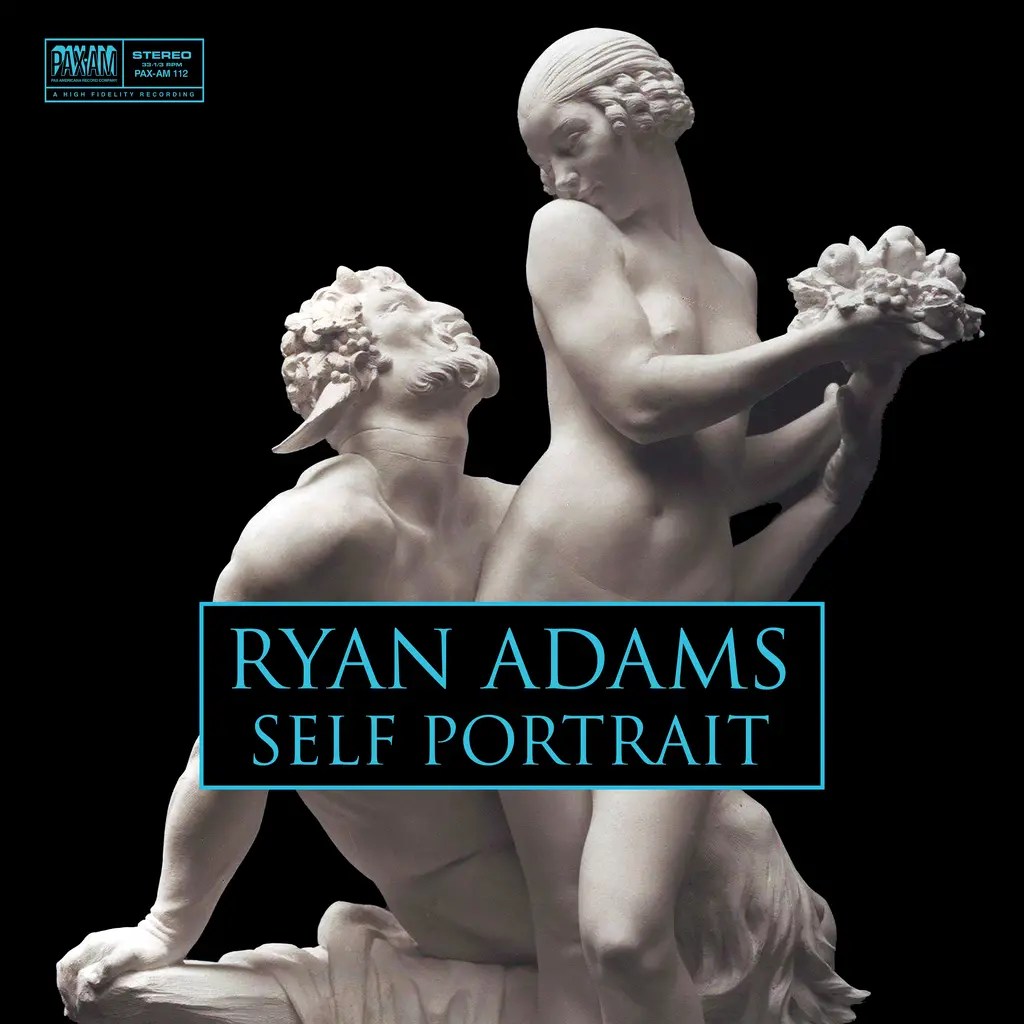
Having recently celebrated half a century alive on this big fat rock, North Carolinian singer/songwriter Ryan Adams took it upon himself to bookend this sad, strange, beautiful year with the official release of his long-awaited, indefinitely-shelved cult item BLACKHOLE. After making good on the promise of his ultra-epic PaxAm album tetralogy this past New Year’s Day (seeing the simultaneous release of four new studio LPs: 1985, Sword & Stone, Heatwave, and Star Sign), on this recent 6th of December he completed the longtime coming dispatch of his lost 2005 studio gem. With its widespread digital release following a few weeks after the delivery of its physical formats, the sough-after collection came through as an 11-track record, clocking in at just about 35 minutes of runtime. This new album marks his THIRTIETH, 3-0, solo full length since the 2000 breakthrough exploit Heartbreaker.
Speaking of his smash debut project, the former Whiskeytown founder recently announced an ambitious world tour for 2025, celebrating 25 years since its release, and spanning nearly sixty dates across eight months of the calendar year (March through October). Adams appears to be enjoying keeping himself untenably busy, for he’s literally just concluded his own other acoustic solo tour of the US this fall, highlighting additional anniversaries of career standout LPs such as Love Is Hell (twenty years) and his Self-Titled (ten years). It’s just too bad that nearly no cuts off either album were actually played during his 3+ hour, 30-song setlist, having recently witnessed his final tour stop in person at New York’s Carnegie Hall.
Back to BLACKHOLE—with an oral history dating the initial writing sessions for it as far back as 2005, it’s safe to say that the record has not only had fans salivate for its release for nearly twenty years, but it has also long been lauded as his one true masterpiece by pockets of hardcore stans. To fan them flames, the 7-time Grammy Awards-nominated artist famously noted how BLACKHOLE “took 4 years to make […] and to me it is basically Love Is Hell, Pt. 3“, adding how ‘it’s like Love is Hell’s sister. In every way. In the most profound way. My most beautiful electric guitar: Johnny Marr-inspired guitar. It’s just all in there“. Now that the gift has been unwrapped, that is certainly not untrue. It’s also interesting though how sonically, this record does not feel out of place amidst the recent spat of consecutive releases, either (particularly when placed side-by-side with outings like Chris, FM, and Devolver)—lest one forgets, Ryan Adams has unveiled as many as sixteen different projects since his marvelously austere Wednesdaysin late 2020.
Now, this realization certainly begs a question with one of two possible answers; i) either has BLACKHOLE been receiving some late-stage studio retooling and retouching (further corroborated by the apparent last-minute omission of previously announced deep cut “Disco Queen“, dropped on the cutting room floor), or ii) some of the projects he’s been releasing in the past couple years actually date back a few decades recording-wise. Truly and honestly, by virtue of both his relentless prolificness, and his endlessly deep catalog, either has merit and robust chances of being true. At the end of the day, it doesn’t quite matter, for BLACKHOLE is no ‘new music’ by any stretch of the imagination—yet future historians will look at the 6th of December 2024 as its birthdate, so we might as well treat it as such and give it a little appraisal.
Musically, albeit a tad bit more polished and sanitized compared to, say, the roughness of Heatwave, 1985, or his recent coverseriestrifecta, the record leans heavier on the dirty garagey-end of his catalog spectrum, as opposed to the sterilized grandeur of his major label-joint venture era of Prisoner and Big Colors. Of course, it’s still drenched in good ole chorus effects and magnitudes of reverb. While no lead single was announced as part of the roll out, the best songwriting at the core of these tunes is probably found on “Call Me Back“, “Starfire” (“Without leaving a trace / I watch her disappear / Come hold me in the rain / Come take away my fears“), and “Catherine“. Yet the most well-rounded and focused record of the bunch might just be “Tomorrowland“, at number nine on the tracklist—the way Adams renders some of his biggest influences in his own unique way, like The Replacements or Bruce Springsteen, typically so overtly worn on his sleeves, is simply gorgeous. Also, the carefulness and intention with which this cut is produced and engineered also have served as the album’s yardstick, yet many other tracks fell short of achieving that.
Elsewhere, opening jam “The Door” as well as “Help Us” and “Likening Love to War” on the front-end A-side of the disc, sound just like they stem right out of the Prisoner B-sides studio sessions—at the very least instrumentally. On account of the uncanny similarities, and by the same token as a result of the cleaner six-string arrangements, these three numbers tend to reverb a smidge out of place with the rest of BLACKHOLE. They do end up growing with each listen though; their sequencing at the beginning of the project undoubtedly helps them mould the auditory experience in their favor. “Just You Wait“, placed halfway through the record, is perhaps the most Love Is Hell-esque reference centerpiece, with its unhinged pen and self-destructive ennui (“It’s funny how she’s so fucked up, she has the nerve to judge somebody else so obviously pure / Listen up, it’s ok / Fuck em all / Be yourself / You know the good ones are always the freaks“). Start here if you’re a puritan and blind follower of the word in the Gospel of Adams, indeed hailing a Love Is Hell, Pt. 3.
To round the tracklist up, “For The Sun” at number seven strikes a fun balance between his mid-00s hit “This House Is Not for Sale” and something off Rock N Roll, whereas penultimate offering “Runaway” is in turn a much bigger, prettier, and immaculately produced bop, one that he should’ve handed over to The Killers instead? Yet, DRA decided to keep it, so this should’ve been the album outro—for the actual BLACKHOLE swan song, “When I Smile“, is just… weird. With its ostensibly upbeat and funky groove, paired with somewhat forgettable hive-mind surface-level lyrics (“All of the birds up in thе tees / All of these trees / All of these trees / They’re like birds“), how this song didn’t end up on freakin’ FM, or as a PaxAm-only vinyl-exclusive bonus track, simply beats us.
At the same time, it’s quite symptomatic and actually on-brand for the late-stage type of Ryan Adams we’re experiencing. And for BLACKHOLE as a project: it’s attractive, memorable, rough around its edges. But it answers no question unequivocally (except for that nope, this album isn’t his one true lost magnum opus). Which in turn might lend a dignified and honest nature to this collection of tracks—it’s earnest and sincere. It captures what the poet laureate legitimately felt. Perhaps it’s time we lost veneered expectations of who Ryan Adams the artist really is, and surrendered ourselves to the grip of the blackhole’s jaws.
We’d like to thank you sincerely for taking the time to read this and we hope to feel your interest again next time.
Essaying to introduce audiences to a body of work whose first of six installments debuted more than thirty years ago might seem like an oxymoron to most. Yet, considering the multi-hyphenate and still to this day vastly under-appreciated career of hip-hop MC extraordinaire Keith Edward Elam—aka Guru, a backronym for Gifted Unlimited Rhymes Universal—we claim this framework to be based and useful to some. The exceptionally talented American recording artist, producer, and actor, whose career was tragically cut short in 2010, is best known for his long-lasting impact as one half of superstar alt-rap duo Gang Starr, accompanied by DJ Premier on decks and production duties. Fewer people have the Boston, MA-native’s solo career trajectory on their radar though, particularly as it pertains to his contributions as the host of the unsung collaborative live jazz-rap project series dubbed Jazzmatazz. In his own words: “an experimental fusion of hip-hop and live jazz”.
While on a break in-between Gang Starr albums in 1993, the East Coast rapper saw fit to temporarily diverge from his storied trademark partnership with DJ Premier and venture into collaborations with both old-school and new-school postmod jazz stylists. The first 21-track chapter result of the series, Guru’s Jazzmatazz, Vol. 1: An Experimental Fusion of Hip-Hop and Jazz, saw the light of day that same year, and featured notable collaborations with none other than Donald Byrd, N’Dea Davenport, MC Solaar as well as Roy Ayers. While overall positively received at the time, the exploit reveals vast amounts of comfortable smoothness beyond what meets the eye; that both aged incredibly well, and belied Guru’s otherwise streetwise toughness.
To be clear, the sampling and interpolation of jazz segments into rap joints was nothing new to Gang Starr or even other prominent hip-hop collectives at the time. However, the way Guru executes that marriage throughout the six-episode Jazzmatazz series results in much more intricate, slamming, and gently seductive records than their street-anchored ones. Doubling down on his successful series opener, Guru’s Jazzmatazz, Vol. 2: The New Reality followed suit a few years later (1995), with as much as an hour and fifteen minutes of new material, counting an expanded stylistic horizon inclusive of Chaka Khan, Ramsey Lewis, Branford Marsalis and Jamiroquai amongst its ranks. The project ended up commercially outperforming its predecessor, peaking at number 71 on the Billboard 200 chart (Vol. 1 had to make do with number 94) and number 16 on the Top R&B/Hip-Hop Albumslist, lending marketable credibility to Guru’s trailblazing vision at the time.
Amazingly, Guru’s Jazzmatazz, Vol. 3: Streetsoul—the following offering in the run arriving five years later—did even better across its sixteen cuts than the previous two albums did. Departing even more drastically from the intelligent hardcore lessons set to incidental jazz on the first two chapters, Vol. 3 embraced more neo-soul and R&B-centric aesthetics, recruiting both genres heavyweights such as Angie Stone, Bilal, Craig David, Donell Jones, and Erykah Badu. Notwithstanding a perhaps more lukewarm critical reception from the reviewing intelligentsia, the album peaked at #32 and #8 on the Billboard 200 and Top R&B/Hip-Hop Albums charts, respectively. Evidently, there existed at the time an audience appetite and marketability for the previously unchartered territory of direct taping live instrumentation to underscore sixteen bars over sixteen bars, aptly spat by a generationally impactful and revered MC.
Initially inspired to pursue his vision by a trip to Europe in the late 1980s, during which his eyes opened to the so-called ‘fusion scene’ where hip-hop breakbeats got grafted onto live jazz sonic mantels, Guru was all too aware that his ongoing undertakings with Gang Starr were loaded with too much pretext and expectation for them to be the right conduits for Jazzmatazz. So, leaning into a softer edge, he fully committed to experimentation under his own name instead. The East Coast hip-hop staple left no stone unturned in pledging allegiance to such cause, ranging from the more obvious instrumental layer all the way to his lyrical content. By his own admission, verses and flows on his Jazzmatazz series are more laidback, more easy listening, although still message-oriented. Moreover, he had no small chip on his shoulder—one grappling with the trials and tribulations that came with the record industry of the time.
Lamenting how the lack of radio hit records with Gang Starr was less attributable to the music’s inherent palatability than to label executives’ shortsighted understanding of what the art stood for, the wordsmith actively sought alliance from jazz and its cats on account of what he saw as a shared cultural curse. Both genres are art forms that are highly relevant and intrinsic to black culture and experience, and they both deal with real emotions. As the rapper learned of the different ways the grandparental record industry tampered and warped jazz in an attempt to increase its commercial appetite in the past, he immediately saw the value in uniting in order to speak truth to power. In a poetic twist of fate (and perhaps not coincidentally), major label Virgin Records, that had earmarked his Jazzmatazz endeavors hitherto, stopped supporting Guru’s recorded affairs after Vol. 3. So he went ahead and founded his own imprint in response; 7 Grand Records.
Guru’s Jazzmatazz, Vol. 4: The Hip Hop Jazz Messenger: Back to the Future—his sixth solo studio LP to date (in-between Vol. 3 and 4., he dropped the standalone projects Baldhead Slick & da Click and Version 7.0: The Street Scriptures)—took a whole other seven years to come to fruition, only to clock in at just shy of an hour of runtime as it was released by 7 Grand Records in 2007. Officially billed as the final installment in the Jazzmatazz canon event, the full length was entirely produced by Solar, and features guest appearances from Blackalicious, Bobby Valentino, Slum Village, Common, and Damian Marley amongst others. However, in a move that put even Frank Ocean‘s 2016 millennium label deal finessing to shame, Guru and 7 Grand saw fit to surprise drop a raw companion mixtape on the same 31st July Vol. 4 came out: Guru’s Jazzmatazz: The Timebomb Back to the Future Mixtape. So much for making a statement of intent directed at the majors.
Ironically, the industrious approach ended up backfiring, turning the right heads in the major label circuit. A mere year later, on the heels of Guru’s growing legacy and influence both within and outside of his Gang Starr lane, dearly departed Virgin Records kind of proved his original point entirely by throwing together a puffy, rushed, and haphazard Jazzmatazz greatest hits compilation. It’s too bad that owing to the EMI/Universal Music Group controlling stake of the body of work’s front-end, the best-of collection only featured 18 cuts, limited to the first three Jazzmatazz volumes. Not exactly the faithful rearview mirror doing justice to the whole creative vision on Guru’s part. Only two years later, and not without having released his swan song solo LP Guru 8.0: Lost and Found, Keith Edward Elam passed away from myeloma at the premature age of 48. Although his carnal manifestation might’ve moved on, his visionary impact is forever. Amidst a genre-less and experimentation-prone contemporary musical zeitgeist, Guru’s Jazzmatazz was both prescient and incisive—as Nate Patrin so eloquently outlines for Stereogum:
Jazzmatazz isn’t nearly as outlandish an idea as its creators might have thought at the time. That seems to matter less than the fact it still bumps, though, and slotted between the two Gang Starr classics that bookend it, it captures one of the all-time greatest MCs at a creative peak. Maybe the more important takeaway is this: it’s always worth celebrating when hip-hop finds a way to do the job of preservation that the conservative purists never really could do alone. And the future belongs to those who know where to take the past.
We’d like to thank you sincerely for taking the time to read this and we hope to feel your interest again next time. RIP Guru.
AV
Below listed and displayed are Guru’s Jazzmatazz volumes (1993-2008):
Guru’s Jazzmatazz, Vol. 1: An Experimental Fusion of Hip-Hop and Jazz (Chrysalis, 1993)
Guru’s Jazzmatazz, Vol. 2: The New Reality (Chrysalis, 1995)
Leave it to ScHoolboy Q to quench the audience’s thirst for new quality hip-hop music excitement in early 2024—after a near five-year drought, no less. Today, at the turn of the March calendar month, the Black Hippy wordsmith releases his long-awaited six studio LP BLUE LIPS, a muscular collection of eighteen brand new cuts, just shy of one hour of runtime. With Kendrick Lamar gone, and SZA having transcended beyond the indie label perception and treatment, the 37-year old West Coast MC is arguably the inherited poster child for what Top Dawg Entertainment stands for. It’s only understandable then how this drop has been turning a significant amount of heads in the hip-hop pantheon of recent, not least due to the California label’s elusive and slim pickings promo roll out accompanying this release.
A TDE mainstay for over a decade now, Q has been a consistent paramount asset in thrusting the imprint’s impact, success, and credibility past the insular rap stratosphere. Absent the multi-generational talent and GOAT-claimant Kendrick Lamar, the Germany-born rapper’s contributions in upholding the West Coast’s rap legacy past the G-funk one-dimensionality have arguably been of greater impact than those of fellow group members Ab-Soul and Jay Rock—particularly amongst scene critics. His new project BLUE LIPS, a body of work that can count featured guests such as Rico Nasty, Lance Skiiiwalker, and Freddie Gibbs amongst its ranks, is distributed by Interscope Records and was preceded by a sole lead single, the nocturnal and rabid “Yeern 101“, dropped in mid February.
With virtually the whole hour of material left to the fans’s imagination, and no meaningful leak to speak of ahead of its street date, this project felt like a generous and auspicious affair. Well, with the benefit of a handful replays hindsight under our belts, BLUE LIPS pulls out all the stops. It is gelled together by a unified versatility and a patchworked assembly more akin to a mixtape, than a conceptual album—the notion of ‘blue lips’ underpinning the record with multiple inherent connotations ranging from floral to medical is clearly intentional. The full listening experience equates to surrendering to a slew of loose cannons, where even shorter one-to-two minute skit records such as “Movie” (trading vocal duties with guest Az Chike), “Germany ’86“, and “Smile“, act less as interludes than glorified thematic palate cleansers, strategically peppered across the tracklist.
Also, there isn’t a joint on here that doesn’t leverage some degree of flow or beat switching; surprisingly, it almost always sticks the landing. “Pop“, co-signed by the aforementioned Rico Nasty at number two on the album, is basically a couple different tunes seamlessly merged into one rager, whereas the forte-piano Gaussian bell distribution on the following three-minute belter “THank god 4 me” should not make sense, but it does. Conversely, the laser-focused and formulaic eight track “Cooties” finds ScHoolboy Q in rare lyrical form: “From start to fin’ I can, better my wheels / Like, literally, my daughters is chill / Likе, I can’t believe my housе on the hill / Like, I can’t believe that mountain is real / Accountant is thrilled / The scars on the back of me healed“. Its hypnotic and bell toll-y beat make it a clear standout on the album.
Throughout the sequencing, Q strikes a subtle yet convincing balance in being earnestly direct about his message conveyance, and curtailing a fair topical amount left to the listener’s interpretation. Strongest case in point, the whole entire project name (although the TDE recording artist does let us know that he leads with its shock and speechlessness semantic variation). Elsewhere, we find one of the purest highlights in “oHio“, halfway through the record—a boneless and spastic Alchemist-trademark production atop which the TDE heavyweight and rap verse of the year nominee Freddie Gibbs absolutely annihilate the backtrack beat, with both kindness and fury.
An inspired fellow Black Hippy compatriot Ab-Soul shows up fiercely on the following “Foux“, both MCs snaking and dicing through the most off-the-wall drum & bass production on this whole thing. In many ways though, this tune could and should act as the cliff note to cheat coding the whole record—with its discordant morphing of soft piano licks and zany percussive motifs, the occasional sea of reverb drowning the bars being spat, as well as one of the most heart-on-sleeve stanzas on the project (Ab’s “Repent for my sins, then I turn around / By next weekend, do it again / Wash, rinse, repeat, cycle won’t end / Just spin, I’m bent, she bent, and bend over“), this is your reference track.
BLUE LIPS does not hold back on its rear-end, either. Full beat deconstruction, a flat-out masterclass in sample flipping, and cold-blooded sound design underscore the solo Q track combo meal at number eleven and twelve (“First” and “Nunu“). Following it, the TDE camp sees fit to place the one radio-friendly booming hook on “Back n Love“, a bona fide trap-rager aptly assisted by a surprisingly convincing Devin Malik (an otherwise in-house producer for certain label products by Isaiah Rashad and REASON). Not long after that, “Time killers” offers some true blue (lipped) respite as a welcome breather, soft-grinding highly warped beat engineering with adept lyricism (“Home of the brave, ran by the slaves / Stole everybody name so white Jesus on the chain / I feel proud when it hangs / Try to hide from the fame and still came with a bang), and yes you guessed it: several mini-beat switches halfway through.
Meanwhile, penultimate cut “Pig feet” gives us wall-to-wall abrasive delivery and more subaltern flows, with Atlanta-based Grammy-nominated rapper and producer Childish Major stealing most of the three minute scene on tape. Do not get it twisted though, if one only listened to this joint, they’d be fooled to think BLUE LIPS is yet another dime-a-dozen trap-rage exploit not dissimilar from the many seen in today’s mainstream rap. Yet one of this album’s main strengths is found in its effortless ability to valorize the impressive sonic range of West Coast sounds, rap rock flows, and jazz rap styles, all baked into the hour of solid material on here. All credit goes to ScHoolboy Q and his posse, for not only making it work wonders, but having it sound so sticky whilst at it. Turns out those with blue lips are all of us.
We’d like to thank you sincerely for taking the time to read this and we hope to feel your interest again next time.
The command completed successfully. More than five years to the day after the release of his 2019 Grammy Award-winning exploit This Land, 49-year-old Austinite Gary Clark Jr has finally uploaded the first teaser pack of new music from his upcoming fourth studio effort, JPEG RAW. Dubbed a nifty and portable sampler, the bundle couches four brand new cuts, all featured on the full album sequence of the blues rocker’s highly-anticipated 12-track project. Fully unfolded as an acronym into Jealousy, Pride, Envy, Greed Rules Alter-Ego, Worlds, JPEG RAW is slated for a street date at the end of March, and continues to fulfill a multi-album obligation with major label Warner Records.
Generously previewed across almost twenty minutes of material laced into four songs at once,—”Maktub“, the title track, “This Is Who We Are“, and “Hyperwave“—the LP is set to also feature samples of Thelonious Monk and Sonny Boy Williamson music, and sports noteworthy co-signs from royalty such as Stevie Wonder andGeorge Clinton. If the sampler is anything to go by, JPEG RAW is poised to both build and expand on the already vast range of sounds and influences championed by the prodigal guitarist on previous outputs. Take the rusty and smokey guitar lick on album opener “Maktub”, which is as immediate and sticky a riff as it gets. While the rest of the same track might get filed as a somewhat canonical Clark Jr effort through and through, one need only press play on “Hyperwave” at number nine on the tracklist to wander into pop-adjacent psychedelia that heavily flirts with a current day singer-songwriter canon.
Elsewhere, the eponymous cut at number two on the record slows things down a smidge, by smoothening some of the opener’s razor edge—yet not without seizing the opportunity to undercut the tune with exuberant tongue-in-cheekness covert as alarm-sounding for talking turkey. One shouldn’t let the apparently harmless lounge-backtrack vibe get it twisted, for the bluesman wastes little time to take no prisoners while preaching his views: “My daughters ain’t gotta shake hips to make tips / No judgement if it makes sense, it made sense / But I ain’t with the ratchet / Only racket they’ll be havin’ is if they pick up a good habit where“. Locked and loaded in the trials and tribulations of fame plus all its dues, Clark Jr attempts to combat inner demons with a healthy dose of self-reflection (“I shoulda paid more attention / All my fault, I did it all for the pictures“), before asking his interlocutor the only question that can redeem him: “If this is what you want, what you waitin’ for? / If this ain’t what you want, what you want?“.
Meanwhile, “This Is Who We Are” is a five minutes and a half epic. Coasting through seas of expansive sonic magnitude before diving headfirst into a pronounced R&B flair, the number is less a responsive answer than a proactively assertive statement. The joint also features angelic BV touches from London-based singer/songwriter and producer Naala, and might double as a central cornerstone of the whole listening experience once the full record becomes available (apparently it’s the first thing Clark Jr wrote for the album). With its lopsided marriage of orchestral elements with dense and viscous tapestry of edgy blues guitar weaves—paired with pierce-loud drumming in the mix—this might not necessarily be the song we deserve, but it’s definitely the song we need.
And then there’s “Hyperwave”. Handily the biggest show-stopping teaser as part of this initial collection of singles. Calling this type of jam unexpected from the Blak & Blu creator would be an understatement. Packing a soft and tender melody into an intelligent psych-rock wireframe, this is the type of material one would peg a post-indie band from the UK with making—yet the Austin six-string prodigy pulls it off in both a tasteful and extremely gratifying fashion. With its bona fide ear worm refrain, the track doesn’t sacrifice soulful transudation at the expense of memorability and accessibility; not the smallest of feats. In a lengthy interview with Forbes, the Warner recording artist revealed the writing sessions that led to JPEG RAW to be loose, pandemic-constrained, and unentangled; admitting how he and his band simply “got together in my studio every Thursday and […] smoke a brisket and […] just sit there and eat barbecue, have a few drinks and play music“.
The haphazard impetus behind the sonic Rorschach inkblot test that became the twelve cuts on the album can certainly be noticed on this sampler. Moreover, hearing how Andre 3000’s recent foray as a flautist into new age jazz inspired him to follow his raw unedited instinct in the same interview draws every door open to a prescient full-blown range and experimentation on the record. Adding that to a more clued in hint where he recalls specific cross-pollinated genre contaminations (“I want my drums to sound like Willie Big Eye Smith meets Jay Dilla. I want my bass to be James Jamerson and Mike Dean“) has us at the edge of our seats to find out what the full project will hold. For Gary Clark Jr is the kind of important artist people will happily wait a long time for. His music and lyrics manage to capture vivid vignettes of fractured modern America, and translate them into universal language and feelings that transcend border and state lines—all the while cruising as one of the biggest rock flagbearers in the mainstream. It’s time he tells us all how we’re really feeling, again.
We’d like to thank you sincerely for taking the time to read this and we hope to feel your interest again next time.
I’d like to thank you sincerely for taking the time to read this and I hope to feel your interest again next time. And happy holidays this time around.