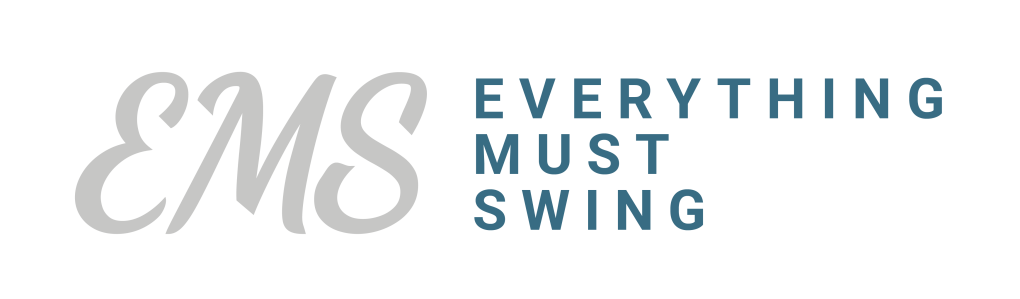
Depending on how exactly you count, Self Portrait should be Ryan Adams’s 31st full length solo effort. Unlike a few of the intervening releases that separate it from BLACKHOLE—2024’s long-awaited and long-presumed indefinitely-shelved cult drop—his new 1st December 2025 exploit is a 24-cut double LP of previously unreleased studio material, including three (and a half) cover songs. Granted, the word ‘studio’ is being used extremely loosely here. No need to beat around the bush: this site’s been up for over ten years at this point, and we have pretty much covered every single piece of new music the 51-year old Jacksonville, NC native has made publicly available since 2015. Sure, we did take a few passes on e.g. his Return to Carnegie Hall (2023) or Another Wednesday (2025) live albums (not to mention his vinyl-only compilation Changes from last June). Similarly, we did not see fit to focus on his 25th Anniversary Edition Heartbreaker reissue several months ago. By and large, that was all due to the fact that none of the aforementioned projects contained any new musical numbers to speak of.
The reason we’re employing the ‘studio’ attribute loosely is because, arguably, since his extraordinary 2021 LP Big Colors, none of the subsequent ten projects feel very much like they were gestated in a true blue studio recording environment. From Chris (2022) to Self Portrait (2025), the through line has for the most part been home-spun and mixtape-like. And to think that this comes without counting as many as eight additional collections since Big Colors that were either of the aforementioned anniversary reissues (Heartbreaker), live tapes (Return to Carnegie Hall, Prisoners, Another Wednesday) or wall-to-wall album-play cover records (Nebraska, Blood on the Tracks, Morning Glory, Changes). Mind you, this is not to say that this is necessarily a bad thing, yet one that warrants an epistemological acknowledgement. For before discoursing about the merits and flaws of his latest, it’s strikes us as perhaps decisive to lean into the paratext that the PaxAm founder is sending us with his release strategy.
He titled this 31st studio LP Self Portrait—does it mean that this low-fidelity, erratic, and hodgepodge-y version of the DRA is his actual true self? At the very least during his third act? After all, this record does match the post-2020-2022 album trilogy modus operandi; one need not even read into that much of tea leaves depth. What is sure is that with now as many bedroom low-fidelity compilations released as big league major label albums back in his commercial heyday—ten in total for both classes, the latter ranging from his seminal 2000 splash Heartbreaker to 2017’s exquisite Prisoner—the question is meritorious and bears significant valence.
So who is the real Ryan Adams in 2026? Is it the author of three lengthy novels in as many years? Or is it the alt-country prodigal son so resentfully clamored by his entitled Reddit fanbase? For what it’s worth, let us bake some method into this investigation in order to look at what the Self Portrait data tells us. To recap, the LP boasts 24 individual records, amounting to almost an hour and fifteen minutes of music, which we’ll go ahead and arbitrarily claim is enough circumstantial evidence to begin inferring some representative conclusions. What we did is listen to each of the cuts on the tracklist in isolation and map them to the most likely, potential, and faithful originally housing post-2020 Ryan Adams studio album. Mostly, this was done by way of judging the recording quality, ethos, aesthetics, and environment of each cut, attempting to match that sonic identikit—as well as the primary writing style of the melodic toplines—to the album timbre resembling it the most. Here’s what we found:
“Virginia in the Rain“, “Stormy Weather“, “Thunderstorm Tears“, “Try Again Tomorrow“, “Theo” — Romeo & Juliet The largest batch of songs sounds like it was inherited from the PaxAm founder’s twentieth studio album as a solo act (2022), which is saying something considering the wild range of sonic styles and explorations on that very record. Clocking in at over an hour of material with already 19 songs in the mix, these are likely loosies and/or throwaways from those writing sessions. By virtue of the album length and format pace the DRA has been keeping of late, few pundits would have bat an eye had these five been quietly laced into the tracklist to make it another 24-track opus like Self Portrait.
“Bye Bye Balloons“, “Fools Game“, “Lovers Under the Moon” — Wednesdays Admittedly more informed by the songwriting at the core of these tunes than the production quality, these three barebones naked unplugged and acoustic numbers wouldn’t have felt too out of place on his 2020 comeback record—perhaps as extra material thrown on top of a market-specific drop. The fact that none of them actually made the bonus tracks cut at the time—especially factoring in how generous Adams typically is with non-LP numbers and outtakes—speaks to the somewhat lukewarm quality and staying power they actually possess.
“Too Old to Die Young“, “I Am a Rollercoaster“, “Look What You Did” — Chris This different crop of Self Portrait songs sports a distinctive Chris kind of musical vibe. Mind you, the highly-anticipated final installment in his powerful 2020-2022 album trilogy—completed by Wednesdays and Big Colors—already showcases some of Ryan Adams’s more immediate and catchiest, if disjointed, songwriting of the past fifteen years. Nonetheless, with yet another bloated tracklist, coming in just shy of sixty minutes of runtime, it’s easy to cut him some slack and understand why these three didn’t quite make it onto any of the commercially released versions at the time. In twenty-twenty hindsight, we would have loved to see either “Too Old to Die Young” or “I Am a Rollercoaster” getting the official upgrade, or at the very least being offered as bonus tracks instead of the hair metal-adjacent “Don’t Follow” that the poet laureate ended up churning out.
“Saturday Night Forever”, “Please, Shut the Fuck Up“, “At Dawn” — Big Colors These three LP standouts err on the shinier and glossier end of the production spectrum (not exactly an awfully high bar for him lately, we know…), while displaying a strong lineage with what’s perhaps the best and most accomplished record in the North Carolinian’s recent discography. Although they don’t quite retain all the required sanitized nooks and crannies to be default-grandfathered into their parent album, their more careful mixing and focused songwriting handily elevate them as amongst the most enjoyable on Self Portrait. “Saturday Night Forever” is gorgeous and sounds like the (even) darker coin flip B side of “In It For the Pleasure”, while “At Dawn” could go neck to neck with “Summer Rain” as the ultimate DRA album swan song—an incredibly tall order.
“Take the Money“, “Not Trash Anymore” — FM “Take the Money” was literally teased and promoted as an FM outtake around the time his power-pop affair dropped in 2022, so that’s a given and perhaps even more of a head scratcher than other jams on here. The non-LP labeling feels fair game and the right outcome for that one, but “Not Trash Anymore” is a strong and muscular tune through and through. It’s a shame it wasn’t included in it four years ago, as it comes across as a bit of a sore thumb on Self Portrait.
“Blue Monday“, “The One I Love“, “Shiny Happy People” — Morning Glory The cover songs for the cover album. From their homespun recording mix to the actual instrumentation committed to tape, these new renditions of New Order and REM classics were in all likelihood cut during the same DIY arrangement and recording sessions as his incredibly hushed and creative Oasis album reimagining. Let’s just say we’re glad Ryan kept these standalones, for they bear less to write home about than pretty much anything on his 2020s album covers series.
“Throw It Away” — Devolver The late 2022 Rock N Roll-spiritual next-of-kin release remains a peppy and underrated project in the alt-country phenom’s canon; this similarly vivacious and inspired cut carries all its songwriting and production fingerprints on it. Considering the more condensed original tracklist on Devolver—with no single record clocking in at longer than 3:14—this should have been on it.
“Castles in the Sand” — Blood on the Tracks If you know you know, but there’s a specific brand of sound capture and playback temperature to the wall-to-wall re-recording of Bob Dylan’s masterpiece, given away for free as a 2022 Christmas present. This ambitious 6-minute jam, somewhat randomly, oozes all of the same hallmarks of what presumably was another home studio set up at the time. Clearly not a potential candidate for the aforementioned covers record, this one-off belter seems to have been sculpted as a torch bearer for the looser and more impromptu kind of Ryan Adams drawl.
“Someone On My Mind“, “I Am Dracula“, “Honky Tonk Girl” — Others These are long tail renegades. We couldn’t quite naturally map any of these three bops to any of his past records. They all pretty much sound like they were cut during the same writing session(s) though, so one is left wondering what kind of different record lies behind them. Their garage-y and more upbeat ethos very much situates them up one of Adams’s more exuberant and storied streets. If our theory that what he sees when he looks in the mirror today is the sprawling, unedited, and primarily low-fidelity singer/songwriter of the past six years is correct, their inclusion appears based.
Notwithstanding the above blow-by-blow granularity, alas the sequencing on Self Portrait continues to be rough. All over the place, once more. Staccato transitions and EQ unbalances render this collection of tunes more like another mixtape, than a cohesive or even conceptual album. Think Chris, rather than Prisoner. Its further shortcomings include the annoying audio static on most of this thing’s mix, as well as many hackneyed bits of Ryan counting-in the songs. Although the latter is of course not necessarily a bad thing, when done intentionally and contextually, the abundant and incoherent times it appears on here feel both unnecessary and haphazard at best. Also, too often one can hear Ryan’s pick hitting the acoustic guitar’s body before or after a performance—another clue pointing to a very self-recorded affair. Indeed, as many seem to speculate online, Self Portrait sounds like yet another album cobbled together by the DRA himself, while left to his own devices. That would mean no major label studio-grading recording engineer in the picture—nor an external curator/consigliere to help him guide song selection and sequencing.
Yet, for as much as his fans seem to think otherwise, the fact of the matter is that Ryan remains in control of his own creative output. He has the complete God-given right to steer the bull by its horns in whichever direction he prefers. Regardless of album creation heuristics, what stays indelible at the end of the day are his artistic choices and the way they can be interpreted by listeners. Ever the self-aware, contrarian, and ironic auteur, one’s gotta sprinkle some humor and affability for accuracy on top though. So while we shall never really find out for sure what his mirrored image looks like, or what he thinks it looks like, titling your 31st studio album Self Portrait feels daring and evanescent at the same time. Is it a giant f**k you to snob and presumptuous superfans who won’t stop crying digital tears until he remakes Heartbreaker and Jacksonville City Nights over and over, or a faithful statement of artistic intent as he evolves throughout the third decade of the new millennium? Like it or not, we’re not so sure the man even knows himself.
We’d like to thank you sincerely for taking the time to read this and we hope to feel your interest again next time.
AV
RYAN ADAMS
SELF PORTRAIT
2025, PAXAM


 Everything Must Swing